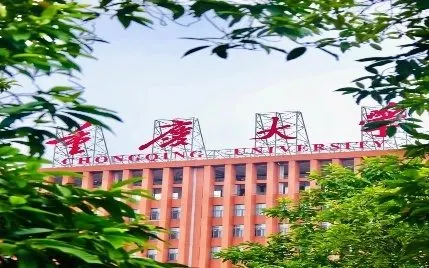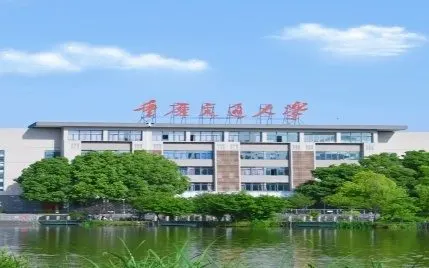
Chongqing Jiaotong University
University · Chongqing
Language courses · Bachelor's Degree · Master's Degree
SWU · 西南大学
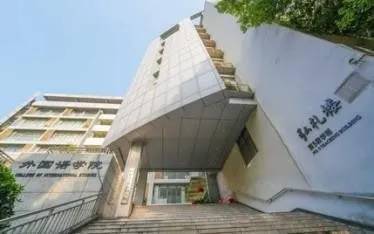
Southwest University accepts international students on programmes in the following fields: engineering, education, law, economics, agriculture. Choose the level and programme that suit your goals.
Chinese language study at the university — from a few weeks to a year or longer. Suitable for those starting from scratch or preparing for the HSK before entering a main programme.
self-funded · language programme
The first level of higher education: usually four years of study, specialised subjects, internships and a graduation thesis. It opens the way to working in your field and to a master's degree.
self-funded
Advanced study after a bachelor's degree: research, applied projects and internships. It helps you become an expert in your chosen field and broaden your career opportunities.
self-funded
Southwest University is located in Chongqing. Nihao Study consultants keep track of the deadlines and admission requirements of this university, and you can always check the most accurate and up-to-date information on its official website.
Come for a face-to-face meeting: together we will go through the requirements, deadlines, documents and study options that suit you.

At the meeting we will look at your situation, tell you which documents to prepare and by when, talk about possible programmes and help you decide on the next step.
Southwest University (SWU, 西南大学, Xīnán Dàxué) is a large comprehensive university under central government administration in Chongqing, itself one of China's four municipalities directly under the central government. The campus is in Beibei District, on the bank of the Jialing River at the foot of Jinyun Mountain. The university reports directly to the Ministry of Education of China, and it is jointly funded by the Chongqing municipal authorities, the Ministry of Agriculture and Rural Affairs and the Ministry of Education. Russian-speaking applicants often write the name the English way, Southwest University, or transliterate it; Chinese students shorten it to 西大 (Xīdà), and in international rankings the university appears under its official abbreviation SWU.
It is a large university: it takes part in Project 211 and the national Double First-Class (双一流) initiative. Its range of disciplines is wide, from philosophy, history and philology to economics, law, education, natural sciences, engineering, medicine, agriculture, management and the arts. The university became nationally known for education and agricultural sciences, and thanks to its silkworm genome laboratory its research in this field has reached first place in the world.
On this page Nihao Study has gathered what a 2026 applicant should know: SWU's ranking positions, accommodation, the route to a CSC scholarship and free tuition, HSK requirements, how it differs from universities with similar names, and the documents for bachelor's admission.
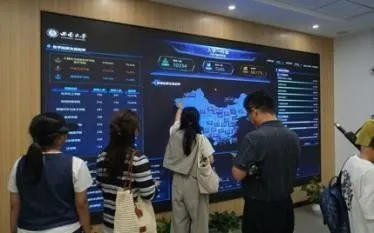
The table shows the university's main indicators. Figures for student numbers vary: besides full-time study, the university runs part-time and continuing education programmes. So we give two reference points — around 60,000 according to the infobox and more than 80,000 if all forms of study are counted; about 50,000 of them are full-time students.
| Item | Data |
|---|---|
| Founded | 2005; its history dates back to 1906 |
| Location | Chongqing, Beibei District |
| Status | Project 211; Double First-Class |
| Total students | around 60,000, of whom more than 50,000 are full-time |
| International students | about 2000 a year |
| Teaching staff | 2650 on staff |
| Campus area | 9600 mu (about 600 hectares) |
| Library collection | 3.8 million volumes |
| University code at the Ministry of Education | 10635 |
The campus at the foot of Jinyun Mountain covers about 600 hectares and is counted among the greenest university campuses in the country. The library, opened in 2005, holds around 3.8 million items. You will need code 10635 if you apply for a scholarship: it is entered in the application form on the China Scholarship Council portal.
Today's SWU was formed in July 2005 by merging two independent universities, each more than a hundred years old — Southwest Agricultural University (西南农业大学) and Southwest China Normal University (西南师范大学). Both grew from a single common root in the early 20th century, and before the merger they were separated by little more than a wall, so the merger was a natural one rather than a formality.
The university's official history states that SWU combines the heritage of two schools dating back to 1906 and is known for its constant drive for renewal in research and education. From the teacher-training branch the university inherited leading positions in China in psychology and educational theory, and from the agricultural branch its schools of agronomy, horticulture and animal science, as well as a well-known sericulture institute.
Over its century-long history, SWU has been home to well-known scholars as students and staff — the psychologist Huang Xiting, the soil scientist Hou Guangjiong, Zhang Furong, who laid the foundations of teaching theory, and Xiang Zhonghuai, who was the first in the world to decode the silkworm genome. The most famous name in the university's history is Academician Yuan Longping, the "father of hybrid rice": the university calls him one of its famous alumni. The same list includes Hu Jinchu, the founder of giant panda ecology, and the Olympic champions Shi Tingmao and Zhao Shuai.
Judging by its overall research output, SWU is consistently near the top of the list of Chinese universities. In the 2026 EduRank ranking the university is 867th in the world, 163rd in Asia and 54th in China, based on more than 64 thousand publications and over a million citations. In the ShanghaiRanking academic ranking (ARWU), SWU is in the 401–500 band worldwide and around 69th among Chinese universities. In the QS World University Rankings the university is in the 1001–1200 band; it is also included in the main list of the US News Best Global Universities.
| Ranking | Position |
|---|---|
| EduRank, 2026 | 867th worldwide, 54th in China |
| ShanghaiRanking, ARWU | 401–500 in the world |
| QS World University Rankings | 1001–1200 |
| US News Best Global | in the main list |
| EduRank: horticulture | 76th worldwide |
Subject by subject, the picture is more striking. EduRank places SWU's horticulture in the world's top hundred, at 76th. According to ESI, ten of the university's fields are in the global top 1%: agricultural sciences, chemistry, engineering, materials science, plant and animal science, biology and biochemistry, pharmacology and toxicology, computer science, neuroscience and environmental science/ecology. Chemistry and agricultural sciences have even risen to the top 0.1%, which is rare for a comprehensive university.
Education and psychology. Thanks to its teacher-training past, SWU is one of China's main centres for training teachers and psychologists; psychology, education and teacher training have traditionally been among the strongest in the country. For an international student, this means the chance to do a master's or doctorate in education at a university with a genuine academic school.
Agricultural sciences and the silkworm genome. The second strong field grew out of the agricultural branch. The university is home to the State Key Laboratory of Silkworm Genome Biology. In December 2022 the Ministry of Science and Technology approved another laboratory based on it — the Key Laboratory of Resource Insects. It was here that the silkworm genome was first sequenced at framework level anywhere in the world, and the university is still considered a world leader in this field.
Chemistry and life sciences. The third pillar is the natural sciences. According to ESI, SWU's chemistry is in the global top 0.1%, and biology, biochemistry and environmental sciences are developing alongside it. All of this provides a solid foundation for programmes in materials, food science and biotechnology.
Teaching covers twelve branches of learning. In numbers: 97 bachelor's programmes, 159 master's and 66 doctoral programmes, 40 national key disciplines and 9 postdoctoral research stations. The programmes can be roughly grouped into several large blocks.
The humanities and education block includes the faculties of psychology, education, history, Chinese language and literature, and law and public administration. The natural sciences are represented by chemistry and chemical engineering, physics, mathematics and statistics, biology and biotechnology, and geography and resource and environmental sciences. The agricultural and biological block is the university's historical pride: it includes agronomy, horticulture, plant protection, animal science, food science and the sericulture institute. A separate block covers engineering, technology and digital fields: engineering and technology, materials science, electronic information engineering, computer science and software engineering.
The most popular choices among international students are Chinese language, psychology, education, economics, agronomy, life sciences and food science, as well as fine arts and Chinese martial arts.
The International College runs three dormitory buildings for international students, including the Ziyun Building and the Zhuyuan dormitory. Rooms have their own bathroom, air conditioning, a fridge, a TV and internet; the residential area has a canteen, a laundry and a gym. Accommodation is paid for a semester or an academic year at once, and the payment already includes the main utilities.
Rooms come as four-person, double and single; the price depends on the type, and current rates are best checked on the university's official website. Short-term students can pay by the day. First-year students are required to live on campus, while students in later years may live off campus — to do so, they need to submit an application and register with the local police station.
The main route to free study is the Chinese government's CSC scholarship. SWU is authorised to accept Chinese Government Scholarship holders; for the 2026 academic year the university is recruiting master's and doctoral students under the high-level programme, and applications are accepted until 15 February 2026. The scholarship waives tuition fees and provides a free place in a campus dormitory, a monthly stipend and medical insurance.
The requirements for candidates are as follows. Master's programmes accept holders of a bachelor's degree aged under 35, and doctoral programmes accept holders of a master's degree aged under 40. The grade point average must be at least 3.3 on a four-point scale, and Chinese-taught programmes require HSK 5 with a score of at least 180. In total, 306 universities accept CSC scholarship holders, so you can apply to other universities with the same set of documents.
Besides CSC, the university has its own support programmes: the SWU Presidential Scholarship, the Chongqing Mayor's Scholarship, the New Silk Road Scholarship and a scholarship for Chinese language teachers. The study plan is one of the key documents on which a candidate is assessed, so it is worth working on it thoroughly, and it helps to contact a potential supervisor in advance.
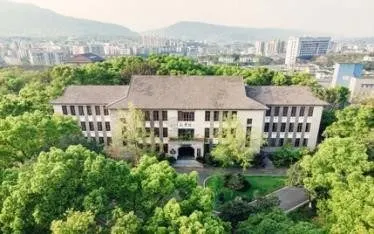
The campus in Beibei District, at the foot of Jinyun Mountain and on the bank of the Jialing River, feels like a large park — there is so much greenery. Students have access to three libraries (the largest is the central one), sports grounds, museums and an art gallery. Beyond the campus lies Chongqing, a huge metropolis in western China with about 32 million people. The city is famous for its hilly terrain and spicy food and is also a transport hub for western China, so student life here is full and lively.
Southwest University has quite a few "namesakes" among Chinese universities, and some of them are also in Chongqing. To avoid sending your documents to the wrong place, compare the main differences in the table.
| University | City, type (profile) |
|---|---|
| Southwest University, SWU | Chongqing, university (education, agricultural science, psychology) |
| Southwest University of Political Science and Law, SWUPL | Chongqing, university (law) |
| Southwestern University of Finance and Economics, SWUFE | Chengdu, university (finance, economics) |
| Southwest Jiaotong University, SWJTU | Chengdu, university (transport, engineering) |
| Southwest University of Science and Technology, SWUST | Mianyang, university (materials science) |
| Chongqing University, CQU | Chongqing, university (engineering, comprehensive) |
In short: SWU is a comprehensive university whose core is education and agricultural sciences. SWUPL is also in Chongqing, but it is a specialised law university. SWUFE and SWJTU, which have similar names, are in Chengdu: the former specialises in finance, the latter in transport. And if you are looking for Chongqing's largest comprehensive university, it is most likely Chongqing University rather than SWU.
Several variants are in use, and they all refer to the same university in Chongqing. Russian sources also use a translated name, spelling variants and transliterations of the English name; these are not separate names. Southwest University is the official international name, and SWU is the abbreviation the university uses in rankings and correspondence. 西大 (Xīdà) is a student abbreviation formed from the first and third characters, and 西南大学 (Xīnán Dàxué) is the original Chinese name.
SWU is short for Southwest University in Chongqing. It is a comprehensive university under central government administration and part of Project 211 and the Double First-Class programme.
Yes, some programmes are taught in English. SWU does not offer teaching in Russian, and Chinese-taught programmes require an HSK certificate.
Chinese-taught scholarship programmes require HSK 5 with a score of at least 180. For self-funded programmes the threshold varies by programme, so it is worth checking in advance.
Yes: the university takes part in both the national Double First-Class initiative and Project 211. It does not have 985 status, but it did have a Project 985 innovation platform for disciplines.
The cost depends on the room type — four-person, double or single — and on whether you pay by semester or by year. Current accommodation and tuition prices are published on the university's official website.
Yes. The university is authorised to accept Chinese Government Scholarship holders, and this scholarship covers tuition, accommodation and insurance and also includes a stipend. Applications for the academic year are accepted until 15 February 2026.
The university's language courses prepare students for the HSK, but the exam is taken at accredited centres according to a set schedule. It is best to check session dates and the registration procedure in advance.
The main campus address is No.2 Tiansheng Road, Beibei District, Chongqing, postcode 400715. The campus is in the north-west of the metropolitan area, at the foot of Jinyun Mountain; rapid transit connects the district to central Chongqing.
SWU is a comprehensive university in Chongqing, strong in education and agricultural sciences. SWUPL is in the same city, but it is a specialised law university. SWUFE is in Chengdu and specialises in finance and economics.
The list is as follows: a valid passport; transcript and secondary school-leaving certificate with a notarised translation into Chinese or English; a language certificate (HSK or IELTS/TOEFL); a completed application form; two photographs.
Chongqing (重庆) is one of the largest cities in the world by area and is called China's 'cyberpunk capital'. It sprawls across mountains: trains here pass right through residential buildings, and in the evening the city glows with lights. The local food is famous for its heat, especially hotpot.
Chongqing gives students the energy of a huge metropolis and an unusual landscape. There is no chance of getting bored: there are lots of young people around, and the universities have spacious campuses. In summer the city gets extremely hot — it has been nicknamed 'China's furnace' — but air conditioning is everywhere. For parents, it matters that safety in this enormous city is well managed, healthcare is advanced, there is an international airport, and a trip to visit their child will leave vivid memories.
You work with Nihao Study specialists. They will help you put together a portfolio and a set of documents, draw up a study plan and choose a university or college and a specialty that genuinely interest you.
We take care of every stage of admission, from choosing to enrolment
We will gather, prepare, certify and send your documents to the institution
We will show the admissions committee your strengths
We run training sessions and courses so you can prepare with more confidence
We will help you settle in at the start of your studies and keep moving forward
Nihao Study specialists select universities and colleges that match the applicant's goals and means. We make sure the teachers are practitioners and that the knowledge will be useful in your profession.
We examine curricula, talk to students and teachers and look at which specialties employers need, and use this information to select options for the applicant.
Advisers guide the applicant from the first consultation to enrolment, help build a plan and spot mistakes in time that could get in the way.
The cost of our support depends on the programme and the partner university; you'll get an exact quote after a free consultation.
Get a quoteA free 15-minute consultation: together we will choose a university or college and a programme that suit your goals and budget.
Apply with peace of mind: we handle the documents, deadlines and correspondence with admissions committees, and you save time and energy.
Don't want to wait for a call? Message us in the chat.
Message us in chat University · Chongqing
Language courses · Bachelor's Degree · Master's Degree