Chongqing Jiaotong University
University · Chongqing
Language courses · Bachelor's Degree · Master's Degree
CQU · 重庆大学
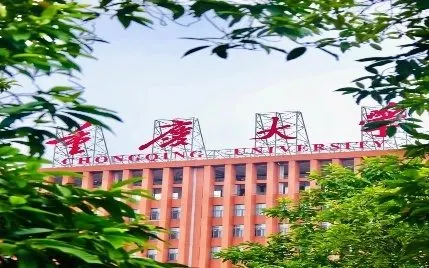
Chongqing University accepts international students on programmes in the following fields: business, engineering, medicine, economics. Choose the level and programme that suit your goals.
Chinese language study at the university — from a few weeks to a year or longer. Suitable for those starting from scratch or preparing for the HSK before entering a main programme.
self-funded · language programme
The first level of higher education: usually four years of study, specialised subjects, internships and a graduation thesis. It opens the way to working in your field and to a master's degree.
self-funded
Advanced study after a bachelor's degree: research, applied projects and internships. It helps you become an expert in your chosen field and broaden your career opportunities.
self-funded
Chongqing University is located in Chongqing. Nihao Study consultants keep track of the deadlines and admission requirements of this university, and you can always check the most accurate and up-to-date information on its official website. In university rankings, it is ranked 35 in China and 418 worldwide.
Come for a face-to-face meeting: together we will go through the requirements, deadlines, documents and study options that suit you.

At the meeting we will look at your situation, tell you which documents to prepare and by when, talk about possible programmes and help you decide on the next step.
Chongqing University (abbreviated CQU, Chinese 重庆大学, pinyin Chóngqìng Dàxué) is a public research university in Chongqing, one of China's municipalities directly under the central government. The university's main grounds are in Shapingba District, and the university itself reports directly to the Ministry of Education of the PRC. Students call it 重大 (Zhòngdà): the abbreviation is made up of the first character of the city's name and the first character of the word 'university'.
Russian renderings of the name vary, translating as 'Chongqing University', 'University of Chongqing' and 'Chongqing University' in transliteration, and sometimes even a misspelt version of the city's name. For official letters and international documents, the correct forms are Chongqing University and the abbreviation CQU. It is also important not to confuse it with other Chongqing universities whose English names have Medical, Technology or Posts and Telecommunications after the word Chongqing.
CQU is indeed part of the 211 and 985 projects: it joined the former in 1998 and the latter in 2001. In its second round, the Double First-Class (双一流) initiative assigned the university three disciplines: mechanical engineering, electrical engineering and civil engineering. Below Nihao Study has gathered what a 2026 applicant should know: statuses, rankings, programmes, dormitories, scholarships, language requirements and the admission procedure.
| Item | Data |
|---|---|
| Founded | 1929 |
| Status | national key university; 211, 985, Double First-Class (双一流) |
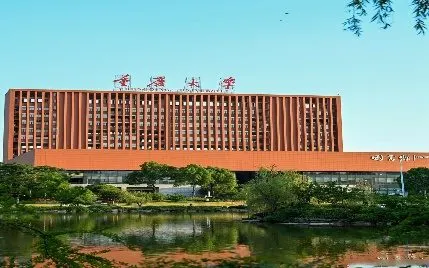
| Structure | 7 faculty clusters, 35 schools, 7 affiliated hospitals |
| Students | over 50,000: more than 26,000 undergraduates and more than 24,000 master's and doctoral students |
| Staff | over 5,300 |
| Area | over 5,300 mu (about 883 acres) |
| Campuses | A, B, C, Huxi and Liangjiang |
International admissions office address: Room 310, Main Teaching Building, Campus A, 174 Shazheng Street, Shapingba District, Chongqing (postcode 400044). Some offices are based on the Huxi campus, so it is best to double-check the address and contacts before posting original documents.
CQU was founded in 1929, and from the outset its founders intended it to be a full-fledged and influential university. By the 1940s it was already teaching law, economics, medicine, engineering, the humanities and the natural sciences. The nationwide reorganisation of higher education in 1952 changed its profile, shifting the emphasis to engineering. In 1960 it was designated a national key university.
The university took its present shape in stages. In 1998 it joined Project 211. In 2000 CQU merged with two institutions, Chongqing Jianzhu College and Chongqing Architecture and Civil Engineering University, and in 2001 it was included in Project 985. It is the 2000 merger that explains why architecture, construction, urban planning and engineering are so closely linked at CQU and still stand out in subject rankings.
In 2017 CQU was included in the first round of the programme to build world-class universities, in category A, and in 2022 it entered the second round of Double First-Class (双一流). The new round no longer divides participants into categories A and B, so it is more accurate to say that CQU is a Double First-Class university with three approved disciplines.
International rankings use different methodologies. QS gives more weight to reputation and internationalisation, THE combines teaching, research and citations, and ARWU looks primarily at research output. It is therefore wiser to assess a consistent range of positions and subject results rather than a single figure.
| Ranking | Position | What it reflects |
|---|---|---|
| QS World University Rankings 2027 | 465th place | overall international profile |
| THE World University Rankings 2026 | 351–400 band | quality of teaching and research |
| ARWU 2025 | 151–200 band | research performance |
| CWUR 2025 | 240th in the world, 36th in China | research and graduate careers |
| EduRank 2026 | 530th in the world, 32nd in China | publications, citations and visibility |
In individual subjects CQU looks considerably stronger than in the overall tables. The university's engineering is in the 151–175 band in THE 2026. In the ARWU Global Ranking of Academic Subjects 2025, CQU is 5th for civil engineering, 6th for metallurgical engineering, 9th for mining engineering, 11th for instrumentation science and 13th for energy science and engineering. These results match the national Double First-Class (双一流) list and show that the university is best suited to those who want to become engineers, architects or urban researchers.
The first strong area brings together electrical systems, energy, mechanics, automation and manufacturing technology. Three disciplines – electrical engineering, mechanical engineering and civil engineering – are on the official second Double First-Class (双一流) list. The university reports that its engineering is in the top 0.01 per cent of ESI, and 16 disciplines are in the top 1 per cent.
For an international student this means a wide choice: besides the classic engineering majors, applied programmes taught in English are available. The current programme list specifically includes electrical engineering, mechanical engineering, energy and power engineering, computer science and technology, software engineering and aerospace engineering.
The second area is the legacy of the 2000 merger. Architecture, urban planning, landscape architecture, civil engineering and project management are developed at CQU as a single cluster. In civil engineering the university ranks 5th in the world in ARWU 2025, and several related engineering disciplines are within the top 40. Chongqing itself, with its steep changes in elevation, serves as a natural laboratory for transport, construction and environmental problems.
The third area is international networks. According to CQU, the university cooperates with more than 300 universities and research organisations from 40 countries and regions, has almost 20 international platforms and offers over 300 courses in English. Since 2025, CQU and Novosibirsk State University have run a joint 3+1 bachelor's programme in physics: students spend the first three years at CQU and the fourth in Novosibirsk. Admission to this programme is aimed mainly at applicants from China, so international students should check with the international admissions office in advance whether they are eligible.
The university covers 11 broad fields: natural sciences, engineering, economics, management, law, literature, history, philosophy, medicine, education and the arts. In practice, it is easier to choose a programme by looking at a few subject groups.
CQU has 35 schools. The words School and College in their English names refer to units of the university, not to separate institutions. At doctoral level there are 38 first-level doctoral programmes and 9 professional doctorate fields, and at master's level 45 first-level programmes and 26 professional fields.
| Level | Duration and format | Language of instruction |
|---|---|---|
| Bachelor's Degree | usually 4 years, 5 years for architecture | Chinese or English |
| Master's Degree | 2 to 3 years | Chinese or English |
| Doctoral (PhD) Programmes | 4 years | Chinese or English |
| Chinese Language | a semester or an academic year | Chinese, groups by level |
Chinese-taught bachelor's programmes require HSK 4 with a score of at least 210, and some majors require HSK 5. For Chinese-taught master's and doctoral programmes the minimum is HSK 5 with at least 180 points. Non-native speakers of English applying to English-taught programmes must provide IELTS 6.0, TOEFL iBT 80 or equivalent proof, such as English having been the language of instruction at their previous level of study.
From the 2026 intake, international bachelor's applicants must take the CSCA (China Scholastic Competency Assessment). The subjects depend on the programme and are listed in the appendix to the list of majors. The requirement is new, so older instructions that mentioned only a school certificate and HSK are now incomplete.
A semester on the language programme lasts 16 or 17 weeks, with 20 hours of Chinese classes a week. The compulsory part includes comprehensive Chinese, speaking, listening, reading and writing, and electives include HSK preparation, business Chinese, calligraphy and Chinese culture. Groups are formed by level after a placement test.
CQU hosts an official test centre for HSK, HSKK, YCT, BCT and MCT; the university calls it the only comprehensive centre of its kind in the Chongqing area. Check test dates on the Chinese Test platform: this calendar is separate from the university's admissions campaign.
From the autumn semester of 2026 the university is switching to an updated fee structure: rates vary by level, language and field of study, and the application fee is non-refundable. Check the exact amounts for tuition, accommodation, insurance and document processing on CQU's official website – the final invoice comes with the admission letter.
There are three main dormitories for international students: Songlinpo and Ganyuancun on the Shapingba campus and Lanyuan No. 6 on the Huxi campus. Every room has its own bathroom, air conditioning, a bed, a desk and a wardrobe, and the buildings have a shared kitchen and laundry.
| Room type | Campus or note |
|---|---|
| Double room, Lanyuan or Songlinpo | Huxi or Shapingba campus |
| Single room, Lanyuan | Huxi campus |
| Single room, Songlinpo | Shapingba campus |
| Double room, Ganyuancun | the price depends on the size of the room |
Utilities, Wi-Fi and bedding are usually not included in the rate. Places are limited and are allocated on a first-come, first-served basis. Students who rent accommodation off campus must register their address with the police within 24 hours. Before booking, find out which campus your school is on: commuting daily between Shapingba and Huxi is more tiring than living near your teaching building.
No scholarship is ever guaranteed automatically. The committee looks at academic performance, language level, the quality of the documents and how well the programme suits the candidate. Several scholarships cannot be combined unless the rules of a specific programme explicitly allow it.
The CQU library has branches on campuses A, B and Huxi. Its total floor area is 59,362 sq m, it has 5,481 reader seats, and its print collection exceeds 5.12 million items. This is convenient for interdisciplinary programmes: the architecture collection is on campus B and the science collection is at Huxi.
On the bank of the Jialing River stands the university history museum. Since its renovation, the exhibition covers over 1,100 sq m and is divided into four themed halls tracing CQU's path since 1929. In addition, the Huxi campus has a student centre, several galleries and sports grounds, as well as spaces for science exhibitions.
The Huxi sports centre has a swimming pool, badminton, basketball and table tennis courts, and a gym. You will need a university account to get in and book a time slot.
If information about a programme or scholarship differs between pages, rely on the most recent official CQU admissions materials.
| University | Type | Main focus |
|---|---|---|
| Chongqing University, CQU, 重庆大学 | national research university; 985, 211, Double First-Class (双一流) | engineering, architecture, construction |
| Chongqing University of Posts and Telecommunications, 重庆邮电大学 | public university under the municipal government | communications, telecommunications, IT |
| Chongqing University of Technology, 重庆理工大学 | public university under the municipal government | mechanical engineering, materials, electronics, AI |
| Chongqing Medical University, 重庆医科大学 | public medical university | clinical medicine, health sciences |
| Chongqing Technology and Business University, 重庆工商大学 | comprehensive university under the Beijing municipal government | economics, management, business |
The key identifiers of CQU are its exact Chinese name, 重庆大学, and the abbreviation CQU. The word Chongqing in another university's English name does not mean that it takes part in Projects 985 and 211.
The main variant used here corresponds to 'University of Chongqing'. The adjectival form 'Chongqing University' is a common and understandable Russian calque, while the form that copies the English word order sounds unnatural in Russian. 'University of Chonkin' is a mistake in rendering the word Chongqing. The official international name is Chongqing University, and the abbreviation CQU is used in rankings, applications and business correspondence. In Chinese, the university is called 重大 (Zhòngdà) for short; the full name 重庆大学 (Chóngqìng Dàxué) is set out in the university's charter documents.
CQU is the abbreviation of Chongqing University. The international admissions office and the main campus are in Chongqing, in Shapingba District: 174 Shazheng Street, postcode 400044. Some classes and dormitories are in Huxi, so check the campus for your specific school.
Yes. The university joined Project 211 in 1998 and Project 985 in 2001. Three disciplines — mechanical engineering, electrical engineering and civil engineering — were confirmed for CQU in the second round of 双一流.
Yes, English-taught programmes are offered at bachelor's, master's and doctoral level. They include mechanics, materials, electrical engineering, civil engineering, business, and computing and energy fields. The specific list changes from intake to intake.
The minimum for Chinese-taught bachelor's programmes is HSK 4 with a score of at least 210, although some programmes require HSK 5. For Chinese-taught master's and doctoral programmes, the baseline is HSK 5 with at least 180.
The tuition fee depends on the level, language and major, and the dormitory fee on the building and room type. Current rates are published on the university's official website, and the final amount is stated in the invoice that comes with the admission letter.
Yes. Under Type A, you apply through the authorised body in your home country, choosing CQU as your preferred university. Whether you can apply under Type B depends on the programmes the university publishes. A full CSC scholarship can cover tuition, accommodation, insurance and a monthly allowance.
Yes. The university's test centre hosts the HSK, the HSKK speaking test, the YCT for schoolchildren, the business BCT and the medical MCT. Check dates and registration separately from the admission deadlines.
As a rule, these are a passport, school-leaving certificate or a certificate of expected graduation, school transcript, CSCA result, language certificate, medical form with test results, police clearance certificate, proof of financial means and a personal statement of at least 800 words. Documents not in Chinese or English must be accompanied by a notarised translation.
CQU is a comprehensive national research university with 985, 211 and 双一流 status. Chongqing University of Technology focuses mainly on technology and applied engineering, while Chongqing Medical University specialises in medicine. Before applying, double-check the university's abbreviation and Chinese name.
In the main 2026 intake, the deadline for bachelor's, master's and doctoral programmes is 31 May, but scholarship competitions have their own dates. Start preparing well in advance and check the current CQU applicant guide and the HSK exam calendar.
Chongqing (重庆) is one of the largest cities in the world by area and is called China's 'cyberpunk capital'. It sprawls across mountains: trains here pass right through residential buildings, and in the evening the city glows with lights. The local food is famous for its heat, especially hotpot.
Chongqing gives students the energy of a huge metropolis and an unusual landscape. There is no chance of getting bored: there are lots of young people around, and the universities have spacious campuses. In summer the city gets extremely hot — it has been nicknamed 'China's furnace' — but air conditioning is everywhere. For parents, it matters that safety in this enormous city is well managed, healthcare is advanced, there is an international airport, and a trip to visit their child will leave vivid memories.
You work with Nihao Study specialists. They will help you put together a portfolio and a set of documents, draw up a study plan and choose a university or college and a specialty that genuinely interest you.
We take care of every stage of admission, from choosing to enrolment
We will gather, prepare, certify and send your documents to the institution
We will show the admissions committee your strengths
We run training sessions and courses so you can prepare with more confidence
We will help you settle in at the start of your studies and keep moving forward
Nihao Study specialists select universities and colleges that match the applicant's goals and means. We make sure the teachers are practitioners and that the knowledge will be useful in your profession.
We examine curricula, talk to students and teachers and look at which specialties employers need, and use this information to select options for the applicant.
Advisers guide the applicant from the first consultation to enrolment, help build a plan and spot mistakes in time that could get in the way.
The cost of our support depends on the programme and the partner university; you'll get an exact quote after a free consultation.
Get a quoteA free 15-minute consultation: together we will choose a university or college and a programme that suit your goals and budget.
Apply with peace of mind: we handle the documents, deadlines and correspondence with admissions committees, and you save time and energy.
Don't want to wait for a call? Message us in the chat.
Message us in chat University · Chongqing
Language courses · Bachelor's Degree · Master's Degree