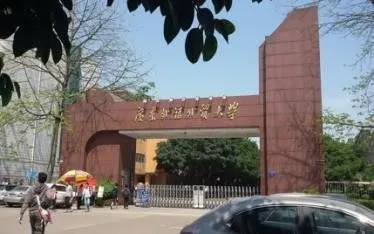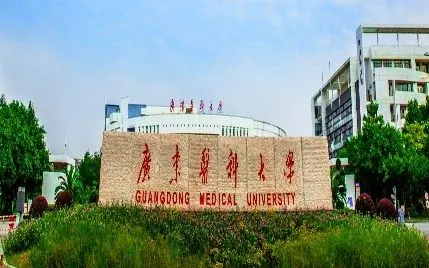
Guangdong Medical University
University · Zhanjiang
Language courses · Bachelor's Degree · Master's Degree
南方医科大学
Southern Medical University accepts international students on programmes in the following fields: business, engineering, medicine, education, arts. Choose the level and programme that suit your goals.
Chinese language study at the university — from a few weeks to a year or longer. Suitable for those starting from scratch or preparing for the HSK before entering a main programme.
self-funded · language programme
The first level of higher education: usually four years of study, specialised subjects, internships and a graduation thesis. It opens the way to working in your field and to a master's degree.
self-funded
Advanced study after a bachelor's degree: research, applied projects and internships. It helps you become an expert in your chosen field and broaden your career opportunities.
self-funded
Southern Medical University is located in Guangzhou. Nihao Study consultants keep track of the deadlines and admission requirements of this university, and you can always check the most accurate and up-to-date information on its official website. In university rankings, it is ranked 77 in China and 1242 worldwide.
Come for a face-to-face meeting: together we will go through the requirements, deadlines, documents and study options that suit you.

At the meeting we will look at your situation, tell you which documents to prepare and by when, talk about possible programmes and help you decide on the next step.
Southern Medical University (SMU, 南方医科大学) is a public medical university under provincial administration in Guangdong, located in Guangzhou. In pinyin the full name is Nánfāng Yīkē Dàxué. Chinese students commonly shorten it to 南医大 (Nányīdà), but the same abbreviation is used for Nanjing Medical University at the other end of the country. Do not confuse SMU with Guangzhou Medical University: it is a separate institution, although the names sound similar in Russian.
SMU's main campus address is No. 1023 to 1063, Shatai South Road, Baiyun District, Guangzhou, postcode 510515. Shunde, the university's second campus, is in the neighbouring city of Foshan. The nearest station to the main campus is Jingxi Nanfang Yiyuan (京溪南方医院) on Guangzhou Metro Line 3.
On this page Nihao Study has gathered information for 2026 applicants: the English-taught Clinical Medicine programme (equivalent to MBBS) and Chinese-taught bachelor's programmes, rankings, history, clinical facilities, scholarships, accommodation and the application procedure.
| Item | Figure | Notes |
|---|---|---|
| Year founded | 1951 | Medical education has been offered here for more than 70 years |
| Transfer to Guangdong province | 2004 | The university ceased to be a military institution and became a civilian public university |
| Campuses | 2 | Baiyun (Guangzhou) and Shunde (Foshan) |
| Bachelor's and master's students | 14,172 and 7,678 | One of the large medical universities in Guangdong |
| International students | 1 017 | Teaching in English and Chinese |
| Schools and faculties | 23 | 36 bachelor's programmes |
| University hospitals | 13 | Around 16.45 million patients a year; over 12,600 beds |
| Academic supervisors | 703 doctoral, 1,139 master's | Including 4 academicians of the Chinese Academy of Sciences and the Chinese Academy of Engineering |
The university traces its history back to October 1951, when a PLA (People's Liberation Army) medical school was opened in north-east China. In 1970 the school moved to Guangzhou, and in 1975 it was renamed the First Military Medical University of the PLA. In 1979 the State Council of the PRC added it to the list of national key universities, placing it on a par with the country's leading medical schools.
The official ceremony at which the First Military Medical University was transferred from army control to the Guangdong provincial government took place on 24 August 2004. The university thus became a civilian public university and received its current name, Southern Medical University. That same year it was authorised to run an eight-year medical programme; there are few such programmes in the country.
No, it is not. When SMU came under provincial administration, it was not included in the national Project 985 or Project 211, although two military medical universities of similar origin, which later became the Naval and Air Force medical universities of China, did make the 211 list. Within Guangdong itself, however, SMU is regarded as a key provincial-level university. Southern Medical University is also absent from the official list of the second round of Double First-Class in 2022.
| Ranking | Position and year | What you need to know |
|---|---|---|
| THE World University Rankings | 251–300, 2026 | Medical and Health: 176–200 |
| THE Impact Rankings | 24th, 2026 | In the Good Health and Wellbeing category |
| ARWU, ShanghaiRanking | 201–300, 2025 | Overall world ranking |
| GRAS by subject | Biomedical Engineering, 14th, 2025 | SMU's highest subject ranking worldwide |
| Ruankao, Chinese medical universities | 3rd, 2026 | Among all medical universities in China |
| EduRank | 2250th worldwide, 165th in China, 2026 | Oncology and Cancer Research: 80th worldwide |
| US News Best Global Universities | around 558th, 2025 | Calculated using the publication's own methodology |
SMU does not yet have its own place in the QS World University Rankings, so it is more useful to compare universities by subject rankings — there the university looks noticeably stronger than in the overall table. 16 of SMU's degree programmes, including basic medicine, have been designated national and provincial first-class programme sites. By ESI citations, SMU's clinical medicine is in the top 1 per mille, and another 8 disciplines are in the top 1 per cent.
In the 2025 ARWU subject rankings, SMU's Biomedical Engineering is 14th in the world — the university's best result across all subject rankings. Pharmacy and Pharmaceutical Sciences (51st–75th) and Nanoscience and Nanotechnology (76th–100th) show that SMU's science and engineering fields are as strong as its clinical ones. In total, 15 of the university's fields appear in the ARWU subject rankings.
SMU has had a department of forensic medicine since 2008, and in 2016 it became the basis for a separate School of Forensic Medicine. The school trains forensic medical examiners — a rare specialisation among Chinese medical universities — and is considered one of the strongest in the country for the quality of its teaching, research and practical forensic work. So SMU may appeal not only to those pursuing classic clinical training, but also to those looking for narrow expert specialities that most Chinese medical universities do not offer.
Teaching and practical training at SMU rely on 13 hospitals directly affiliated with the university, which treat around 16.45 million patients a year. The main one is Nanfang Hospital: for the university it is both the first clinical base and the first clinical school. It was founded in 1941 as a hospital of the New 4th Army and moved to Guangzhou in 1970. Today Nanfang has 3,601 beds on two sites and handles around 3.25 million visits a year. Second in importance is Zhujiang Hospital, which is also SMU's second clinical school. Both Nanfang and Zhujiang have been included in the Climbing Programme, Guangdong's provincial programme for building top-tier hospitals. The Shenzhen clinical school is in the south of the province, and the third clinical school operates at Guangdong Provincial Orthopaedic Hospital. The clinical network has 17 national-level and 60 provincial-level specialities.
SMU is not just a classic medical university: besides clinicians, it trains biomedical engineers, pharmacists, and specialists in public health and healthcare management. In total the university has 23 schools and faculties.
The core of the university is formed by three clinical schools — at Nanfang Hospital, Zhujiang Hospital and Guangdong Orthopaedic Hospital — the Shenzhen clinical school, and the schools of basic medicine, traditional Chinese medicine, forensic medicine, stomatology, anaesthesiology, paediatrics and rehabilitation medicine.
This group includes the schools of biomedical engineering, pharmaceutical sciences, public health, nursing, laboratory medicine and biotechnology, and healthcare management. Humanities and language training is provided by the School of Foreign Languages and the School of International Education, which also prepares international students for the start of their main programme.
Rooms are equipped with air conditioning, an en-suite bathroom with shower, a water heater, beds, a desk, a wardrobe and a TV; every building has a shared kitchen and laundry. The price depends on the room type: superior single rooms are the most expensive and are booked in advance, while four-person rooms are cheaper because more students share them. Check current prices on SMU's official website.
| Room type | Feature |
|---|---|
| Shared room in the international block | The cheapest option |
| Standard double | The most popular choice |
| Superior single | Must be booked in advance |
SMU is part of the Chinese government scholarship system: for Chinese Government Scholarship applications the university has agency number 12121. Besides the national CSC scholarship, there is also the Guangdong Provincial Government Scholarship. Going by information from several universities in the province, it is available to bachelor's, master's and doctoral students, and the amount depends on the level of study. Check whether there is a quota for your specific programme and year before applying.
SMU also has its own scholarships for students with excellent academic results.
The main and south campuses in Guangzhou together cover roughly 1 square kilometre. The third campus, Shunde, was added later and is in neighbouring Foshan. At the start of 2021 the library's collection numbered around 4.77 million items, including over 1.7 million printed books and more than 3,000 print periodicals; readers have access to the SCIE, Science, Nature and JAMA databases. For sport, the campus has an artificial-turf football pitch, a standard-size indoor swimming pool and sports grounds where international and Chinese students train on ordinary days.
The easiest way to reach the main campus is by metro: Jingxi Nanfang Yiyuan station, Line 3. From there you can walk to both the teaching buildings and the international students' dormitory.
| University (Chinese name) | City, type of university | How it differs |
|---|---|---|
| Southern Medical University, SMU, 南方医科大学 | Guangzhou; public medical university | Formerly a military university; 13 hospitals in its clinical network |
| Guangzhou Medical University, 广州医科大学 | Guangzhou; city (municipal) medical university | Founded in 1958; known for respiratory research |
| Southern University of Science and Technology, SUSTech, 南方科技大学 | Shenzhen; research university | Founded in 2010, not a medical university; similar English name |
| Guangdong Medical University, 广东医科大学 | Zhanjiang and Dongguan; provincial medical university | Similar-sounding name but a different city — do not confuse it with SMU or Guangzhou Medical |
The main confusion arises because several medical universities with similar names operate in Guangzhou and across Guangdong province. When applying, check not just the word medical but the university's full English name and city.
The standard Russian name is a direct translation of "Southern Medical University, Guangzhou"; garbled or reordered variants also turn up in searches but are incorrect. Southern Medical University is the official international name. SMU is the official abbreviation, but the same abbreviation is used by Southern Methodist University (USA), Singapore Management University (Singapore) and Shanghai Maritime University (Shanghai), so in correspondence it is safer to write the full name or give the city. 南医大 (Nányīdà) is a colloquial Chinese abbreviation shared with Nanjing Medical University. 南方医科大学 (Nánfāng Yīkē Dàxué) is the original Chinese name.
SMU stands for Southern Medical University. It is a public medical university of Guangdong province, located in Guangzhou. It was founded in 1951 as a military medical school and became civilian in 2004; its history is described in detail in the section above.
Yes. The main programme for international students, Clinical Medicine, is taught in English and lasts 6 years, including a year of internship. Most other bachelor's programmes are taught in Chinese.
No knowledge of Chinese is required for admission to the English-taught Clinical Medicine programme. Chinese-taught bachelor's and master's programmes require an HSK certificate; check the exact level for your chosen programme when you apply.
No — at national level the university is not on any of these three lists (see the history section for details). However, back in 1979 SMU was granted national key university status, it remains a key university of Guangdong province today, and its clinical medicine is in the top 1 per mille of the global ESI ranking.
The price depends on the room type: shared rooms in the international block are the cheapest, superior single rooms the most expensive. Check the current year's terms on the university's official website.
SMU has its own agency number for Chinese Government Scholarship applications (see the scholarships section for details). However, the quota, type of coverage and availability of the scholarship for your programme and year need to be confirmed before you apply.
Yes. The university has 13 directly affiliated hospitals with more than 12,600 beds in total; among them are the flagship Nanfang and Zhujiang hospitals, both selected for the Guangdong provincial programme for developing top-tier hospitals. Details are in the section on the clinical network.
The main campus address is No. 1023–1063, Shatai South Road, Baiyun District, Guangzhou, postcode 510515. The nearest station is Jingxi Nanfang Yiyuan on Guangzhou Metro Line 3.
SMU is a former military university that only came under provincial administration in 2004. Guangzhou Medical University, by contrast, was a city university from the start: it was founded in 1958 and is known for respiratory research. Guangdong Medical University is not in Guangzhou at all, but in other cities — Zhanjiang and Dongguan. A full comparison is in the table above.
Usually you need an international passport valid for at least 1 year, a school-leaving certificate and transcript with English translation, medical certificates, a police clearance certificate and proof of financial means.
Guangzhou (广州) is the capital of Guangdong Province and the trade gateway of southern China. The large-scale Canton Fair is held here twice a year. Cantonese cuisine originates here, and the city remains a centre of international business.
Here it is easy to combine study with work experience: thousands of export companies operate in the city. The metro has 16 lines, the environment is multinational, and the subtropical climate allows you to play sport all year round. Parents will care about other things: the city is safe, Hong Kong is 1 hour away by high-speed train, there are international hospitals and schools and direct international flights, and the campuses are well run, with security on duty around the clock and dedicated services to help international students.
You work with Nihao Study specialists. They will help you put together a portfolio and a set of documents, draw up a study plan and choose a university or college and a specialty that genuinely interest you.
We take care of every stage of admission, from choosing to enrolment
We will gather, prepare, certify and send your documents to the institution
We will show the admissions committee your strengths
We run training sessions and courses so you can prepare with more confidence
We will help you settle in at the start of your studies and keep moving forward
Nihao Study specialists select universities and colleges that match the applicant's goals and means. We make sure the teachers are practitioners and that the knowledge will be useful in your profession.
We examine curricula, talk to students and teachers and look at which specialties employers need, and use this information to select options for the applicant.
Advisers guide the applicant from the first consultation to enrolment, help build a plan and spot mistakes in time that could get in the way.
The cost of our support depends on the programme and the partner university; you'll get an exact quote after a free consultation.
Get a quoteA free 15-minute consultation: together we will choose a university or college and a programme that suit your goals and budget.
Apply with peace of mind: we handle the documents, deadlines and correspondence with admissions committees, and you save time and energy.
Don't want to wait for a call? Message us in the chat.
Message us in chat University · Zhanjiang
Language courses · Bachelor's Degree · Master's Degree
University · Guangzhou
Language courses · Bachelor's Degree · Master's Degree