Guangdong Medical University
University · Zhanjiang
Language courses · Bachelor's Degree · Master's Degree
SCNU · 华南师范大学
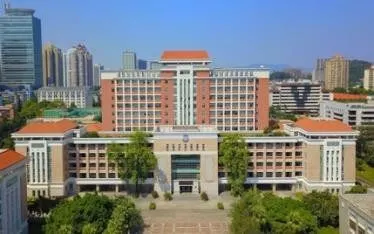
South China Normal University accepts international students on programmes in the following fields: engineering, education, agriculture, natural sciences. Choose the level and programme that suit your goals.
Chinese language study at the university — from a few weeks to a year or longer. Suitable for those starting from scratch or preparing for the HSK before entering a main programme.
self-funded · language programme
Cost: 17 000 ¥/year
The first level of higher education: usually four years of study, specialised subjects, internships and a graduation thesis. It opens the way to working in your field and to a master's degree.
self-funded
Cost: 21 000 ¥/year
Advanced study after a bachelor's degree: research, applied projects and internships. It helps you become an expert in your chosen field and broaden your career opportunities.
self-funded
Cost: 29 000 ¥/year
South China Normal University is located in Guangzhou. Nihao Study consultants keep track of the deadlines and admission requirements of this university, and you can always check the most accurate and up-to-date information on its official website. In university rankings, it is ranked 64 in China and 679 worldwide.
Come for a face-to-face meeting: together we will go through the requirements, deadlines, documents and study options that suit you.

At the meeting we will look at your situation, tell you which documents to prepare and by when, talk about possible programmes and help you decide on the next step.
South China Normal University (SCNU, 华南师范大学) is a public teacher-training university in Guangdong Province, with its main campus in Guangzhou. Russian-language sources and searches render the name in several ways, including a reversed word order and an incorrect literal calque of the word ‘Normal’. The full Chinese name is pronounced Huánán Shīfàn Dàxué, and in conversation the university is known for short as 华师 (Huáshī).
The university was founded in 1933: it began as a teacher-training institution and has grown into a comprehensive research university. Its statuses are confirmed: SCNU was included in Project 211 in 1996, and since 2017 it has taken part in the national Double First-Class programme. Precision matters here: physics is SCNU's designated world-class discipline, which does not mean that all of the university's fields have that status.
On this page Nihao Study has gathered what matters to a 2026 applicant: verified statuses, rankings, admission conditions, scholarships and how SCNU differs from similarly named universities in Guangzhou.

The university publishes its statistics with a note that the data are current as of March 2026. These are the figures to go by: outdated reference books still list three campuses and a smaller student body.
| Indicator | Confirmed data |
|---|---|
| Status | public university; Project 211 and Double First-Class; jointly supported by the province and the Ministry of Education |
| Campuses | 4 campuses in 3 cities of the province, with a total area of more than 355 hectares |
| Students | 51,966 students, of whom 49,270 study full-time |
| Programmes | 97 bachelor's programmes; first-level disciplines: 32 for master's and 20 for doctoral degrees |
| Staff | about 5,400 staff, of whom roughly 2,700 are full-time teaching staff |
| Research | 15 disciplines are in the ESI top 1 per cent, 8 of them in the top 5 per mille |
Within the overall total, 224 international students on degree programmes are listed separately: 112 bachelor's students, 76 master's students and 36 doctoral students. The university also reports that, once language, short-term and exchange programmes are added, more than 1,000 international students are studying there at any one time. The figures refer to different groups, so they do not contradict each other.
Its educational tradition goes back to the Gezhi Academy, opened in 1888, but the university itself counts 1933 as its founding year. At that time it was the teachers' college of the provincial Xiangqin University. Because of these two dates, publications may refer both to a tradition of more than a century and to a history of over ninety years.
In 1951 three institutions were merged to form the new South China Teachers College: the education department of South China Union University, Guangdong College of Humanities, and the teachers' college of National Sun Yat-sen University. In 1952–1953 a number of education, geography and language departments from other universities were added to the college, and it settled in Shipai.
The name then changed several more times: in 1970 the institution was renamed Guangdong Teachers College, in 1977 its former name was restored, and in 1982 it received its current English name, South China Normal University. The university stresses that its motto preserves continuity: it speaks of hard work, rigorous study, the pursuit of truth and the teacher's personal example. Over its history SCNU has produced more than 900,000 teachers and specialists in other professions.
Each international ranking measures something different, so neither a position nor a band should be taken as a universal measure of quality. THE looks at teaching, research and international outlook; ARWU relies more heavily on research achievements; CWUR has its own set of indicators; EduRank counts publications, citations and recognition.
| Ranking | Rank and edition | What it means |
|---|---|---|
| THE World University Rankings | 601–800 band, 2026 edition | SCNU is included in THE's main world ranking |
| THE Asia University Rankings | 175th, 2026 edition | a separate table for Asian universities |
| ARWU | 401–500 band, 2025 edition | the university's research publications are highly visible |
| CWUR | 496th in the world, 87th in China (2026 edition) | a position in the top 2.4 per cent of the CWUR table |
| EduRank | 972nd in the world, 68th in China (2026 edition) | a bibliometric ranking broken down by subject |
| QS | subject: 501–550 band; Asia: 498th according to the published profile | the subject and regional breakdowns are more useful |
The takeaway for applicants: SCNU is not an all-round technical giant; its strengths are education, psychology, physics, optics and related research. The university itself reports that in the Ministry of Education's discipline evaluation psychology was rated A+, and four disciplines were placed in category A.
SCNU remains a teacher-training university by specialisation, but it trains more than just schoolteachers. Its structure includes psychology, languages, education and educational administration, educational technology, as well as the humanities and social sciences. The university contributes to training teachers for Guangdong, Hong Kong and Macao: according to its figures, more than 70 per cent of Macao's teachers — in secondary schools, primary schools and kindergartens — studied at SCNU.
For an international student, this means an environment where Chinese as a foreign language is studied not only through language practice but also through teaching methodology. In 2026 the master's programme in International Chinese Language Education lasts two years, whereas the other master's programmes open to international students usually last three years.
In the national Double First-Class programme SCNU is represented by physics, while optics has the status of a national key discipline. This base underpins work in photonics, materials science, quantum science and physics education. The university takes part in the international LHCb, BESIII, STAR and CMS collaborations and is developing a joint quantum matter laboratory with universities in Hong Kong.
Guangzhou gives access to the educational and technological environment of the Greater Bay Area. According to SCNU, it has more than 100 partner universities abroad, and its students come from more than 110 countries and regions. Another fact: the institute set up together with the University of Aberdeen was the first joint institute of its kind in China to open a bachelor's programme in artificial intelligence.
According to the current Chinese-language profile, the university has 35 schools plus 9 research-oriented institutes or centres; its academic system covers 12 subject categories. Applicants will find it easier to navigate by study pathway rather than by administrative names:
When applying, check the separate list of programmes for international students, the language of instruction and the campus.
The university reports that in 2026 international students are admitted to four bachelor's programmes: Chinese language, English language, education and human resource management. The list may change every year, so the overall list of 97 majors does not match what is actually available to international applicants.
| Level | What is available | Key requirements |
|---|---|---|
| Bachelor's Degree | Chinese language, education, human resource management, English language | HSK 4 with a score of at least 180; for the English programme, IELTS 5.5 or TOEFL 75 or higher in addition |
| Master's Degree | 12 programmes, including journalism, biology, ecology, environmental science, educational technology, management and International Chinese Language Education | HSK 5 (score of 180 or higher), bachelor's degree, study plan, two recommendation letters |
| Chinese language courses | general course for a year, a semester or a summer month; intensive course for a semester | HSK not required; your group level is set by a placement test |
The bachelor's degree takes four years. On all programmes except Chinese language, the first year is preparatory, followed by three years of specialised study: students improve their Chinese and adjust to university study, and then move on to their school based on academic performance, a language test and an interview. In 2026 applications for bachelor's and master's programmes were accepted from 1 January to 10 June; classes began in early September.
The language courses in Guangzhou are also open to complete beginners. The general programme has 20 contact hours a week, the intensive one 30. The university expects one intensive semester to bring a student to roughly HSK 3 or 4, and two semesters to HSK 5 with a score of 180 or higher. HSK preparation, basic Cantonese and Chinese culture are offered as free electives.
For degree programmes, medical insurance can be chosen from several options. The application fee is non-refundable.
SCNU has four campuses: two in Guangzhou — Shipai and University Town — plus Nanhai in Foshan and Binhai in Shanwei. The International Culture School and most of the language programmes are at Shipai. It is best to find out the campus of your programme in advance: moving between cities is not a short walk across a single site.
| Option | What to check |
|---|---|
| Single room | there are fewer of these rooms — apply early |
| Twin room | bunk bed |
| Off-campus housing | budget in advance for the deposit, utility bills and commuting |
On-campus dormitory places are limited and are allocated in order of application; the university helps with the room application. To be safe, it is worth having a back-up plan — renting accommodation off campus.
The main route to government funding is the CSC scholarship. According to SCNU, the full scholarship is available to candidates under 25 with HSK 4 and a score above 180; Type A applications are submitted through the authorised agency in the applicant's own country, usually from January to early April. For master's programmes the age limit is 35, and the minimum language level is HSK 5 with a score above 180.
Scholarships are awarded competitively. Do not confuse admission to the university with an application for funding: the procedures are linked, but they are not the same thing.
The main address of the Shipai campus is No. 55, West Zhongshan Avenue, Tianhe District, Guangzhou, postcode 510631. The University Town campus is at No. 378, Waihuan West Road, Panyu District. Near Shipai is Huashi metro station — named after the colloquial short form of the university's name; today you can change there between Lines 3 and 11.
On campus there are libraries, teaching buildings, canteens, shops, sports grounds and medical centres. Language programme students can choose electives: business and travel Chinese, HSK preparation, basic Cantonese and Chinese culture.
Go by the international admissions list for your specific year, not by the general list of faculties. In 2026 four majors are open at bachelor's level, and twelve programmes have been announced for master's.
For a bachelor's degree you will need a school-leaving certificate, a full transcript and HSK 4 with a score of 180 or higher. The English-taught programme requires IELTS 5.5, TOEFL 75 or higher, or a recognised equivalent. Master's applicants need a bachelor's degree, HSK 5 with a score of 180 or higher, a study plan of about 800 words and two recommendation letters.
In line with the programme's requirements, gather your passport, diploma or certificate of expected graduation, full transcript, language certificate, photo, study plan and recommendation letters. Documents not in Chinese or English must be accompanied by a notarised translation. In 2026 bachelor's applicants were also required to submit CSCA results in the subjects specified for their chosen major.
Applications are submitted online; files for the university must be smaller than 1 MB. Do not leave your application until the last day, especially if you are counting on a dormitory place or a scholarship.
The preliminary review takes about one to two weeks. Once the fee is paid, an interview is scheduled; after it, preparing the admission letter and the JW202 form takes roughly three to four weeks.
With the admission letter and the JW202 form, the student applies for an X1 visa, and after arrival registers and obtains a residence permit. Before you fly, make sure you have an address for registration, the originals of your diploma and HSK certificate, proof of payment, insurance and an accommodation booking.
In Russian, the names of three universities look almost identical. All of them are in the same region, but each has its own profile and its own English abbreviation.
| University and Chinese name | Type | Main focus |
|---|---|---|
| South China Normal University, SCNU, 华南师范大学 | research university with a teacher-education profile | psychology, education, languages, physics |
| South China University of Technology, SCUT, 华南理工大学 | research university with a technology profile | IT, engineering, manufacturing |
| South China Agricultural University, SCAU, 华南农业大学 | comprehensive agricultural university | biology, agriculture, food science |
If you are interested in education, psychology or teaching Chinese, SCNU is the place to start. If you need classic engineering, it is more often compared with SCUT, and for agrobiology and food science with SCAU. There is also Guangzhou University (GU): it is likewise located in University Town, but its name does not contain ‘South China’, and it is not another translation of SCNU's name.
The standard Russian form is the one meaning ‘South China Pedagogical University’. The spelling with a capital letter on ‘China’ appears in catalogues, but that is a matter of style, not a different name. The rendering that translates ‘Normal’ literally is a mistake, and ‘Pedagogical University of South China’ is simply the English name with the words rearranged. South China Normal University is the official international name, and SCNU is the abbreviation used in rankings and documents. The full Chinese name 华南师范大学 is read as Huánán Shīfàn Dàxué, and 华师 (Huáshī) is its colloquial short form.
SCNU is short for South China Normal University. Its main campuses are in Guangzhou, with one more campus each in Foshan and Shanwei. The administrative address of the Shipai campus is 55 West Zhongshan Avenue, Tianhe District, Guangzhou.
Yes. SCNU is a Project 211 university and takes part in Double First-Class; physics is listed as its world-class discipline. SCNU is not, however, a Project 985 university.
The university has not announced any Russian-taught programmes. Most programmes are taught in Chinese; the bachelor's programme in English language is taught in Chinese and English and requires IELTS 5.5 or TOEFL 75 or higher.
A bachelor's programme usually requires HSK 4 with a score of 180 or higher, and a master's programme HSK 5 with a score of 180 or higher. You can apply for non-degree language courses without HSK: your level will be determined by a placement test.
The price depends on the room type — single or double. Current rates are published on the university's official website.
Yes: SCNU announces the full Chinese Government Scholarship for eligible candidates. It can cover tuition, accommodation and insurance and include a monthly stipend, but selection is competitive. Keep an eye on the deadlines of the agency that accepts applications.
The language course prospectus mentions HSK preparation, but it is not a register of test centres, and BCT is not mentioned there at all. Before registering, check the venue and exam date in the official testing system.
Head for Huashi station, which is next to the campus, and then walk to 55 West Zhongshan Avenue.
SCNU's profile is education, psychology, languages and physics. SCUT is a technology and engineering university, while SCAU specialises in agricultural and biological sciences. Sharing the words ‘South China’ in their English names does not make these universities branches of one institution.
You will need a passport, a school-leaving certificate or certificate of expected graduation, a full transcript, a Chinese or English language certificate, CSCA results in the required subjects, a study plan, two recommendation letters and a photo. Foreign documents must be accompanied by a notarised translation into Chinese or English.
Guangzhou (广州) is the capital of Guangdong Province and the trade gateway of southern China. The large-scale Canton Fair is held here twice a year. Cantonese cuisine originates here, and the city remains a centre of international business.
Here it is easy to combine study with work experience: thousands of export companies operate in the city. The metro has 16 lines, the environment is multinational, and the subtropical climate allows you to play sport all year round. Parents will care about other things: the city is safe, Hong Kong is 1 hour away by high-speed train, there are international hospitals and schools and direct international flights, and the campuses are well run, with security on duty around the clock and dedicated services to help international students.
You work with Nihao Study specialists. They will help you put together a portfolio and a set of documents, draw up a study plan and choose a university or college and a specialty that genuinely interest you.
We take care of every stage of admission, from choosing to enrolment
We will gather, prepare, certify and send your documents to the institution
We will show the admissions committee your strengths
We run training sessions and courses so you can prepare with more confidence
We will help you settle in at the start of your studies and keep moving forward
Nihao Study specialists select universities and colleges that match the applicant's goals and means. We make sure the teachers are practitioners and that the knowledge will be useful in your profession.
We examine curricula, talk to students and teachers and look at which specialties employers need, and use this information to select options for the applicant.
Advisers guide the applicant from the first consultation to enrolment, help build a plan and spot mistakes in time that could get in the way.
The cost of our support depends on the programme and the partner university; you'll get an exact quote after a free consultation.
Get a quoteA free 15-minute consultation: together we will choose a university or college and a programme that suit your goals and budget.
Apply with peace of mind: we handle the documents, deadlines and correspondence with admissions committees, and you save time and energy.
Don't want to wait for a call? Message us in the chat.
Message us in chat University · Zhanjiang
Language courses · Bachelor's Degree · Master's Degree
University · Guangzhou
Language courses · Bachelor's Degree · Master's Degree