Guangdong Medical University
University · Zhanjiang
Language courses · Bachelor's Degree · Master's Degree
SCAU · 华南农业大学
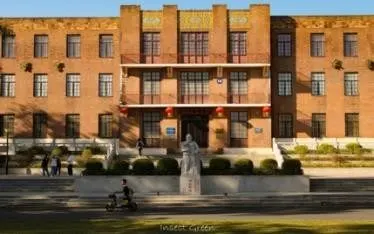
South China Agricultural University accepts international students on programmes in the following fields: engineering, education, humanities, natural sciences. Choose the level and programme that suit your goals.
Chinese language study at the university — from a few weeks to a year or longer. Suitable for those starting from scratch or preparing for the HSK before entering a main programme.
self-funded · language programme
The first level of higher education: usually four years of study, specialised subjects, internships and a graduation thesis. It opens the way to working in your field and to a master's degree.
self-funded
Advanced study after a bachelor's degree: research, applied projects and internships. It helps you become an expert in your chosen field and broaden your career opportunities.
self-funded
South China Agricultural University is located in Guangzhou. Nihao Study consultants keep track of the deadlines and admission requirements of this university, and you can always check the most accurate and up-to-date information on its official website. In university rankings, it is ranked 143 in China and 1193 worldwide.
Come for a face-to-face meeting: together we will go through the requirements, deadlines, documents and study options that suit you.

At the meeting we will look at your situation, tell you which documents to prepare and by when, talk about possible programmes and help you decide on the next step.
South China Agricultural University (SCAU, 华南农业大学) is a public research university in Guangzhou, the capital of Guangdong Province. Its official short form is 华南农大, and in conversation people simply say 华农 (Huánóng). The full name in pinyin is Huánán Nóngyè Dàxué.
SCAU's core profile is agricultural and biological sciences, but it also develops engineering, IT, economics, law, the humanities and creative fields. The university entered the second round of China's Double First-Class programme, with crop science named as its world-class discipline. One nuance matters for applicants: SCAU took part in a joint 211 programme run by Guangdong and the Ministry of Agriculture, but it is not on the national list of Project 211 universities. Nor does it have 985 or C9 status.
Nihao Study has prepared an overview of SCAU for 2026 applicants: status and rankings, programmes, HSK requirements, accommodation, scholarships and how it differs from Guangzhou universities with similar names.

| Item | Value |
|---|---|
| History dates from | 1909 |
| Campus area | 550.7 ha; floor area of buildings over 1.40 million m² |
| Students | over 50,000, including bachelor's students (over 38,000) and master's and doctoral students (13,000) |
| Staff | 3380, including 2360 teaching staff |
| Structure | 25 colleges and units |
According to the university's profile, SCAU has 62 doctoral programmes, 139 master's programmes and 98 bachelor's programmes. These figures describe the university's academic capacity as a whole. International applicants should go by the separate catalogue for international students: the range of available programmes and languages of instruction there may be narrower.
The university began with the Guangdong Agricultural Experiment Station and its training centre, founded in 1909. In 1952, during the reorganisation of higher education, South China Agricultural College was created. Its core was formed by the agricultural departments of Lingnan University and National Sun Yat-sen University, joined by the relevant departments of Guangxi University.
The name of the new college was written in Mao Zedong's own hand, and the institution reported to the Ministry of Agriculture. The college received its current name — South China Agricultural University — in 1984, and in 2000 the university was transferred to the administration of Guangdong province.
In 2022 SCAU was included in the second Double First-Class list for the discipline of crop science. Today this status reflects the university's position more accurately than the old 211 and 985 labels.
The university itself uses the wording '211 Project university sponsored by Guangdong Province and the Ministry of Agriculture'. This refers to the joint development of the university by Guangdong province and the agriculture ministry. The Ministry of Education has also referred to SCAU in the same context as a university jointly developed under the 211 programme.
However, the national list of 115 Project 211 members names South China University of Technology, Sun Yat-sen University, South China Normal University and Jinan University for Guangzhou, and SCAU is not on it. So on an application form or in a consultation, the correct description is: a public key university, a member of Double First-Class and of the provincial 211 programme; it does not belong to the national 211, nor to 985 or the C9.
SCAU's rankings are more useful when viewed by subject. The university scores highest in veterinary science, agricultural sciences and food technology, while its overall world positions depend largely on the methodology of each ranking.
| Ranking | Position | Year |
|---|---|---|
| ARWU | 301 to 400 worldwide | 2025 |
| QS Agriculture and Forestry | 28th | 2026 |
| ShanghaiRanking Veterinary Sciences | 8th | 2025 |
| ShanghaiRanking Agricultural Sciences | 9th | 2025 |
| ShanghaiRanking Food Science and Technology | 19th | 2025 |
| CWUR | 502nd in the world, 89th in China | 2026 |
| EduRank | 1140th in the world, 81st in China | 2026 |
SCAU has a profile in Times Higher Education. According to the aggregator UniversityGuru, the university is ranked 540th in the 2025 U.S. News publication.
Crop science is SCAU's discipline on the Double First-Class list. The international bachelor's catalogue includes agronomy, tea science, horticulture, biological breeding, and seed science and engineering.
In the 2025 ShanghaiRanking subject rankings, SCAU's veterinary sciences came 8th. This cluster includes veterinary medicine, veterinary pharmacy, animal science and smart animal husbandry, as well as aquaculture.
In the 2025 ShanghaiRanking subject rankings, SCAU's food science and technology is in 19th place. The 2026 catalogue for international students includes AI and big data, robotics, GIS, agricultural mechanisation, environmental engineering, bioengineering, food engineering and food safety.
The university reports that as of October 2024, 13 of its disciplines were in the ESI top 1%, and 2 in the top 1‰. Such indicators confirm the university's research specialisation.
SCAU makes the most sense for someone who wants to combine fundamental biology with an applied task. The agricultural profile here is broader than classic agronomy: it can be combined with agribusiness management, food safety, environmental monitoring, automation or data analysis. This path suits those who understand in advance not only the name of the specialism but also what they will be working with: plants, animals, food production, natural systems, a robotic farm or a supply chain.
When choosing a programme, it is sensible to go from the general to the specific: first the research cluster, then the school and only then the specific specialism. Those aiming for crop science should compare breeding, seed science and agronomy. Those who will work with animals need to distinguish between veterinary pharmacy, animal science and veterinary medicine. In the food field, bioengineering, packaging, safety control, and the study of composition and technology differ from one another. These tracks partly overlap but lead to different curricula and different laboratory work.
If SCAU caught your eye only because of the word agricultural in its name, it is worth looking at its engineering and digital units too. The university also suits an interdisciplinary route when the project topic involves smart agriculture, computer vision, automation, GIS or big data analysis. An international candidate should find out in advance whether the desired field is open at the chosen level, who leads the research group and which language the teaching is in.
SCAU's academic structure can be roughly divided into four groups:
The full international bachelor's catalogue for 2026 includes 95 specialisms spread across 21 academic units. SCAU's International College issued the master's and doctoral catalogues as separate documents on 18 January 2026.
| Level | Language and duration | Main requirement |
|---|---|---|
| Bachelor's Degree | international students are taught in Chinese | HSK 4 or higher |
| Master's Degree | mainly Chinese; the Plant Protection programme is taught separately in English | for the Chinese programme — HSK 4; for the English one — IELTS 6.0 or TOEFL iBT 80 |
| Doctoral (PhD) Programmes | Chinese or English — according to the catalogue and subject to agreement | master's degree, language certificate, research proposal and recommendation letters |
| Chinese language courses in Guangzhou | language training by semester | the International College confirms the conditions before you apply |
The 2025 provincial scholarship rules state explicitly that all bachelor's programmes for international students are taught in Chinese, while among master's programmes the professional master's in Plant Protection is offered in English. SCAU has no programmes taught in Russian.
The language threshold is best seen as a minimum entry condition, not a guarantee that studying will be easy. On agricultural and biological programmes you will have to master terminology, follow laboratory instructions, discuss methodology and write reports. So before applying it is useful to assess not only your certificate level but also how fluently you read texts in your future field.
On master's and doctoral programmes the language of instruction depends largely on the supervisor and the research group. Even when the catalogue allows English, some administrative communication and everyday life on campus will still be in Chinese. In practice, it helps to ask the international office to confirm the language of the programme you want, and to ask your future supervisor which language seminars, lab meetings and thesis supervision are conducted in.
SCAU's fees vary by level and field: they are set separately for art, the English-taught Plant Protection programme, doctoral programmes and Chinese language courses. Check the current tuition fee on the university's official website (scau.edu.cn) or in the current intake materials. Note that the registration fee and compulsory insurance are paid separately — on top of tuition and accommodation.
International students are offered double rooms with air conditioning, hot and cold water, a private bathroom, a wardrobe, a desk, a chair and a network socket. Check the current cost of accommodation with the university.
SCAU admits international students on the Chinese Government Scholarship. In the regulations the university published for master's and doctoral students, the full scholarship covered tuition, the registration fee, a dormitory place, medical insurance and a monthly stipend; international flights were not included. Conditions and deadlines change from round to round, so make sure SCAU is on the current list of universities accepting CSC scholarship holders.
Guangdong province has its own scholarship for international students enrolling for the first time. Under the 2025 rules, its amount depended on the level — bachelor's, master's or doctoral. It was paid once and awarded to an already enrolled student who, as a self-funded student, had paid for tuition, accommodation and insurance.
Chinese-taught study on a CSC scholarship requires a valid HSK 4 certificate, and master's and doctoral applicants also need a research proposal and two academic recommendation letters.
The university's main address is 483 Wushan Road, Tianhe District, Guangzhou, 510642, China. The nearest metro station is Wushan: its Exit A is by the south-western gate of the campus.
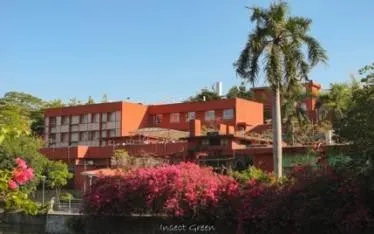
The campus is famous for its greenery, lakes and flowers blooming in different seasons. According to the library system, its collection amounts to 11.2639 million items, with a floor area of 33,700 m² and 2529 reader seats. The grounds also have stadiums and sports grounds, canteens, a medical centre and student services. According to the International College, about 200 international students from 65 countries study at SCAU.
| University | Type | Main focus |
|---|---|---|
| South China Agricultural University, SCAU, 华南农业大学 | public, Double First-Class | agricultural sciences, veterinary science and biology |
| South China University of Technology, SCUT, 华南理工大学 | public, 985, 211, Double First-Class | engineering, technology and architecture |
| South China Normal University, SCNU, 华南师范大学 | public, Project 211, Double First-Class | education, psychology and the humanities |
SCAU and SCUT are the pair most often confused: the abbreviations differ by just two letters, but they are different universities. Go by the Chinese name: SCAU's contains 农业, 'agriculture', while SCUT's contains 理工, which points to a science and engineering profile.
The standard Russian form is a direct equivalent of 'South China Agricultural University'. Simplified or unhyphenated spellings also turn up in search results, and a Russian rendering of 'Agricultural University of South China' is an understandable loan translation but not the university's name. The official English name is South China Agricultural University, and the official abbreviation is SCAU. 华农 (Huánóng) is the colloquial Chinese short form, and 华南农业大学 (Huánán Nóngyè Dàxué) is the full Chinese name.
If you mean the national list of 115 universities, no — SCAU is not on it. The university took part in the 211 programme run jointly by Guangdong province and the Ministry of Agriculture, but that is a provincial-ministerial arrangement, not the national list.
SCAU is part of Double First-Class for the discipline of crop science. The university is not on the 985 or C9 lists.
Bachelor's programmes and Chinese-taught programmes require HSK 4 or higher. For the English-taught master's programme the university publishes its own English requirements, but HSK may still be needed — for example, for certain administrative procedures or scholarship conditions.
All international bachelor's programmes are listed as Chinese-taught. At master's level, the Plant Protection programme is offered separately in English: a candidate who is not exempt from this requirement on the basis of the language of their previous education will need IELTS 6.0 or TOEFL iBT 80. According to the university, there is no teaching in Russian.
International students are offered places in air-conditioned double rooms; the cost depends on the current year's terms, so check the final amount against the university's official information before moving in.
Yes, SCAU admits master's and doctoral students under the Chinese Government Scholarship programme. The published regulations provided a full package: insurance, a stipend, a dormitory place, tuition and the registration fee. Quotas and competition conditions change and need to be checked for the current year.
HSK is required for admission to SCAU, but the university itself has no HSK or BCT test centre. Choose a test venue through the official Chinese Test service.
The main campus is at 483 Wushan Road, Tianhe District, Guangzhou, 510642. The easiest landmark is Wushan metro station: Exit A leads to the south-western gate.
You will need an application form, passport and photos, an HSK 4 certificate, a school-leaving certificate or a certificate of expected graduation, a full transcript of grades and translations into Chinese or English. If the applicant is a minor, a document confirming a legal guardian in Guangzhou is required.
SCAU's profile is agricultural and biological. SCUT focuses mainly on engineering and technology, and SCNU on education and the humanities. The main clue is in SCAU's Chinese name — the characters 农业, meaning 'agriculture'.
Guangzhou (广州) is the capital of Guangdong Province and the trade gateway of southern China. The large-scale Canton Fair is held here twice a year. Cantonese cuisine originates here, and the city remains a centre of international business.
Here it is easy to combine study with work experience: thousands of export companies operate in the city. The metro has 16 lines, the environment is multinational, and the subtropical climate allows you to play sport all year round. Parents will care about other things: the city is safe, Hong Kong is 1 hour away by high-speed train, there are international hospitals and schools and direct international flights, and the campuses are well run, with security on duty around the clock and dedicated services to help international students.
You work with Nihao Study specialists. They will help you put together a portfolio and a set of documents, draw up a study plan and choose a university or college and a specialty that genuinely interest you.
We take care of every stage of admission, from choosing to enrolment
We will gather, prepare, certify and send your documents to the institution
We will show the admissions committee your strengths
We run training sessions and courses so you can prepare with more confidence
We will help you settle in at the start of your studies and keep moving forward
Nihao Study specialists select universities and colleges that match the applicant's goals and means. We make sure the teachers are practitioners and that the knowledge will be useful in your profession.
We examine curricula, talk to students and teachers and look at which specialties employers need, and use this information to select options for the applicant.
Advisers guide the applicant from the first consultation to enrolment, help build a plan and spot mistakes in time that could get in the way.
The cost of our support depends on the programme and the partner university; you'll get an exact quote after a free consultation.
Get a quoteA free 15-minute consultation: together we will choose a university or college and a programme that suit your goals and budget.
Apply with peace of mind: we handle the documents, deadlines and correspondence with admissions committees, and you save time and energy.
Don't want to wait for a call? Message us in the chat.
Message us in chat University · Zhanjiang
Language courses · Bachelor's Degree · Master's Degree

University · Guangzhou
Language courses · Bachelor's Degree · Master's Degree