Guangdong Medical University
University · Zhanjiang
Language courses · Bachelor's Degree · Master's Degree
SZU · 深圳大学
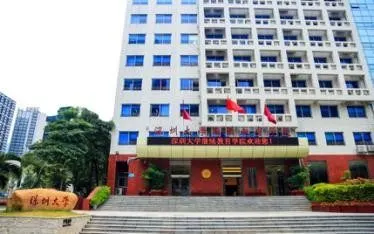
Shenzhen University accepts international students on programmes in the following fields: business, engineering, medicine, education, economics. Choose the level and programme that suit your goals.
Chinese language study at the university — from a few weeks to a year or longer. Suitable for those starting from scratch or preparing for the HSK before entering a main programme.
self-funded · language programme
The first level of higher education: usually four years of study, specialised subjects, internships and a graduation thesis. It opens the way to working in your field and to a master's degree.
self-funded
Advanced study after a bachelor's degree: research, applied projects and internships. It helps you become an expert in your chosen field and broaden your career opportunities.
self-funded
Shenzhen University is located in Shenzhen. Nihao Study consultants keep track of the deadlines and admission requirements of this university, and you can always check the most accurate and up-to-date information on its official website. In university rankings, it is ranked 1835 in China and 12394 worldwide.
Come for a face-to-face meeting: together we will go through the requirements, deadlines, documents and study options that suit you.

At the meeting we will look at your situation, tell you which documents to prepare and by when, talk about possible programmes and help you decide on the next step.
Shenzhen University (SZU, 深圳大学, Shēnzhèn Dàxué) is located in a technology hub in southern China. Students shorten the name to 深大 (Shēndà). Russian-language searches also turn up a couple of non-standard spellings of the name. The university is funded by the Shenzhen Municipal People's Government; in terms of status, it is a municipal public research university.
SZU was founded in 1983, when the young Special Economic Zone needed its own skilled workforce. Tsinghua University, Peking University and Renmin University of China supported the development of its disciplines. This start has shaped the university's character: it is younger than most of the country's well-known universities, closely tied to the city and quick to adapt its programmes to Shenzhen's economy.
In this Nihao Study overview for 2026 applicants, we have checked the official status, rankings, programmes for international students, language requirements, scholarships and dormitories.
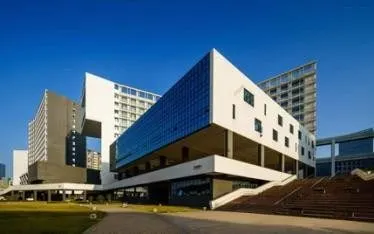
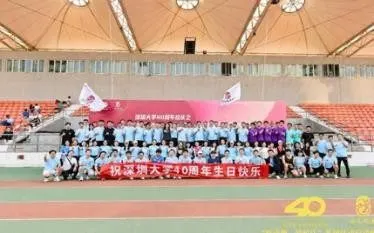
SZU is worth considering if you want to live and study in a big Chinese city, are interested in technology, computer science, electronics, materials, urban development, business or Chinese language, and are prepared to choose the language of your programme carefully. The university is not part of the national Projects 211 and 985 or the current Double First-Class list. Even so, its research performance, municipal funding and location in Nanshan are well above what the label "ordinary municipal university" usually implies.
The main trade-off is this. Formal 985 or Double First-Class status sometimes matters in selection for certain jobs and master's programmes within China, and SZU does not provide such a brand on its own. Its advantages lie elsewhere: access to Shenzhen's economy, a fast-growing research base and proximity to technology companies. Four of Tencent's founders studied at SZU, including Ma Huateng.
International students should not apply information intended for Chinese applicants to themselves. The international intake has its own catalogue, its own fees and its own rules. For example, the official list of bachelor's programmes for international students for 2026 includes Chinese-taught programmes and several English-taught ones marked with an asterisk. So you should choose from the catalogue for the specific intake, not from the general list of faculties.
According to the university, as of June 2026 it had 48,516 students in higher education programmes: 29,803 undergraduates, 16,394 master's students, 1,518 doctoral students and 801 international students. The university comprises 29 college-level units; it offers 106 bachelor's programmes, plus 3 joint ones.
| Item | Data | Notes |
|---|---|---|
| Campuses | 2 main campuses | Yuehai and Lihu, both in Nanshan District |
| Area | 2.72 square kilometres | A large site within the city |
| Staff | 4,492 people | Including 2,958 full-time teachers |
| Partners | 321 institutions in 58 countries and regions | Exchanges and joint research |
| ESI | 20 disciplines in the top 1 per cent | A strong publication base |
The university offers every level of study, up to the doctorate. According to its figures, it has 14 postdoctoral stations, 73 master's and 27 doctoral disciplines. This is what fundamentally sets SZU apart from a vocational college or a language school.
The basis is the published 2026 budget of its parent body: it includes a large share of public funding, as well as separate lines for education and research and for building a high-level university. These figures, rather than marketing language, are what allow this description to be verified.
In 2025 the university won 409 projects from the National Natural Science Foundation of China. Over 2021–2025 SZU accumulated 1,845 projects from this foundation, plus 179 projects from the National Social Science Fund. For applicants to master's or doctoral programmes, this suggests looking not only at the university's overall ranking but also at the laboratory, the supervisor and current projects.
Shenzhen University is not part of Project 985: the Ministry of Education's official list includes 39 universities, and SZU is not among them. Nor is it part of Project 211: the ministry's list of approved project universities does not include Shenzhen University.
SZU is also absent from the second-round Double First-Class list published by the Ministry of Education. The Shenzhen government website further confirms that the Southern University of Science and Technology (SUSTech) became the city's first Double First-Class university, with mathematics as the discipline under development.
Phrases such as "national first-class programme site" or provincial first-class discipline do not mean Double First-Class status. SZU has 17 provincial-level first-class disciplines and 34 national sites where first-class bachelor's programmes are being built. These are real achievements, but they should not be presented as the whole university taking part in the national project.
The rankings confirm that research at the university is growing fast, although their methodologies differ. THE World University Rankings 2026 places SZU in the 351–400 band, and ARWU 2025 in the 201–300 range. In the QS World University Rankings 2027, Shenzhen University is joint 416th.
| Ranking | Position | Edition |
|---|---|---|
| THE | 351–400 band | 2026 |
| ARWU | 201–300 range | 2025 |
| QS | 416th (joint) | 2027 |
| CWUR | 255th in the world | 2025 |
| EduRank | 701st in the world | 2026 |
The university's profile is clearer from its subject results. In the Global Ranking of Academic Subjects 2025, SZU has 38 ranked disciplines: mining is 20th, nanoscience and nanotechnology 22nd, and telecommunication engineering 25th. In addition, the university reports that chemistry, computer science, materials and engineering are in the top 0.1 per cent of ESI.
A ranking does not guarantee the quality of every individual programme. For bachelor's students, the language and curriculum matter more; for master's students, the laboratory team; for prospective doctoral students, the publications of their potential supervisor and the funding of their project.
The international bachelor's programme usually lasts 4 years; the maximum permitted length of study is 8 years. The 2026 catalogue includes law, psychology, chemistry, materials, computer science, electronic information, civil engineering, smart transport, environmental engineering, fintech, internet and new media, management, business, Chinese language and literature, and teaching Chinese.
English-taught programmes are marked with an asterisk; examples include International Business Administration, Financial Technology for the ASEAN group and International Economics and Trade. All other programmes on the list are taught in Chinese.
Master's programmes are full-time and usually last 2 to 3 years. The list for international students includes architecture, design, journalism, foreign languages, psychology, area studies, civil engineering, computer technology and management; English-taught programmes are again marked with an asterisk.
Doctoral programmes usually take 3 to 4 years, with a maximum of 5 years. At this level you need to start by finding a supervisor willing to take you on and a research topic; only then are language, department requirements and sources of funding checked.
International students are offered single and double rooms on the Yuehai campus. The published guide lists three options: a 16-square-metre single room, an 18-square-metre double room and a place in a double room in Lingxiaozhai (17 square metres). Fees are charged per semester; check current rates with the university.
According to the official description, rooms have a bed with a mattress, a water heater, a bathroom, a desk and a chair. Students bring bedding and household items with them or buy them locally. There are not enough places on campus for everyone, so the university houses some students off campus.
Apply for a dormitory place as soon as you receive instructions from the university. Do not pay rent to unknown intermediaries until you have checked the contract and the address.
For bachelor's programmes, the official 2026 admission rules provide for four types of support: the Guangdong Government Outstanding International Student Scholarship, the Shenzhen Universiade Scholarship, the Liyuan International Scholarship and the International Chinese Language Teachers Scholarship. The first two are provincial and city scholarships paid annually. Liyuan has three categories: the first waives tuition and adds an annual allowance, the second waives tuition, and the third reduces it by 50 per cent.
For master's programmes in the same intake there are also provincial and city scholarships, and the first Liyuan category combines a tuition waiver with an annual allowance. For doctoral students, the provincial and city awards are larger, and the Liyuan categories provide a tuition waiver and monthly support.
According to a separate announcement, the Shenzhen Universiade Scholarship 2026 has 15 places for Chinese language learners and 52 places for degree students. The amount differs for bachelor's, master's and doctoral students and language course participants.
As for CSC: the Chinese Government Scholarship does not appear in the tables of funding available at SZU for the 2026 international intake. The Type A route via the embassy may be possible depending on the country and its annual quota; the conditions need to be checked separately.
The international bachelor's programme accepts foreign nationals with a valid passport and completed secondary education. The 2026 admission rules set an age range of 18 to 25. If an applicant is not yet 18 on 31 August, they must submit a power of attorney for a guardian.
Chinese-taught programmes have the following requirements: HSK 4 with at least 180 points for engineering and natural sciences, and HSK 5 with at least 180 points for humanities, medicine and arts. No HSK certificate is required on admission for the bachelor's programmes in Chinese language and literature and in TCSOL. For English-taught bachelor's programmes, applicants whose native language is not English need one of the following: IELTS (5.5 or higher), TOEFL iBT (80 or higher) or Duolingo (at least 100 points).
The bachelor's application package includes a passport, photo, school certificate with transcript, CV, medical form, language certificate, a study plan of about 500 words and two recommendation letters. Documents in languages other than Chinese and English must be translated and notarised.
Master's programmes require a bachelor's degree; the age limit is usually 35. You need two academic recommendation letters and a personal statement of about 800 words. Before applying, the candidate contacts a potential supervisor and obtains a recommendation letter from them in the prescribed format.
Deadlines and the range of programmes change from one intake to the next, so it is worth checking your documents once more before submitting.
SZU has two main campuses: Yuehai (3688 Nanhai Avenue, Nanshan District) and Lihu (1066 Xueyuan Avenue, Nanshan District). The international office is at Yuehai, but your programme may be based on the other campus, so check the arrival address against your admission notice.
The campuses have 12 canteens, 41 dormitory buildings and more than 10 sports facilities. The campus card serves as ID and as a means of payment on buses, in canteens, in the library and at sports facilities. Halal food is available on campus, and several canteens are a short walk from the international dormitory.
Shenzhen is not a cheap city, but it offers plenty of opportunities. At the end of 2025 it had a population of 18.2485 million.
According to city statistics, at the end of 2025 Shenzhen had 18 rail transit lines with a total length of 634.5 kilometres. Even so, it is best to plan your route to the teaching building using an up-to-date map on the day of travel.
| University | Status | Who it suits |
|---|---|---|
| Shenzhen University, SZU, 深圳大学 | Municipal comprehensive university outside the 211, 985 and Double First-Class lists | For those who want a wide choice of disciplines and an urban ecosystem |
| Southern University of Science and Technology | Shenzhen's first Double First-Class university | For those aiming for research in science and engineering |
| Harbin Institute of Technology, Shenzhen | Campus of Harbin Institute of Technology, a Project 985 university | For those who value engineering and a well-known national brand |
SZU is the independent Shenzhen University, not a campus of HIT and not SUSTech. When choosing between them, look beyond the status of the parent university: compare the supervisor, cost, language of instruction and the programme for international students itself.
This text uses the standard Russian form; other Russian spellings either simplify the transliteration or copy the English word order, which sounds unnatural in Russian. Shenzhen University is the official international name, and SZU is the accepted English abbreviation. 深大 (Shēndà) is the Chinese abbreviation, and ‘Shenda’ only approximates its pronunciation. 深圳大学 (Shēnzhèn Dàxué) is the original Chinese name with pinyin.
It is a municipal public research university in Nanshan District, Shenzhen. Founded in 1983, it holds classes on the Yuehai and Lihu campuses.
No, SZU is not on any of the three official lists. National Double First-Class status should not be confused with provincial-level first-class disciplines and bachelor's programmes.
Yes, but only those marked with an asterisk. For bachelor's programmes in 2026, these include International Business Administration and International Economics and Trade; all other programmes are taught in Chinese by default.
Chinese-taught programmes in engineering and natural sciences require HSK 4 with at least 180 points, and those in humanities, medicine and art HSK 5 with at least 180 points. The exception is the bachelor's programmes in Chinese language and TCSOL, where no HSK is required for admission.
The cost depends on the programme level, the building and the room type; the university's official website publishes current rates.
According to the university, there is no CSC channel through the university for the 2026 intake. Guangdong and Shenzhen scholarships, the Liyuan scholarship and the International Chinese Language Teachers Scholarship are available. Whether you can get Type A through an embassy needs to be checked separately.
Yes. The international college publishes the contact details of the SZU test centre; for registration questions, candidates are referred to office 320 in the Zhaoxi building.
As a rule, these are a passport, photo, school-leaving certificate with grades, CV, medical form, language certificate, a study plan of about 500 words and two recommendation letters. Documents not in Chinese or English are translated and notarised.
No. The 2026 rules state plainly that there are not enough places on campus. Some students may be housed in off-campus accommodation, and if no suitable option is available, students find housing themselves.
SZU is a comprehensive municipal university without Double First-Class status. SUSTech became Shenzhen's first Double First-Class university, and HIT Shenzhen belongs to Harbin Institute of Technology. In practice, an international student will notice the difference in available programmes, language of instruction, cost and the terms of a particular intake.
Shenzhen (深圳) is a young tech metropolis that in just 40 years has grown from a fishing village into a centre of innovation: it is home to the headquarters of Huawei, Tencent and DJI. The average age of its residents is 32, so students settle in easily. Applicants can look forward to modern campuses (Shenzhen University, SUSTech), a good environment, the proximity of beaches and Hong Kong (30 minutes away by metro), plus plenty of scope for launching start-ups and doing internships at IT companies. For parents, it matters that Shenzhen is considered a very safe city, with advanced healthcare and clean air, convenient international transport links via Hong Kong and Guangzhou, and well-organised student infrastructure: dormitories are within walking distance of metro stations.
You work with Nihao Study specialists. They will help you put together a portfolio and a set of documents, draw up a study plan and choose a university or college and a specialty that genuinely interest you.
We take care of every stage of admission, from choosing to enrolment
We will gather, prepare, certify and send your documents to the institution
We will show the admissions committee your strengths
We run training sessions and courses so you can prepare with more confidence
We will help you settle in at the start of your studies and keep moving forward
Nihao Study specialists select universities and colleges that match the applicant's goals and means. We make sure the teachers are practitioners and that the knowledge will be useful in your profession.
We examine curricula, talk to students and teachers and look at which specialties employers need, and use this information to select options for the applicant.
Advisers guide the applicant from the first consultation to enrolment, help build a plan and spot mistakes in time that could get in the way.
The cost of our support depends on the programme and the partner university; you'll get an exact quote after a free consultation.
Get a quoteA free 15-minute consultation: together we will choose a university or college and a programme that suit your goals and budget.
Apply with peace of mind: we handle the documents, deadlines and correspondence with admissions committees, and you save time and energy.
Don't want to wait for a call? Message us in the chat.
Message us in chat University · Zhanjiang
Language courses · Bachelor's Degree · Master's Degree
University · Guangzhou
Language courses · Bachelor's Degree · Master's Degree