- Language courses
- English
- College
- English
- Bachelor's Degree
- English
- Master's Degree
- English
香港科技大学
Hong Kong University of Science and Technology accepts international students on programmes in the following fields: business, engineering, medicine, education, economics. Choose the level and programme that suit your goals.
Chinese language study at the university — from a few weeks to a year or longer. Suitable for those starting from scratch or preparing for the HSK before entering a main programme.
self-funded · language programme
The first level of higher education: usually four years of study, specialised subjects, internships and a graduation thesis. It opens the way to working in your field and to a master's degree.
self-funded
Advanced study after a bachelor's degree: research, applied projects and internships. It helps you become an expert in your chosen field and broaden your career opportunities.
self-funded
Hong Kong University of Science and Technology is located in Hong Kong. Nihao Study consultants keep track of the deadlines and admission requirements of this university, and you can always check the most accurate and up-to-date information on its official website.
Come for a face-to-face meeting: together we will go through the requirements, deadlines, documents and study options that suit you.

At the meeting we will look at your situation, tell you which documents to prepare and by when, talk about possible programmes and help you decide on the next step.
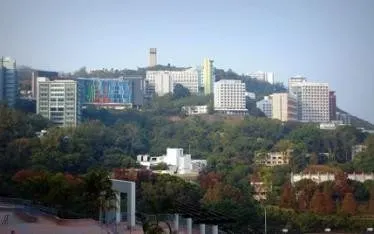
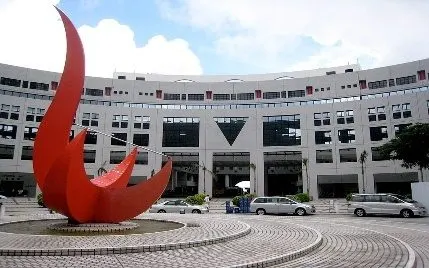
The Hong Kong University of Science and Technology (HKUST, 香港科技大学) is a publicly funded research university in Hong Kong. Its campus is on the Sai Kung Peninsula, by Clear Water Bay, while its official address lists the Kowloon district. In Chinese the university is known for short as 港科大 (Gǎng Kē Dà), and its full name is pronounced Xiānggǎng Kējì Dàxué.
HKUST opened in 1991: it was created as a new research university intended to support the growth of Hong Kong's innovation economy. Applicants should remember that Hong Kong rules apply here: teaching is mainly in English, payments are made in Hong Kong dollars (HKD), applications from international students are considered on the international track, and a Hong Kong student permit is required to study. 33rd in the world — that is the university's position in the QS World University Rankings 2027.
This Nihao Study overview brings together what will be useful to a 2026 applicant: programmes and rankings, scholarships and accommodation, IELTS and TOEFL requirements, and the application procedure.
| Item | Value |
|---|---|
| University opened | 1991 |
| Number of students | 20,475 (as of December 2025) |
| Non-local students, including international students | 9,860 (as of December 2025) |
| Teaching staff | 976 full-time equivalent |
| Bachelor's programmes | More than 45 majors and 22 minors |
| Campus area | 150 acres overlooking Clear Water Bay |
In December 2025, the university had 8,710 master's and doctoral students and 11,765 bachelor's students. HKUST is smaller than many large Asian universities, but you can go all the way from a bachelor's degree to a PhD here, and a noticeable share of students are not on the local track.
The idea for a new university took final shape in 1989, when the Hong Kong authorities concluded that the region needed a research university for its technological development. Preparations had begun even earlier: in 1987 the Hong Kong Jockey Club provided funds to build the campus, in 1988 the foundations were laid, and the official opening took place in October 1991.
Youth has become part of HKUST's character. Instead of an inherited faculty model, the university brought together science, engineering, business and interdisciplinary research from the very beginning. Today its global alumni network numbers more than 110,000 people. The Clear Water Bay campus should not be confused with HKUST Guangzhou: in 2022 the mainland campus was officially established as a legally independent university with its own academic structure.
| Ranking | Position |
|---|---|
| QS World University Rankings 2027 | 33rd |
| THE World University Rankings 2026 | 58th |
| THE Computer Science 2026 | 25th |
| QS Data Science and Artificial Intelligence 2026 | 25th |
| QS Materials Sciences 2026 | 47th |
| THE Sustainability Impact Ratings 2026 | 20th |
Rankings help compare the scale of research, but they cannot choose a specific programme for the applicant. For example, in THE 2026, HKUST's business and economics are 30th, engineering 38th and physical sciences 57th. Applicants would do better to compare curricula, access to laboratories and internships, maths and science requirements, and the overall budget.
The engineering profile covers artificial intelligence and computer science, microelectronics, electronic and computer engineering, as well as aerospace and environmental fields. The artificial intelligence research centre brings together specialists from different schools working on machine learning, speech technology and robotics, as well as AI in medicine, sustainability, security and AI governance. This makes HKUST a good fit for those who want to apply algorithms in a specific applied field.
The university reports that more than 1,900 active start-ups and 11 "unicorn" companies are linked to its ecosystem, and 22 have achieved a successful exit, through an IPO or a merger or acquisition. Behind these figures are incubators, investors, patent support and a culture of project work.
Thanks to its location on the bay, the university has a well-developed Ocean Science and Technology field: oceanography, marine ecology, monitoring technologies, climate change and resource management. The campus itself serves as a living laboratory for sustainability, where new ideas are tested on working buildings and infrastructure.
Bachelor's programmes are run by the schools of business and management, science, engineering, and humanities and social science, and by the Academy of Interdisciplinary Studies. The overall catalogue has more than 45 majors and 22 minors. A standard degree usually takes 4 years and requires at least 120 credits.
Admission to the School of Science follows a school-based admission scheme: group A focuses on the physical sciences, group B on the life sciences, and students choose their major after the first year. This route suits those who are sure they want to study science but have not yet decided between mathematics, physics, biology or a related discipline.
| Level | Format and duration |
|---|---|
| Bachelor's Degree | Usually 4 years, in English, at least 120 credits |
| Taught master | Full-time, usually 1 to 2 years depending on the programme |
| MPhil | Research degree, usually 2 years of full-time study |
| PhD | Usually 4 years after a first degree; 3 years with a relevant research master's |
International applicants to bachelor's programmes can list up to 2 choices, and the first is treated as the priority. Sometimes the application is made not for a specific major but for a whole school or department, with the specialisation chosen later. Programmes related to risk and sustainable finance, as well as a number of other competitive fields, may require a compulsory interview; for many science and engineering programmes an interview is not required.
An HKUST study budget includes the tuition fee, personal expenses, the application fee and a deposit after the offer; for taught master's programmes the cost depends on the specific programme, with no single rate. Separate costs may include meals, insurance, laundry, air conditioning and study materials. Check the current amounts on the university's official website, hkust.edu.hk.
New non-local bachelor's students in the 2026/27 intake are given priority for university housing in their first year. Fees are charged for an academic year of 287 nights and depend on the hall and room type. Double, triple and other arrangements are available; do not count on a specific hall before you receive a hall offer.
| Housing option | What to check |
|---|---|
| On-campus hall, first year | Priority allocation for new non-local bachelor's students |
| Off-campus housing | Price depends on the area and type of rental; HKUST publishes a guide |
From the second year onwards, you need to look for housing well in advance. The spread in rents depends on the area, distance from transport, room size and the type of shared rental. It is wise to budget for a landlord's deposit, utility bills and transport. Always check the current hall charges with the Student Housing and Residential Life Office.
HKUST awards its own scholarships for academic results and achievements. Most admissions scholarships do not require a separate application: the university automatically considers everyone who has applied. The decision usually comes together with the offer, but some non-academic awards require a separate form and have their own deadline.
The amount of support depends on the qualification and the rules of the given year. A school certificate alone does not guarantee a scholarship: the portfolio takes into account grades, exam results, subject achievements, essays and recommendations. It is best to plan your strategy before paying the application fee, which is non-refundable.
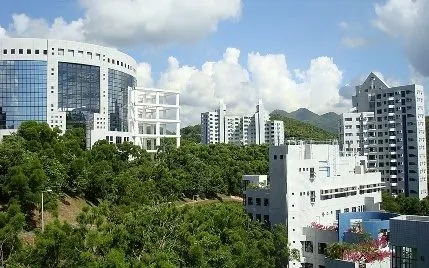
The campus sits on a hillside above the bay, which means beautiful views and closeness to nature, but also noticeable changes in elevation. The MTR stations closest to the campus are Choi Hung, Hang Hau and Po Lam, reached by bus or taxi; according to the university, these 3 stations are the main interchange points. The bus from the campus to the nearest metro takes about 15 minutes.
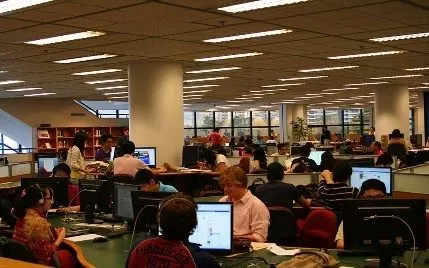
The Lee Shau Kee Library has 5 floors, more than 3,400 reading seats and over 700,000 printed volumes. The sports complex has a 1,600-square-metre hall, a 400-metre 8-lane running track, courts, and an outdoor 50-metre and an indoor 25-metre swimming pool. On campus there are cafés, a supermarket and a convenience store, and shuttle buses run.
You can explore the campus in advance on the official HKUST virtual tour.
HKUST assesses school documents using its own table of international qualifications. The guideline average grade, if one is given for your education system, is not an automatic pass mark: the university looks at the applicant's profile as a whole, and for engineering and science programmes it checks subject-specific maths and science.
Teaching is in English. Bachelor's programmes require IELTS Academic of at least 6.0. The TOEFL iBT threshold depends on the test date: for tests taken before 21 January 2026 it is 80 points, and for tests taken from that date onwards it is 4.5 on the new scale. For postgraduate programmes the minimum overall IELTS Academic score is 6.5, with no component below 5.5.
The 2026/27 intake had three application deadlines: early, by 20 November 2025; main, by 8 January 2026; and late, by 30 June 2026. These dates have already passed and only show how the cycle works; the deadlines for the next intake need to be checked separately. When preparing your documents, follow HKUST's rules and the Hong Kong visa requirements first and foremost.
Non-local students need a permit to study in Hong Kong. According to HKUST, the process usually takes 6 to 8 weeks; according to the Immigration Department, a complete set of documents is usually processed in about 6 weeks. Documents in languages other than English and Chinese must be accompanied by a certified English translation.
| University | How it differs |
|---|---|
| HKUST, 香港科技大学 | The university this page is about: a research campus in Clear Water Bay, Hong Kong |
| University of Hong Kong, HKU | A separate university with a historic campus on Hong Kong Island |
| Chinese University of Hong Kong, CUHK | An independent university in Sha Tin with a collegiate system |
| HKUST Guangzhou | Campus in Nansha, opened in 2022, legally independent |
The abbreviations HKUST and HKU are the ones most often confused. When choosing a programme, check the city, the campus and the official website domain, and then compare against the official requirements of each programme.
Russian uses two similar forms, translating as 'Hong Kong University of Science and Technology' and — more often in university catalogues — 'Hong Kong University of Science and Technologies'. The variant 'University of Science and Technologies of Hong Kong' is a calque of the English name and is also easy to find in searches. The full official English name is The Hong Kong University of Science and Technology, and the main international abbreviation is HKUST. In Chinese the university is called 港科大 (Gǎng Kē Dà) for short; the full name in simplified Chinese is 香港科技大学 (Xiānggǎng Kējì Dàxué), while the university itself writes it in traditional characters: 香港科技大學.
It is a publicly funded research university in Hong Kong, opened in 1991. Its main campus is in Clear Water Bay (Kowloon, Hong Kong).
HKUST teaches mainly in English. The minimum benchmark for bachelor's programmes is IELTS Academic 6.0, but for a strong application it is better to have a score with some margin.
The university checks school documents against its table of international qualifications. The average grade given there as a competitiveness benchmark does not guarantee admission, so check the requirements for your school certificate in that table in advance.
The university publishes the fee for non-local bachelor's students for each academic year and estimates personal expenses separately. See the current amounts on HKUST's official website.
Yes. A full tuition waiver is possible for IB results, medals at international olympiads or through the Global Learners Scholarship. These options have different conditions, and the outcome depends on the candidate's qualifications and academic profile.
New non-local bachelor's students admitted in 2026/27 have priority for university housing in their first year. The hall and room type are determined through a separate allocation procedure.
Yes. A non-local student needs a student visa or entry permit from the Hong Kong Immigration Department. Start the process as soon as you accept your offer: a complete set of documents is usually processed in about 6 weeks.
In the 2026/27 cycle, the early round closed on 20 November 2025; the main round ran until 8 January 2026, and the late round until 30 June 2026. The deadlines for the next intake will be known once the university publishes its new calendar.
HKUST is the university in Clear Water Bay. HKU is a different university, the University of Hong Kong. HKUST Guangzhou is a legally independent university in Nansha. Pay attention to which campus is stated in your offer and where the programme is delivered.
Hong Kong (香港) is a global financial centre and a meeting point of East and West. Skyscrapers stand side by side with jungle and islands, and life moves at a very fast pace. The education system is built on British standards.
Hong Kong gives students a degree recognised worldwide (HKU, HKUST), teaching in English and the opportunity to build a career in international banks and corporations. Cultures are closely intertwined here, you can try the food of almost any country, and transport works excellently. Parents value the high standards of healthcare and safety, a legal system based on English law, no language barrier (English is an official language) and the prestige of the degree. That said, it is worth bearing in mind that living and studying here is expensive.
You work with Nihao Study specialists. They will help you put together a portfolio and a set of documents, draw up a study plan and choose a university or college and a specialty that genuinely interest you.
We take care of every stage of admission, from choosing to enrolment
We will gather, prepare, certify and send your documents to the institution
We will show the admissions committee your strengths
We run training sessions and courses so you can prepare with more confidence
We will help you settle in at the start of your studies and keep moving forward
Nihao Study specialists select universities and colleges that match the applicant's goals and means. We make sure the teachers are practitioners and that the knowledge will be useful in your profession.
We examine curricula, talk to students and teachers and look at which specialties employers need, and use this information to select options for the applicant.
Advisers guide the applicant from the first consultation to enrolment, help build a plan and spot mistakes in time that could get in the way.
The cost of our support depends on the programme and the partner university; you'll get an exact quote after a free consultation.
Get a quoteA free 15-minute consultation: together we will choose a university or college and a programme that suit your goals and budget.
Apply with peace of mind: we handle the documents, deadlines and correspondence with admissions committees, and you save time and energy.
Don't want to wait for a call? Message us in the chat.
Message us in chat 
University · Hong Kong