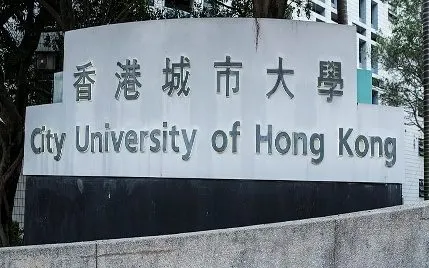
City University of Hong Kong
University · Hong Kong
- Language courses
- English
- Bachelor's Degree
- English
- Master's Degree
- English
- Doctoral (PhD) Programmes
- English
香港中文大学

Chinese University of Hong Kong accepts international students on programmes in the following fields: business, engineering, medicine, education, economics. Choose the level and programme that suit your goals.
Chinese language study at the university — from a few weeks to a year or longer. Suitable for those starting from scratch or preparing for the HSK before entering a main programme.
self-funded · language programme
The first level of higher education: usually four years of study, specialised subjects, internships and a graduation thesis. It opens the way to working in your field and to a master's degree.
self-funded
Advanced study after a bachelor's degree: research, applied projects and internships. It helps you become an expert in your chosen field and broaden your career opportunities.
self-funded
Chinese University of Hong Kong is located in Hong Kong. Nihao Study consultants keep track of the deadlines and admission requirements of this university, and you can always check the most accurate and up-to-date information on its official website. In university rankings, it is ranked 141 in China and 1255 worldwide.
Come for a face-to-face meeting: together we will go through the requirements, deadlines, documents and study options that suit you.

At the meeting we will look at your situation, tell you which documents to prepare and by when, talk about possible programmes and help you decide on the next step.
The Chinese University of Hong Kong (CUHK, 香港中文大學) is a research university located in Sha Tin in the New Territories of Hong Kong. Chinese students call it 港中大 for short, and in Putonghua its full name is pronounced Xiānggǎng Zhōngwén Dàxué. The university was founded in 1963; it is distinguished by its collegiate structure, flexible credit system, bilingual teaching and international academic environment.
CUHK belongs to the higher education system of the Hong Kong Special Administrative Region, not mainland China. For this reason, the 211, 985 and 双一流 projects, the CSC scholarship and the mandatory HSK do not apply to it. Undergraduates are admitted through several routes: JUPAS for local candidates, Non-JUPAS, and a separate international scheme for those with overseas school qualifications. The language of a course is English, Cantonese or Putonghua depending on the subject, but an international applicant first and foremost needs to prove their English proficiency.
This page brings together what a 2026 applicant should know: figures, history, rankings, faculties, English requirements, scholarships, accommodation and the application procedure. Questions about admission can be discussed during a consultation with Nihao Study, but the final conditions are always published by the university itself.
In terms of scale, CUHK is a large comprehensive university. According to the university's latest statistics, 18,438 undergraduates and 4,650 postgraduates study on publicly funded programmes. By the end of 2025, the total number of graduates had reached 298,175.
| Indicator | Data | What this means for applicants |
|---|---|---|
| Year founded | 1963 | One of Hong Kong's universities with a long research history |
| Campus | 138.4 hectares | A spacious hillside site with internal transport |
| Academic structure | 8 faculties and the Graduate School | Study at every level: from bachelor's to master's and research degrees |
| Colleges | 9 colleges | Every undergraduate belongs to one of the small college communities |
| Staff | 8,394 full-time staff, of whom 1,729 are teaching staff | A large base for teaching and research |
| International environment | More than 8,100 non-local students | Students here are not only Hong Kong residents |
| Exchanges | Around 290 partners in 37 countries and regions | You can go on a semester exchange; the university has wide international links |
The university was not built from scratch as a single campus. It was established by a Hong Kong ordinance of 1963 that united three colleges: New Asia College (founded in 1949), Chung Chi College (1951) and United College (1956). The official inauguration took place at City Hall on 17 October 1963, and from that moment students of all three colleges became students of the new university.
The college system did not disappear but became a defining feature of CUHK. Shaw College opened in 1986, and five more colleges followed in 2006 and 2007, just before Hong Kong switched to four-year bachelor's degrees. Today every full-time undergraduate belongs to one of the nine colleges, which provides not only a place in a hall of residence but also mentors, general education courses and a social circle.
The university's mission has historically been described as bringing together tradition and modernity, and China and the West. In everyday life this is reflected in two written languages and three spoken ones: English, Cantonese and Putonghua. An international student gets a full academic environment in English, although outside the classroom spoken Cantonese makes life much easier.
A ranking position does not replace looking into the programme itself, but it gives an idea of the scale of research and how well known the degree is. The QS World University Rankings 2027 place CUHK 18th in the world, and in the Times Higher Education World University Rankings 2026 the university is joint 41st.
| Ranking | Position | Edition |
|---|---|---|
| QS World University Rankings | 18th | 2027 |
| THE World University Rankings | joint 41st | 2026 |
| THE Asia University Rankings | 10th | 2026 |
| U.S. News Best Global Universities | 28th worldwide | 2026 and 2027 |
| ShanghaiRanking ARWU | 3rd among Hong Kong universities | 2025 |
Subject rankings say more than the overall number. In the QS by Subject 2026, nursing at CUHK is 6th, communication and media studies 16th, geography 21st and education 24th. In the THE 2026 subject rankings, education was 13th, medicine and health 26th and computer science 34th.
The Faculty of Medicine covers a wide range of clinical disciplines, from cardiology and oncology to neurology, microbiology and surgery. CUHK's strategic plan names genetic, genomic and precision medicine as an established research area. For an applicant with a biomedical profile, this means the high rankings rest on a large clinical and laboratory base.
The university is developing robotics, computer vision, machine learning, speech processing, big data and AI for medicine. In 2025 the State Key Laboratory of Quantum Information Technologies and Materials was established at CUHK, working on quantum computing, communications, sensing and photonics. This laboratory does not make CUHK part of the mainland Project 211 or 双一流 programmes; it is Hong Kong's own independent research infrastructure.
China Studies at CUHK has traditionally been built at the intersection of the humanities and social sciences, law and business. More than 200 of the university's academic staff work on research related to China. An international student gets a rare combination here: academic work in English, access to Chinese sources and everyday life in bilingual Hong Kong.
The university has eight faculties: Arts, Business Administration, Education, Engineering, Law, Medicine, Science and Social Science. Programmes in each of them are open to international applicants, but some fields additionally require specific school subjects, an interview or a portfolio.
The list of bachelor's programmes for the 2026 intake includes anthropology, English, history, Chinese Studies, fine arts, artificial intelligence, as well as engineering, science, business, law and medical fields. The bachelor's degree normally lasts four years and is credit-based. Architecture applicants need a portfolio, and some language and professional programmes require knowledge of Chinese or Cantonese.
When choosing a programme, look beyond the faculty name. First check the International row in the requirements table, then the programme-specific requirements. The general minimum only gives you the right to apply; after that, selection decides, and the university openly describes it as competitive.
CUHK defines itself as a bilingual university, but the language of each course is specified separately in the timetable: E stands for English, C for Cantonese, P for Putonghua, and there are mixed combinations too. So the claim that "all teaching is in English" does not hold for every subject. Before accepting an offer of admission, an international student should find out which language the required courses of the chosen major are taught in.
The minimum language requirement for 2026 admission is IELTS Academic 6.0 or TOEFL iBT 80 if the test was taken on the old scale. IELTS One Skill Retake, IELTS Indicator, IELTS Online and TOEFL Home Edition cannot be used to meet the compulsory language requirement. Other evidence is also accepted, for example 590 points in SAT Evidence-Based Reading and Writing, 23 in ACT English Language Arts or IB English with a grade of 4.
For international applications to English-taught programmes, HSK is not part of CUHK's standard requirements. The university teaches Chinese, English, spoken Cantonese and Putonghua to students who have already been admitted. When comparing Hong Kong with mainland Chinese universities, use the HSK timetable only as reference information, not as a condition of admission to CUHK.
International bachelor's applicants are considered for an admission scholarship automatically; as a rule, no separate application is needed. The size of the university award varies, up to full coverage of the tuition fee. Some options include an annual allowance, and renewal of the scholarship depends on academic performance.
International students are not offered standard need-based financial aid, so you should not plan your budget relying only on possible support. The CSC scholarship does not apply here; information about it is useful only for comparison with mainland Chinese universities. For CUHK, refer to the Scholarships section on the university's website and to HKSAR government programmes.
The campus has more than 30 halls of residence with over 9,000 places in total; more than half of undergraduates live in hostels. For international full-time undergraduates, the N minus 2 rule applies: a place is usually guaranteed for the normal study period minus two years. When the guaranteed period ends, a student competes for the remaining vacancies or rents accommodation off campus.
Each college has its own halls, canteens and event spaces. Morningside, S.H. Ho and C.W. Chu are fully residential colleges with communal dining. A college and a faculty are different things: your academic specialisation is set by your major, while the college is responsible for students' everyday life and some general education courses.
University station on the MTR East Rail Line is next to the campus. The official map shows the station's north and west exits, internal shuttle stops, colleges, teaching buildings and libraries. The grounds are hilly, so the internal bus is handy even where the walk looks short on the map. Routes 1A, 1B, 2, 3, 4, 8, N and H are published by the Transport Office.
CUHK's library network consists of seven libraries and a Learning Commons space. The campus also has the Art Museum and the Museum of Climate Change, as well as sports and social facilities. Before applying, it is worth planning a separate budget for your first month of living in Hong Kong.
Most often, CUHK in Hong Kong is confused with CUHK-Shenzhen. Their names are related, but they are two different universities, with different campuses, jurisdictions and admission rules.
| University | Location | What's the difference |
|---|---|---|
| The Chinese University of Hong Kong, 香港中文大學 | Sha Tin, Hong Kong | The university this page is about; international admission, fees in HKD |
| The Chinese University of Hong Kong, Shenzhen | Shenzhen, mainland China | An independent Sino-foreign university approved by the PRC Ministry of Education |
| The University of Hong Kong, 香港大學 | Hong Kong Island | Another university with a long history, abbreviated HKU |
| City University of Hong Kong | Kowloon | A different research university, abbreviated CityUHK |
| The Education University of Hong Kong | Tai Po | An independent university specialising in education, abbreviated EdUHK |
When a form or letter simply says Chinese University, always check the city, the domain name and the full English name. The official postal address of the Admissions Office of CUHK in Hong Kong ends with Shatin, N.T. Hong Kong.
CUHK suits those who are ready for competitive selection, an academic workload in English and the high cost of living in Hong Kong. The university's advantages include the college system, a wide choice of majors, research in medicine and AI, and its immediate proximity to an international financial and scientific hub. The main risks are a substantial budget, varying languages of instruction across courses and the fact that a scholarship is not guaranteed.
Finally, check three things. First, open the international programme list and make sure the chosen programme is accepting applications. Second, compare tuition, dormitory and other costs without factoring in a possible scholarship. Third, find out the language of each required course. The admission decision is made solely by CUHK.
The Russian version of this text treats the form meaning 'Chinese University of Hong Kong' (written with a lower-case 'university', as Russian spelling requires) as the main one. The variant with a capital letter in the word 'University' does not follow normal Russian spelling, and the misspelt version is simply a typo. 'Hong Kong Chinese University' conveys the meaning clearly, but it is a calque with the word order changed. The official English name is The Chinese University of Hong Kong; the abbreviation CUHK is used both by the university itself and by rankings. 港中大 is a common Chinese abbreviation of the full name 香港中文大學, which is pronounced Xiānggǎng Zhōngwén Dàxué in Putonghua.
It is a comprehensive research university in Hong Kong, founded in 1963. The main campus is next to University MTR station, in the Sha Tin district of the New Territories.
Many programmes and courses are available in English, but CUHK also uses Cantonese and Putonghua. Check the language of each compulsory course and the programme requirements in the timetable.
For a standard international application to English-taught programmes, HSK is not among the entry requirements. The main language requirement is met with IELTS, TOEFL or an equivalent approved by the university. Some programmes may require Chinese or Cantonese.
No. These are statuses in the mainland Chinese system, while CUHK is a Hong Kong university established under a separate Hong Kong ordinance. And do not confuse it with CUHK-Shenzhen — that is a different campus.
You should not count on CSC: it is not a standard funding scheme for CUHK. Look at CUHK Admission Scholarships, the HKSAR Government Scholarship and other Hong Kong awards. International bachelor's applicants are automatically considered for some entrance scholarships.
JUPAS is the main route for local candidates with the HKDSE. Local Non-JUPAS is for local applicants with other qualifications. An applicant with a foreign school-leaving certificate who needs a student visa usually applies under the International Students Admissions Scheme.
For the 2026 intake, the general minimum is IELTS Academic 6.0 or TOEFL iBT 80 on the old scale. Some formats taken remotely are not accepted, and competitive programmes may require a stronger profile.
For full-time international bachelor's students there is an 'N minus 2' policy: a place is usually guaranteed for the normal length of study minus two years. After that, students either take part in a separate allocation of places or rent accommodation off campus.
You will need a valid passport, school-leaving certificate or proof of current studies, transcripts, academic and language exam results, plus any materials requested by the specific programme. The final list is provided by CUHK's online system; if a result is published later, you can add it after submitting your application.
Hong Kong (香港) is a global financial centre and a meeting point of East and West. Skyscrapers stand side by side with jungle and islands, and life moves at a very fast pace. The education system is built on British standards.
Hong Kong gives students a degree recognised worldwide (HKU, HKUST), teaching in English and the opportunity to build a career in international banks and corporations. Cultures are closely intertwined here, you can try the food of almost any country, and transport works excellently. Parents value the high standards of healthcare and safety, a legal system based on English law, no language barrier (English is an official language) and the prestige of the degree. That said, it is worth bearing in mind that living and studying here is expensive.
You work with Nihao Study specialists. They will help you put together a portfolio and a set of documents, draw up a study plan and choose a university or college and a specialty that genuinely interest you.
We take care of every stage of admission, from choosing to enrolment
We will gather, prepare, certify and send your documents to the institution
We will show the admissions committee your strengths
We run training sessions and courses so you can prepare with more confidence
We will help you settle in at the start of your studies and keep moving forward
Nihao Study specialists select universities and colleges that match the applicant's goals and means. We make sure the teachers are practitioners and that the knowledge will be useful in your profession.
We examine curricula, talk to students and teachers and look at which specialties employers need, and use this information to select options for the applicant.
Advisers guide the applicant from the first consultation to enrolment, help build a plan and spot mistakes in time that could get in the way.
The cost of our support depends on the programme and the partner university; you'll get an exact quote after a free consultation.
Get a quoteA free 15-minute consultation: together we will choose a university or college and a programme that suit your goals and budget.
Apply with peace of mind: we handle the documents, deadlines and correspondence with admissions committees, and you save time and energy.
Don't want to wait for a call? Message us in the chat.
Message us in chat University · Hong Kong
University · Hong Kong