Guangdong Medical University
University · Zhanjiang
Language courses · Bachelor's Degree · Master's Degree
GUCM · 广州中医药大学
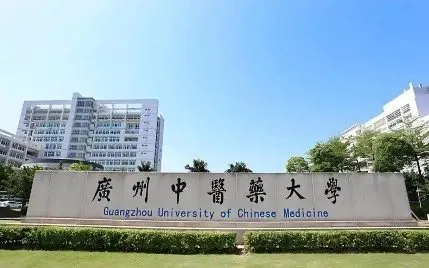
Guangzhou University of Chinese Medicine accepts international students on programmes in the following fields: engineering, medicine, humanities, natural sciences. Choose the level and programme that suit your goals.
Chinese language study at the university — from a few weeks to a year or longer. Suitable for those starting from scratch or preparing for the HSK before entering a main programme.
self-funded · language programme
The first level of higher education: usually four years of study, specialised subjects, internships and a graduation thesis. It opens the way to working in your field and to a master's degree.
self-funded
Advanced study after a bachelor's degree: research, applied projects and internships. It helps you become an expert in your chosen field and broaden your career opportunities.
self-funded
Guangzhou University of Chinese Medicine is located in Guangzhou. Nihao Study consultants keep track of the deadlines and admission requirements of this university, and you can always check the most accurate and up-to-date information on its official website. In university rankings, it is ranked 205 in China and 1524 worldwide.
Come for a face-to-face meeting: together we will go through the requirements, deadlines, documents and study options that suit you.

At the meeting we will look at your situation, tell you which documents to prepare and by when, talk about possible programmes and help you decide on the next step.
Guangzhou University of Chinese Medicine (GZUCM, 广州中医药大学, Guǎngzhōu Zhōngyīyào Dàxué) is a public university of Guangdong Province, located in Guangzhou. In Russian it is known by a name meaning "University of Chinese Medicine of Guangzhou", and searches also turn up a form with a different word order. Its short Chinese name is 广中医 (Guǎng Zhōngyī).
The university's core is traditional Chinese medicine. Built around it are integrative and clinical medicine, pharmacology, medical information technology, public health, rehabilitation and nursing. In the national Double First-Class programme the university is represented precisely by the discipline of Chinese medicine. It does not appear on the official national list of the 211 project, so calling it a 211 or 985 university is incorrect.
For 2026 applicants, the sections below cover: the name variants and statuses, rankings, programmes, scholarships, HSK requirements, the new CSCA exam, dormitories and the application procedure. A Nihao Study consultation will help you prepare for admission.
| Item | Data |
|---|---|
| Status and governing body | Public university under the education authorities of Guangdong Province |
| Key dates | Roots: 1924; university status since 1956; current name since 1995 |
| Campuses | University City and Sanyuanli; total area 1,205 mu |
| Structure | 15 schools, 18 independent research units, 4 directly affiliated hospitals |
| Students | 21,214 in total: bachelor's 12,441, master's and doctoral 6,606, international students 798 |
| Programmes and degrees | Admission to 29 majors; first-level disciplines: 7 for master's and 3 for doctoral degrees; 3 postdoctoral stations |
| Status in national programmes | Double First-Class (discipline: Chinese medicine) |
Main campus: 232 Outer Ring East Road, Guangzhou University City, Panyu District, Guangzhou (postcode 510006 is given in the Chinese admissions announcement). Sanyuanli campus: 12 Jichang Road, Baiyun District, Guangzhou, postcode 510405. Future medical students should find out in advance exactly where their courses and clinical placements will take place, as some stages of study may be tied to particular hospitals and specialist schools.
The university traces its history to the Guangdong Specialized School of Traditional Chinese Medicine, founded in 1924, long before the university officially came into being. From 1936 it was called Guangdong College of Traditional Chinese Medicine, and in 1952 it was reorganised into a school for the further training of Chinese medicine practitioners. Thanks to this continuity, the university speaks of a century-old tradition, even though the higher education institution in its current form took shape later.
The State Council decided to establish Guangzhou College of Traditional Chinese Medicine in 1956. It was among the first four traditional Chinese medicine universities opened in the People's Republic of China. The current name, Guangzhou University of Chinese Medicine, has been used since 1995. During the war, the university's predecessor temporarily resumed classes in Hong Kong: in 1939 a building at 37 Leighton Road was rented there as a campus.
The university has a long international track record: it has taught international students since 1974 and, according to the university, has since trained more than 20,000 specialists from over 110 countries and regions. Since 2020, GZUCM has been jointly supported by the Guangdong authorities, the Ministry of Education of China and the National Administration of Traditional Chinese Medicine. In the second round of Double First-Class, Chinese medicine kept its status as a discipline under construction at the university.
Any ranking should be judged in light of its methodology. In general tables a specialist medical university often ranks modestly, but in pharmacy, clinical research or among Chinese medicine universities within China its positions are much higher.
| Ranking | Position | Comment |
|---|---|---|
| ShanghaiRanking ARWU 2025 | Global band 801–900 | Overall assessment of research |
| ShanghaiRanking GRAS 2025 | Pharmacy: 51–75; nursing: 201–300 | Specialist subjects rank higher than the overall position |
| ShanghaiRanking TCM 2026 | 4th in China among traditional Chinese medicine universities | Comparison of specialist universities within China |
| CWUR 2026 | 951st in the world, 184th in China; top 4.5% | Position in the CWUR global list |
| QS Asia 2026 | Asia: band 1101–1200; Eastern Asia: 503rd | QS regional ranking |
| EduRank 2026 | 3,777th in the world, 305th in China, 294th in pharmacology | Independent benchmark based on bibliometrics |
GZUCM has a profile in the Times Higher Education (THE) database.
The university reports that seven of its disciplines are in the ESI top 1%: clinical medicine, chemistry, pharmacology and toxicology, agricultural sciences, biology and biochemistry, neuroscience and behaviour, and molecular biology and genetics. When choosing a research topic, this list tells you more than a single overall position.
The first advantage is the regional Lingnan tradition and Chinese medicine as a discipline holding two statuses at once: national key discipline and Double First-Class. Building on it, the university has brought together integrative and clinical medicine, Chinese pharmacology, pharmacy and the study of infectious diseases. Applicants get not a course in folk remedies but a fully fledged medical and research environment.
According to the university, it has 4 directly affiliated hospitals, a further 8 hospitals run jointly with the authorities, and 30 indirect clinical bases. The First Hospital is known for its work during major epidemics, the Second is the Guangdong Provincial Hospital of Chinese Medicine, and the Third specialises in traumatology and orthopaedics. Whether a student ends up at a particular base depends on the programme, year of study, language of instruction and clearance for clinical practice.
GZUCM's research infrastructure comprises 10 national research platforms plus 53 at provincial or ministerial level. They include laboratories for Chinese medicine syndromes, Lingnan medicinal plants, immune diseases, tumour pharmacology and acupuncture. The university also reports that its own antimalarial compound is used in programmes in more than 10 countries. It is this research, rather than promotional wording, that explains its subject positions in ShanghaiRanking.
The official list of schools includes basic medical sciences, four clinical schools, plus a clinical school of rehabilitation, acupuncture and moxibustion, the School of Chinese Materia Medica, nursing, medical information engineering, public health and management, foreign languages, sport and health, and an international school. Here a School means a structural unit of the university, not a separate university.
The university lists 8 national and 11 provincial first-class bachelor's majors; it has 16 first-class courses at national level and 100 at provincial level. However, international students can access only part of the general catalogue, so you should go by the international admissions list rather than the full list for Chinese applicants.
According to the university, only one major is open in the 2026 international bachelor's intake: Chinese medicine, taught in Chinese using Chinese textbooks. The programme lasts 5 years and leads to a Bachelor of Medicine degree. This differs noticeably from aggregator sites, which may list a standard four-year bachelor's degree.
| Level | Format | What to check |
|---|---|---|
| Bachelor's in Chinese medicine | Full-time, 5 years, in Chinese | HSK 5 with at least 180 points, CSCA result |
| Master's Degree | Research and clinical programmes | Current list of supervisors; profile matching your previous education |
| Doctoral (PhD) Programmes | Research or clinical track | Master's field, recommendation letters, clinical qualification requirements |
| Chinese language courses in Guangzhou | Long-term language study | Check current intake conditions and fees with the university |
From the 2026 intake, bachelor's applicants must have a CSCA result. GZUCM requires subject Chinese (humanities or science version) and mathematics, for which you can choose the exam language. The university stresses that neither BCT nor an internal language test replaces the standard HSK requirement without its separate written decision.
The university provides dormitory accommodation in University City for international bachelor's students. Double and single rooms are priced differently; check current rates on the university's official website. Students buy their own bedding and household items, and living off campus requires a permit.
GZUCM takes part in Chinese Government Scholarship programmes. In 2026 a separate Chinese medicine project for bachelor's students, Silk Road, was announced. It covers tuition and dormitory, includes medical insurance and a monthly allowance at China Scholarship Council rates. Participants must be no older than 25; in the published intake, applications were accepted until 22 May 2026.
Your financial plan should be enough to cover self-funded study for at least the first year.
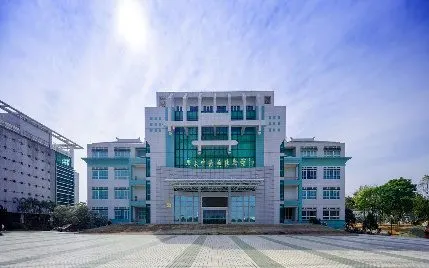
The University City campus in Panyu District has teaching buildings, landscaped waterfronts, a square, a library and the Guangdong Chinese Medicine Museum, all featured in the official campus photo gallery. The Sanyuanli campus is closer to the city centre and has long-standing links with the university's medical units.
Clinical work is part of the normal course of study: the First, Second and Third Affiliated Hospitals are also clinical medical schools. But enrolment alone does not give access to patients: the amount of practice and the right to perform procedures depend on the programme and on the rules in force in China.
If you are choosing between universities in Guangzhou, it makes sense to compare GZUCM with Southern Medical University and Guangdong Pharmaceutical University before applying.
| University | Type | Main focus |
|---|---|---|
| GZUCM (GUCM), 广州中医药大学: Guangzhou University of Chinese Medicine | Public, specialist | Chinese and integrative medicine, materia medica |
| Guangzhou Medical University, 广州医科大学 | Public, medical | Western clinical medicine, public health |
| Southern Medical University, 南方医科大学 | Public, medical | Clinical and biomedical training |
| Guangdong Pharmaceutical University, 广东药科大学 | Public, specialist | Pharmacy, biomedicine, public health |
| Guangzhou University, 广州大学 | Public, comprehensive | Many fields: humanities, natural sciences, engineering |
GZUCM's distinguishing feature is the characters 中医药 ("Chinese medicine and pharmacy"). Guangzhou Medical University's English name begins similarly, but it is a separate university. That is why your application, translations and payment documents must show exactly GZUCM's Chinese name and its institution code.
The main Russian form is the one meaning 'University of Chinese Medicine of Guangzhou'. Spellings that drop the 'zh' sound in 'Guangzhou' are typos, while the form meaning 'Guangzhou University of Chinese Medicine' is a common variant that follows English word order. The official international name is Guangzhou University of Chinese Medicine; under its charter the English abbreviation is GZUCM, while GUCM appears in catalogues and search queries. 广中医 is the short Chinese name, and the full name is 广州中医药大学 (Guǎngzhōu Zhōngyīyào Dàxué).
Yes, they are the same university. The abbreviation GUCM has caught on in some catalogues, while GZUCM is the official abbreviation used by the university itself. In official correspondence it is safer to give the full English name together with GZUCM.
The 2026 international bachelor's programme in Chinese medicine is taught in Chinese using Chinese textbooks. According to the university, there is no programme in Russian. The language of instruction for master's and doctoral programmes depends on the specific programme, so check it with the university.
The 2026 intake required HSK 5 with a score of at least 180 points. Native speakers of Chinese and those who completed their previous level of education in Chinese may be exempted from this requirement after verification. It is convenient to plan your exam using the HSK calendar.
Double First-Class, yes: in the second round of the programme the university is represented by the discipline of Chinese medicine. It is not on the national list for Project 211, and it does not claim Project 985 status. Double First-Class should not be confused with these historical projects.
The price depends on the room type, double or single. A registration fee and insurance are also paid separately. Current terms are published on the university's official website.
Yes, if you win the competition for a suitable programme. For example, the 2026 Silk Road bachelor's scholarship covered tuition, the dormitory and insurance and included a monthly allowance. The terms and the list of countries change, so go by the current GZUCM announcement.
The 2026 international bachelor's programme required a CSCA score report in mathematics and subject-specific Chinese. BCT is not listed as a substitute for the HSK. Candidates are notified separately about an interview or additional assessment.
No, GZUCM is not an active HSK centre. The centre and date are chosen through the official testing service.
The main campus is in University City in Panyu District, at 232 Outer Ring East Road. Sanyuanli Campus is in Baiyun District, at 12 Jichang Road. In your application, use the address from the admissions announcement you are applying under, and check your accommodation campus against the notice before moving in.
The basic package includes your passport and a photo, a school certificate or a letter confirming that you are due to graduate, a full transcript of grades, the result of a standardised school-leaving exam, HSK, CSCA, a personal statement, a medical form, a police clearance certificate and, where necessary, additional documents depending on citizenship. Before sending, check the list against the current admissions brochure.
Guangzhou (广州) is the capital of Guangdong Province and the trade gateway of southern China. The large-scale Canton Fair is held here twice a year. Cantonese cuisine originates here, and the city remains a centre of international business.
Here it is easy to combine study with work experience: thousands of export companies operate in the city. The metro has 16 lines, the environment is multinational, and the subtropical climate allows you to play sport all year round. Parents will care about other things: the city is safe, Hong Kong is 1 hour away by high-speed train, there are international hospitals and schools and direct international flights, and the campuses are well run, with security on duty around the clock and dedicated services to help international students.
You work with Nihao Study specialists. They will help you put together a portfolio and a set of documents, draw up a study plan and choose a university or college and a specialty that genuinely interest you.
We take care of every stage of admission, from choosing to enrolment
We will gather, prepare, certify and send your documents to the institution
We will show the admissions committee your strengths
We run training sessions and courses so you can prepare with more confidence
We will help you settle in at the start of your studies and keep moving forward
Nihao Study specialists select universities and colleges that match the applicant's goals and means. We make sure the teachers are practitioners and that the knowledge will be useful in your profession.
We examine curricula, talk to students and teachers and look at which specialties employers need, and use this information to select options for the applicant.
Advisers guide the applicant from the first consultation to enrolment, help build a plan and spot mistakes in time that could get in the way.
The cost of our support depends on the programme and the partner university; you'll get an exact quote after a free consultation.
Get a quoteA free 15-minute consultation: together we will choose a university or college and a programme that suit your goals and budget.
Apply with peace of mind: we handle the documents, deadlines and correspondence with admissions committees, and you save time and energy.
Don't want to wait for a call? Message us in the chat.
Message us in chat University · Zhanjiang
Language courses · Bachelor's Degree · Master's Degree
University · Guangzhou
Language courses · Bachelor's Degree · Master's Degree