Guangdong Medical University
University · Zhanjiang
Language courses · Bachelor's Degree · Master's Degree
GU · 广州大学
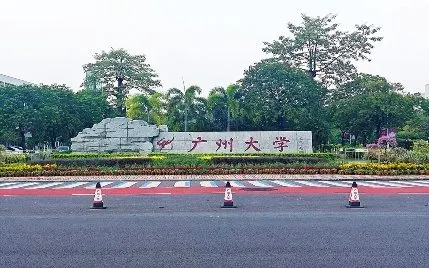
Guangzhou University accepts international students on programmes in the following fields: engineering, medicine, education, natural sciences. Choose the level and programme that suit your goals.
Chinese language study at the university — from a few weeks to a year or longer. Suitable for those starting from scratch or preparing for the HSK before entering a main programme.
self-funded · language programme
The first level of higher education: usually four years of study, specialised subjects, internships and a graduation thesis. It opens the way to working in your field and to a master's degree.
self-funded
Advanced study after a bachelor's degree: research, applied projects and internships. It helps you become an expert in your chosen field and broaden your career opportunities.
self-funded
Guangzhou University is located in Guangzhou. Nihao Study consultants keep track of the deadlines and admission requirements of this university, and you can always check the most accurate and up-to-date information on its official website. In university rankings, it is ranked 114 in China and 1106 worldwide.
Come for a face-to-face meeting: together we will go through the requirements, deadlines, documents and study options that suit you.

At the meeting we will look at your situation, tell you which documents to prepare and by when, talk about possible programmes and help you decide on the next step.
Guangzhou University (GZHU, 广州大学, Guǎngzhōu Dàxué) is a public comprehensive university. It is located in Guangzhou, the capital of Guangdong Province.
GZHU's status needs to be stated carefully. The university is jointly governed by the province and the city, with Guangzhou taking the leading role. It is included in Guangdong's and Guangzhou's plans to build high-level universities. However, it is not part of the national 211 and 985 projects, and it is not on the second Double First-Class (双一流) list. The mention on the GZHU website that the university draws on the opportunities of the national initiative does not amount to membership of the list.
This overview for 2026 applicants covers: the status of GZHU, which is neither a 211 nor a 985 university; its strongest disciplines; which programmes are open to international students and at what HSK level; how the scholarship and dormitories work; which documents are needed; and how the university differs from Sun Yat-sen University. You can choose a programme during a Nihao Study consultation.
| Item | Data |
|---|---|
| Founded | Roots go back to 1927; the present university was formed in 2000 |
| Campuses | Daxuecheng, Guihuagang and Huangpu |
| Full-time students | bachelor's — 29,623; master's and doctoral — 9495 |
| Structure | 26 specialist schools; 76 bachelor's programmes in the 2026 intake |
| Master's, doctoral and postdoctoral | 14 doctoral disciplines, 8 postdoctoral stations; master's disciplines — 34 academic and 30 professional |
| Staff | 3371 in total, including 2138 teaching and research staff |
| Main campus address | 230 Waihuan Xi Road, Guangzhou Higher Education Mega Center, Guangzhou 510006 |
These figures show that GZHU is a large research university, not a Chinese language school. But the overall statistics do not tell you whether international students are admitted to a particular major: that has to be checked against the current year's admission conditions.
The starting point is 3 March 1927, when the educator and economist Chen Bingquan founded the private Guangzhou University. That institution's motto was 博学笃行: broad learning combined with steadfast action. In 1951 the private university was incorporated into South China Union University. In 1983 work began on re-establishing the university, and in 1984 it regained the name Guangzhou University.
The present university was formed in July 2000 by the merger of several institutions: the former Guangzhou University, Guangzhou Institute of Education, Guangzhou Normal College, Guangzhou Higher Normal College and the western part of South China Institute of Construction. A directive from the Ministry of Education of the PRC clarifies the administrative side: the city's resources in construction and vocational education were also merged in.
This origin explains why education, the humanities, architecture and engineering sit side by side in one university. And the two dates do not contradict each other: 1927 marks the beginning of the tradition, while 2000 marks the official founding of the modern GZHU.
| Ranking | Position | Comment |
|---|---|---|
| ARWU 2025 | 468th in the world; 95th among universities in mainland China | ARWU overall world table |
| ARWU 2025, subject rankings | Civil Engineering — 23rd; Computer Science and Engineering and Artificial Intelligence — 76–100 band | Subject strength matters more than the overall position |
| U.S. News 2025‑2026 | 454th in the world; 61st in mainland China | Bibliometrics carries great weight in the methodology |
| THE 2025 | World band 601–800 | A range is given; no exact position is stated |
| QS Sustainability 2026 | Band 1401–1500 | Assesses sustainability; not to be confused with the general QS World University Ranking |
| ESI | 13 disciplines in the top 1%, engineering in the top 0.1% | According to the university's current profile |
A single number cannot describe the picture. GZHU already has notable international bibliometric indicators, and it is strongest in artificial intelligence, computer science and civil engineering. At the same time, a high ARWU position does not change its legal status: the university remains a regional one and does not thereby become part of 211, 985 or Double First-Class.
GZHU's highest international position in an individual subject is Civil Engineering: in the 2025 ShanghaiRanking the discipline is 23rd in the world. In the university's strategy, the safety of large structures is linked to their intelligent operation and maintenance. For students this offers access to pressing issues in the Greater Bay Area — bridges, urban construction, earthquake resistance, transport and digital monitoring.
Another area of growth is cyberspace, information systems and applied modelling. Academic programmes include Computer Science, Information and Communication Engineering and Cyberspace Security. According to ShanghaiRanking 2025, computer science and artificial intelligence are in the world 76–100 band. This path suits those who want to apply fundamental mathematics to smart city challenges, network security and industrial digitalisation.
The third pillar is less conspicuous, but without it the character of the university is hard to understand. Strong schools of psychology and teacher education grew out of the former teacher-training colleges. Statistics, mathematics, geography, astronomy, psychology and the social sciences appear both in the list of programmes and among the ESI disciplines. For those planning a career in education, urban studies, data analysis or city management, this combination of disciplines may offer more than a formal 211 label.
The university's schools include, among others, economics and statistics, law, education, journalism, management, tourism, music, fine arts and design, as well as humanities and foreign languages. The natural sciences include mathematics, physics, chemistry, geography, life sciences and remote sensing of the Earth. The engineering schools teach mechanical engineering, electronics, telecommunications, computer science, architecture, urban planning, civil engineering and environmental engineering.
The degree catalogue offers bachelor's and master's degrees in applied economics, law, education and psychology, journalism, Chinese language and literature, mathematics, statistics, physics, chemistry, biology and mechanics, as well as many engineering majors. For doctoral studies, the university's English-language overview lists education, mathematics, statistics, astronomy, civil engineering, cybersecurity and management.
International applicants have to pass one more filter: admission of international students to a particular field and the language of instruction are announced separately. The correct order is: the catalogue, then the quota for international students, and only then preparing documents.
| Level | Duration and language | What to consider when applying |
|---|---|---|
| Bachelor's Degree | Usually 4 or 5 years; in Chinese, or in English by arrangement | HSK 4 or higher; HSK 5 for some fields |
| Master's Degree | Usually 2 or 3 years; language — Chinese, or English by arrangement | Bachelor's diploma plus 2 academic letters of recommendation |
| Doctoral (PhD) Programmes | Usually 4 years | Master's diploma, academic CV, 2 recommendations |
The official notice for 2026 provided 100 places for international students across all levels: half for scholarship holders and half for self-funded students. Applications in that cycle closed on 30 April 2026, and classes were due to start in September. Deadlines may shift for the next intake, so check them against the current year's notice. Formats include bachelor's, master's and long-term courses.
The minimum for Chinese-taught programmes is HSK 4, and HSK 5 for some majors. The university may accept other official language certificates, considering each case individually. For English, the benchmark is TOEFL 72 or above or IELTS 5.5 or above (other recognised certificates are also possible), but the programme must in any case be agreed with the School of International Education.
Besides degree programmes, you can take separate Chinese language courses in Guangzhou. Their price is set separately for each intake, so it is best to find out the curriculum, number of hours, duration and cost before applying. HSK exam dates are in the official test schedule.
| Campus | Location and purpose |
|---|---|
| Daxuecheng, University Town | Main campus: 230 Waihuan Xi Road, Panyu District, postcode 510006 |
| Guihuagang | 1 Guihuagang East Road, Yuexiu District |
| Huangpu | Research and teaching site in Sino-Singapore Guangzhou Knowledge City |
For the 2026 intake, GZHU did not publish room types or a single accommodation rate. A dormitory place is secured separately, by a written confirmation stating the campus, room type, cost, deposit, check-in date and payment procedure. The international student office is in the east administration building of the main campus, telephone 0086-20-39366100.
For 2026 the university allocated 50 scholarship places in total across bachelor's, master's and doctoral programmes. The scholarship is the university's own and is awarded competitively.
| Level | What is included |
|---|---|
| Bachelor's Degree | Monthly allowance; study subsidy (differs between humanities and science programmes); annual reimbursement of visa and insurance costs |
| Master's Degree | Monthly allowance; annual study subsidy; reimbursement of visa and insurance costs |
| Doctoral (PhD) Programmes | Monthly allowance; study subsidy for one year; visa and insurance paid |
Selection is based on a written exam, an interview and previous academic results. Renewal from the second year depends on the student's grades and conduct during the first year. The study subsidy may not fully cover tuition, and the scholarship does not pay for dormitory accommodation, so it is worth budgeting item by item rather than relying on the word "scholarship" alone.
The Chinese Government Scholarship (CSC) needs to be checked separately. The university has announced its own scholarship, but no direct CSC application channel through GZHU is described. The list of universities accepting CSC scholarship holders includes Sun Yat-sen University, South China University of Technology, Guangzhou Medical University and Guangzhou University of Chinese Medicine, but Guangzhou University is not on it. So, unless a new official call is announced, you cannot count on applying through GZHU. CSC has Type A and Type B, but only the announcement for the current cycle gives a definitive answer.
The main campus is on Xiaoguwei Island, in the Guangzhou Higher Education Mega Center. It is not an isolated, closed-off campus: it is surrounded by a whole education zone with other universities, student services, parks and transport. The easiest way to get there is by metro: Line 4 to Higher Education Mega Center North station, then the internal campus bus.
The library has branches on the main campus, in Guihuagang and in Huangpu. Through it, students access electronic resources and use an interlibrary loan scheme that links 10 universities in University Town. Officially, there are 80 student societies on campus with more than 12,000 members, covering technology, the arts, sport, community initiatives and volunteering.
International life is not confined to a single faculty. According to GZHU, it has more than 200 partner universities and institutes in 33 countries and regions, and over 700 students go abroad every year. If you are choosing a city to study in, it makes sense to compare GZHU with other universities in Guangzhou.
| University | Type and status | Main focus |
|---|---|---|
| Guangzhou University, GZHU, 广州大学 | Public, run by the province and the city; not part of 211, 985 or Double First-Class | Civil engineering, IT, mathematics, education; a broad range of disciplines |
| Sun Yat-sen University, SYSU, 中山大学 | National, under the Ministry of Education of China; 211, 985, Double First-Class | Major research university: medicine, sciences, engineering |
| Guangzhou Medical University, GMU, 广州医科大学 | Public, medical; Double First-Class | Clinical medicine, public health |
| Guangzhou University of Chinese Medicine, GZUCM, 广州中医药大学 | Public, medical; Double First-Class | Chinese medicine, pharmacology |
Guangzhou University is most often confused with Sun Yat-sen University. Yet they have different Chinese names, abbreviations, status and admission channels. The word Guangzhou in GZHU's English name refers only to the city and does not make it one and the same as other universities in Guangzhou.
The main Russian form is the one meaning 'University of Guangzhou'. The adjectival form meaning 'Guangzhou University' is also understandable but is not the main name, and 'University of the City of Guangzhou' is a descriptive calque. The official English name is Guangzhou University, and the university itself uses the abbreviation GZHU. The short Chinese name is 广大 (Guangda) and the full original name is 广州大学 (Guǎngzhōu Dàxué).
GZHU is a public comprehensive university in Guangzhou (Guangdong Province). The main campus address is 230 Waihuan Xi Road, Guangzhou Higher Education Mega Center, Guangzhou 510006.
No. Guangzhou University is not on the official lists for Project 211, Project 985 or the second round of Double First-Class. The university is a key participant in regional programmes of Guangdong and Guangzhou, but that is a different level of status.
You can choose an English-taught programme only after it has been approved by the School of International Education. The language benchmarks for such programmes are TOEFL 72 or above and IELTS 5.5 or above. There are no Russian-taught programmes in the official intake.
For Chinese-taught programmes the basic bar is HSK 4 or above, and HSK 5 for some programmes. Check the required score for your specific programme with the university, and choose the exam date from the HSK calendar.
The university has not published an official accommodation rate. The cost is given together with the room confirmation, so check the current terms with the university.
In the 2026 intake there was no direct CSC channel through Guangzhou University. Instead, the university set up its own scholarship, with 50 places across bachelor's, master's and doctoral programmes combined. It only makes sense to apply for CSC if the current round is open and there is a correct application channel.
GZHU itself is not a permanent HSK test centre, although an HSK certificate is required for admission. The exam venue is chosen in the official registration system, separately for each session.
The main campus is in the Guangzhou Higher Education Mega Center. A convenient route is metro line 4 to Higher Education Mega Center North station, then the campus bus or a taxi. Check the right entrance and building in your admission letter in advance.
Guangzhou University is a regional comprehensive university that is not part of Project 211, Project 985 or Double First-Class. Sun Yat-sen University (中山大学) is a different university: it reports to the Ministry of Education and is part of Project 985. When submitting documents, check the Chinese name, website and email address.
The basic set includes a copy of your passport, a digital photo, a certified school certificate and transcript of grades, at least 1 recommendation from a school teacher, an HSK 4 or higher certificate, a medical certificate, a police clearance certificate and, for self-funded students, a financial guarantee.
Guangzhou (广州) is the capital of Guangdong Province and the trade gateway of southern China. The large-scale Canton Fair is held here twice a year. Cantonese cuisine originates here, and the city remains a centre of international business.
Here it is easy to combine study with work experience: thousands of export companies operate in the city. The metro has 16 lines, the environment is multinational, and the subtropical climate allows you to play sport all year round. Parents will care about other things: the city is safe, Hong Kong is 1 hour away by high-speed train, there are international hospitals and schools and direct international flights, and the campuses are well run, with security on duty around the clock and dedicated services to help international students.
You work with Nihao Study specialists. They will help you put together a portfolio and a set of documents, draw up a study plan and choose a university or college and a specialty that genuinely interest you.
We take care of every stage of admission, from choosing to enrolment
We will gather, prepare, certify and send your documents to the institution
We will show the admissions committee your strengths
We run training sessions and courses so you can prepare with more confidence
We will help you settle in at the start of your studies and keep moving forward
Nihao Study specialists select universities and colleges that match the applicant's goals and means. We make sure the teachers are practitioners and that the knowledge will be useful in your profession.
We examine curricula, talk to students and teachers and look at which specialties employers need, and use this information to select options for the applicant.
Advisers guide the applicant from the first consultation to enrolment, help build a plan and spot mistakes in time that could get in the way.
The cost of our support depends on the programme and the partner university; you'll get an exact quote after a free consultation.
Get a quoteA free 15-minute consultation: together we will choose a university or college and a programme that suit your goals and budget.
Apply with peace of mind: we handle the documents, deadlines and correspondence with admissions committees, and you save time and energy.
Don't want to wait for a call? Message us in the chat.
Message us in chat University · Zhanjiang
Language courses · Bachelor's Degree · Master's Degree
University · Guangzhou
Language courses · Bachelor's Degree · Master's Degree