
Anshan Normal University
University · Anshan
Language courses · Bachelor's Degree · Master's Degree
DUFL · 大连外国语大学
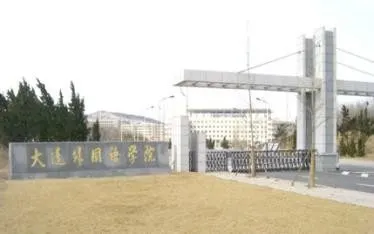
Dalian University of Foreign Languages accepts international students on programmes in the following fields: engineering, arts. Choose the level and programme that suit your goals.
Chinese language study at the university — from a few weeks to a year or longer. Suitable for those starting from scratch or preparing for the HSK before entering a main programme.
self-funded · language programme
The first level of higher education: usually four years of study, specialised subjects, internships and a graduation thesis. It opens the way to working in your field and to a master's degree.
self-funded
Advanced study after a bachelor's degree: research, applied projects and internships. It helps you become an expert in your chosen field and broaden your career opportunities.
self-funded
Dalian University of Foreign Languages is located in Dalian. Nihao Study consultants keep track of the deadlines and admission requirements of this university, and you can always check the most accurate and up-to-date information on its official website. In university rankings, it is ranked 469 in China and 4388 worldwide.
Come for a face-to-face meeting: together we will go through the requirements, deadlines, documents and study options that suit you.

At the meeting we will look at your situation, tell you which documents to prepare and by when, talk about possible programmes and help you decide on the next step.
Dalian University of Foreign Languages (DUFL, 大连外国语大学, Dàlián Wàiguóyǔ Dàxué), known in Russian as the Dalian University of Foreign Languages, is a public university in Dalian under the Liaoning provincial government. Other versions of the name also occur: the abbreviation DLUFL, 'Dalian University of Overseas Languages' and 'University of Foreign Languages of Dalian'; in China itself the university is colloquially shortened to 大外 (Dàwài).
DUFL's main focus is foreign languages, translation and interpreting, international communication and area studies, although it now also teaches economics, law, education, IT, management and the arts. The university is not part of the 211 or 985 projects or the national Double First-Class programme. Among Liaoning's universities, the official 211 list includes Northeastern University, Liaoning University and Dalian University of Technology; DUFL is not on it. After 2011 the 211 and 985 projects no longer admitted new members, and DUFL is also absent from the current national Double First-Class list.
In this overview Nihao Study has gathered the essentials about DUFL for those applying in 2026: status and rankings, programmes, dormitories, scholarships, HSK requirements, the application procedure and how it differs from other universities in Dalian.
| Item | Value |
|---|---|
| Campuses | Lüshun and Zhongshan, total area 1.26 million sq m |
| Structure | 22 academic units; 6 first-level master's disciplines and 9 professional master's programmes |
| Bachelor's Degree | 46 majors, 17 foreign languages taught |
| Students | 14,500 full-time students: 12,587 undergraduates, 1,620 master's students, 54 doctoral students, 196 international students |
| Teaching staff | 746 full-time teaching staff, including 83 professors and 246 associate professors |
| International links | Over 260 partners from 41 countries and regions; 10 Confucius Institutes |
Figures may differ between pages of the university website, depending on when they were updated. Here we use the latest general profile of DUFL: 46 programmes and 17 languages. The international brochure for the 2026 intake still lists 44 programmes and 18 languages. This does not change the university's status – the catalogue was simply recorded at different dates.
DUFL was founded in 1964 with the support of Premier Zhou Enlai. Its first name was the Dalian Japanese Language Special School: at the time the country needed personnel for the diplomatic service. In 1970 the school was renamed the Liaoning Foreign Languages Special School, and from 1974 it began training bachelor's students.
From 1978 the institution was called the Dalian Institute of Foreign Languages. University status and the current Chinese name 大连外国语大学 date from 2013. So the name 大连外国语学院 found in old documents and catalogues is the former name of the same institution, not a different university.
In 2024 DUFL joined a provincial project that prepares institutions to gain the right to award doctoral degrees. A special doctoral programme is already running – it focuses on diplomacy and international affairs in Northeast Asia – but bachelor's and master's programmes still make up the bulk of teaching. In total, the university has more than 70,000 graduates; over 100 of them have joined China's Ministry of Foreign Affairs.
| Ranking | Position | How to read it |
|---|---|---|
| ShanghaiRanking 2026 | 12th among China's language universities | Only specialised language universities are compared |
| ShanghaiRanking 2025 | 10th place, same category | The position changes from one edition to the next |
| EduRank 2026 | 315th in China and 3,917th in the world | Based on publications, not admission conditions |
| EduRank 2026, Dalian | 6th of 16 universities in Dalian | Only meaningful as a guide within the city |
| EduRank, linguistics | 2,370th in the world list | Reflects research activity |
According to EduRank, DUFL is credited with 1,484 publications and 7,807 citations; its main topics include linguistics, computational linguistics, education and the social sciences. These figures do not guarantee the quality of any individual programme: the ranking takes into account publications, visibility and alumni, but says nothing about dormitory comfort or your chances of admission.
What matters more for applicants is not to confuse the national Double First-Class programme with Liaoning's provincial programme. DUFL's Foreign Languages and Literature discipline is being developed as a high-level provincial discipline. The 2024 assessment placed it in the top 20 per cent of comparable disciplines in the province. This is notable regional recognition, but it does not put the university on the national Double First-Class (双一流) list. The official national list includes 147 universities; four of them are from Liaoning, and DUFL is not among them.
There is no confirmation that any DUFL disciplines are in the top 1 per cent of ESI. If you come across DUFL positions in Times Higher Education, QS, CWUR or U.S. News, check whether they have been carried over from Dalian University of Technology or Dalian University: false rankings most often arise from confusing similar English names.
DUFL's strength is not engineering but the combination of languages with translation, diplomacy, international relations and area studies. 12 of the university's bachelor's programmes have national first-class status and another 6 have provincial status; in addition, there are 4 national-level specialities. 5 courses are recognised as first-class at national level and 130 at provincial level.
DUFL has set up 45 research units, among them a simultaneous interpreting laboratory, a centre for Northeast Asian languages and a digital humanities laboratory. A new area within the foreign languages discipline, multilingual digital humanities, was introduced in 2025. The university therefore suits those who want to combine languages with data analysis, media or digital tools rather than limiting their studies to conversation practice.
DUFL has more than 260 partners — universities and organisations from 41 countries and regions. Every year the university runs over 150 international projects, and more than 900 students go abroad to study or do internships. There is also a dedicated education base for China–Russia exchanges; Russian studies has traditionally been one of the university's strong areas.
International students also come to DUFL itself: according to the university, there are roughly 1,500 student visits a year from almost 70 countries. This is the number of people who studied or took part in exchanges over the year, not the number of international students on campus at any one time.
International students at DUFL are taught by the School of Chinese Studies, which has worked with them since 1985. You can take the HSK here, as well as the exam that leads to a certificate for teaching Chinese as a foreign language. This makes DUFL a convenient place to start with a language course and then move on to a bachelor's or master's degree. Exam session dates change, so check the schedule in the official HSK account before registering.
Language majors: English and Business English, Japanese, Korean, Russian, German, French, Spanish, Italian, Portuguese, Polish, Arabic, Thai, Indonesian, and translation. International students will find it easiest to navigate the three Chinese-based programmes: Teaching Chinese to Speakers of Other Languages, Chinese Language and International Trade, and Chinese Language and Culture. They share a common foundation — intensive reading, listening, speaking and writing — while each has its own specialist subjects.
Besides languages, DUFL teaches economics and the digital economy, international trade, cross-border e-commerce, financial management, tourism, diplomacy, international relations, journalism and international communication. The technical majors are software engineering, computer science, information systems, network technology and big data management.
In 2026 DUFL is launching the Aveiro International Institute and a joint 4+0 Portuguese programme. Students who meet all the requirements receive a DUFL diploma and degree, as well as a University of Aveiro degree in multilingualism and international business. Whether this track is open to international students in your admission category needs to be checked separately.
| Level | What you can study | Condition |
|---|---|---|
| Language courses | Chinese language: long-term and short-term courses | Admission is open for both short and long programmes |
| Bachelor's Degree | Teaching Chinese to Speakers of Other Languages, Chinese culture, international trade | 4 years of study |
| Other bachelor's programmes | Business, foreign languages, international relations, IT, media, art | The list changes from one intake to the next |
| Master's in translation | Translation and interpreting: English, Japanese, Russian and other languages | 10 tracks announced for the 2026 scholarship intake |
Most programmes open to international students are taught in Chinese. Even on language majors — English, Russian or others — paperwork and administrative matters, as well as some university-wide general subjects, may be conducted in Chinese. It is best to request the curriculum for international students in advance rather than relying only on the English name of the programme.
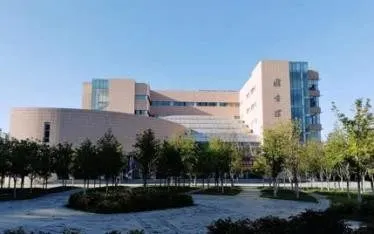
The address given for international admissions is 6 Lushun South Road West Section, Lüshunkou District, Dalian, Liaoning, 116044. The two campuses, Lüshun and Zhongshan, together cover 1.26 million square metres, with 470,000 square metres of buildings. The main campus is in Lüshunkou District, far from central Dalian, so when choosing accommodation consider the travel time to the centre, not just the distance on the map.
The grounds include teaching buildings, sports grounds, separate residential areas, Mingyang Lake and the New Moon Bridge. According to the 2026 admissions regulations, the library holds 2.15 million books. Since 2024 the ground floor of the library has housed an exhibition space devoted to the modern history of Dalian and Lüshunkou.
International students in the 2026 intake are offered several accommodation options. The new building has small single rooms of 13, 15 or 19 square metres, each with its own bathroom and hot water, plus a shared laundry. The North Building offers standard double rooms, rooms for single occupancy and six-person apartment units.
| Accommodation type | Conditions |
|---|---|
| New building, types A, B, C | En-suite bathroom, hot water, shared laundry |
| North Building: a place in a double room | 26-square-metre room with its own bathroom |
| North Building: single occupancy | Room of 18 to 22 square metres |
| Six-person unit | Three bedrooms, two bathrooms and a living room |
The fee per semester is calculated on the basis of 120 days. Accommodation during the holidays, late check-in and the availability of the room type you want are confirmed separately. Check the current price of each option on the university's official website.
For bachelor's programmes, the university publishes the annual tuition fee, the registration fee (paid only after enrolment) and the cost of compulsory medical insurance separately. Language courses and master's programmes have their own rates, which cannot be inferred from the bachelor's price. Check the current amounts for your intake and what the payment covers — textbooks, accommodation, holidays — on the university's official website or with the admissions office.
DUFL officially accepts students on the Chinese Government Scholarship, the International Chinese Language Teachers Scholarship and the Liaoning Provincial Government Scholarship. Places are allocated competitively, separately by level of study and major, so start by finding a programme at your level in the current call for applications.
Applications for the translation project for the 2026 intake were accepted until 23 March 2026. This date does not apply to the next cycle: new deadlines and quotas are published in a fresh DUFL announcement.
Applicants are generally expected to be aged 18 to 25, to hold citizenship of another country and to have completed secondary school. The Teaching Chinese to Speakers of Other Languages programme requires HSKK at intermediate level and HSK 4 with at least 180 points. Other bachelor's programmes require HSK 5 with a minimum of 195 points.
Tuition is paid only after the official admission decision — the university specifies that the registration fee is paid after enrolment. Scholarship applicants should check in parallel that they meet two sets of requirements: the university's and the scholarship programme's.
| University | Status | Main focus |
|---|---|---|
| Dalian University of Foreign Languages, DUFL, 大连外国语大学 | Provincial public university | Foreign languages, translation and international communication |
| Dalian University, DLU, 大连大学 | Multidisciplinary municipal university | Many different fields |
| Dalian University of Technology, DUT | National research university | Engineering and technology |
| Dalian Polytechnic University, DLPU | Provincial university | Design, light industry, engineering |
| Dalian Maritime University, DLMU | National sector-specific university | Transport and maritime studies |
The simplest way is to look at the Chinese name: DUFL's is 大连外国语大学, and its profile is languages. If the English name contains Technology, it is DUT; if Polytechnic, it is DLPU; and plain Dalian University is a separate institution. Be especially careful to check names when looking up rankings, addresses or application forms.
The main Russian form corresponds to 'Dalian University of Foreign Languages'; spelling the Russian adjective for 'Dalian' without the soft sign is a mistake. 'University of Foreign Languages of Dalian' is an understandable calque but not the main variant. The official international name is Dalian University of Foreign Languages; the university itself uses the abbreviation DUFL on its English-language pages. DLUFL is an extended abbreviation that appears in some catalogues. In Chinese, the university is called 大外 (Dàwài) for short; the full name is 大连外国语大学 (Dàlián Wàiguóyǔ Dàxué).
No. The university is not on the official lists of Project 211 or the national Double First-Class programme. Provincial status as a strong language discipline is not the same as national 双一流, and it is wrong to call it that.
For the International Chinese Language Education programme — intermediate HSKK and HSK 4 with a score of at least 180. For all other bachelor's programmes — HSK 5 with at least 195.
English, Russian and other languages are studied here as majors, but the published international bachelor's brochure sets HSK requirements. This means that the main language of most available programmes is Chinese. Whether an English or Russian track exists needs to be confirmed in a letter from the admissions office.
The university publishes the tuition fee, registration fee and insurance cost separately for each intake. Check the current amounts for your year on DUFL's official website or with the admissions office.
The price depends on the building and room type — from a place in a six-person unit to a single room in a new building. The university confirms current rates and room availability.
Yes, DUFL is one of the host universities for the Chinese Government Scholarship. However, the available levels, majors and quotas are set by each specific competition.
Yes. The School of Chinese Studies holds the HSK, as well as the exam for the Certificate for Teachers of Chinese to Speakers of Other Languages.
A passport, school-leaving certificate or a certificate from your place of study, grades, medical form, CSCA, HSK and HSKK results, and a photo; sometimes documents on citizenship and guardianship are also needed. Requirements may change in the new cycle.
The main campus and the international admissions office are at 6 Lushun South Road West Section, Lüshunkou District, Dalian, Liaoning, 116044. This is Lüshunkou District — not the central part of Dalian.
DUFL specialises in languages, translation and international communication; it is not part of Projects 211 and 985. Dalian University of Technology is an engineering university that is part of 211, 985 and the national Double First-Class programme.
Dalian (大连) sits at the very tip of the Liaodong Peninsula. It is called the 'Pearl of the North' and the city of squares. Dalian is known for its European architecture and clean beaches, and as a centre of fashion and IT.
In atmosphere, Dalian is perhaps the least like a typical Chinese city, and it is a comfortable place to study: lots of greenery, sea air, a lively international scene, and internships in the well-developed IT industry, for example at Dalian Software Park. Parents value the good environment and climate, safety, consulates and international clinics, well-established international connections and well-organised campuses by the sea.
You work with Nihao Study specialists. They will help you put together a portfolio and a set of documents, draw up a study plan and choose a university or college and a specialty that genuinely interest you.
We take care of every stage of admission, from choosing to enrolment
We will gather, prepare, certify and send your documents to the institution
We will show the admissions committee your strengths
We run training sessions and courses so you can prepare with more confidence
We will help you settle in at the start of your studies and keep moving forward
Nihao Study specialists select universities and colleges that match the applicant's goals and means. We make sure the teachers are practitioners and that the knowledge will be useful in your profession.
We examine curricula, talk to students and teachers and look at which specialties employers need, and use this information to select options for the applicant.
Advisers guide the applicant from the first consultation to enrolment, help build a plan and spot mistakes in time that could get in the way.
The cost of our support depends on the programme and the partner university; you'll get an exact quote after a free consultation.
Get a quoteA free 15-minute consultation: together we will choose a university or college and a programme that suit your goals and budget.
Apply with peace of mind: we handle the documents, deadlines and correspondence with admissions committees, and you save time and energy.
Don't want to wait for a call? Message us in the chat.
Message us in chat University · Anshan
Language courses · Bachelor's Degree · Master's Degree
University · Dalian
Language courses · Bachelor's Degree · Master's Degree
University · Dalian
Language courses · Bachelor's Degree · Master's Degree