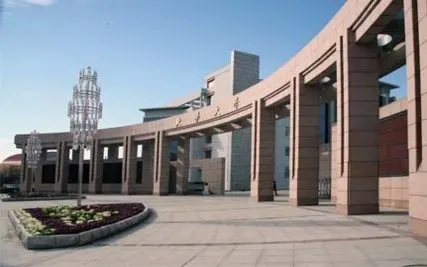
Beihua University
University · Jilin
Language courses · Bachelor's Degree · Master's Degree
CFRSVS · 长春方晟俄语中等职业学校
Changchun Fangsheng Russian Secondary Vocational School accepts international students on programmes in the following fields: education. Choose the level and programme that suit your goals.
Secondary vocational education: practice-oriented programmes where you learn the language and a profession. Suitable for graduates of grades 9 and 11, and some programmes lead on to a bachelor's degree.
Check upcoming application deadlines for this level with your Nihao Study adviser.
All programmes at this level →Chinese language study at the university — from a few weeks to a year or longer. Suitable for those starting from scratch or preparing for the HSK before entering a main programme.
self-funded
Cost: 15 000 ¥/year
Changchun Fangsheng Russian Secondary Vocational School is located in Changchun. Nihao Study consultants keep track of the deadlines and admission requirements of this university, and you can always check the most accurate and up-to-date information on its official website.
Come for a face-to-face meeting: together we will go through the requirements, deadlines, documents and study options that suit you.

At the meeting we will look at your situation, tell you which documents to prepare and by when, talk about possible programmes and help you decide on the next step.
Changchun Fangsheng Russian Secondary Vocational School (CFRSVS for short; 长春方晟俄语中等职业学校, Chángchūn Fāngshèng Éyǔ Zhōngděng Zhíyè Xuéxiào) is a private full-time secondary vocational school (民办全日制中等职业学校) that reports directly to the Changchun Municipal Education Bureau in Jilin Province. The school opened in 1998, has officially admitted international students since 1999 and, according to its own information, remains the only secondary vocational institution in Jilin that combines Russian with several applied specialities. Russian-speaking applicants often call it simply Fangsheng College or Changchun Fangsheng (following the English word order). In China the school also has a second, historical name – 远东 (Yuandong, meaning 'Far East'): 长春市远东俄语中等职业学校 is the very same institution, and its domain name ydeyxx.cn is derived from this name.
It is worth making clear from the outset that Fangsheng is not a university but a secondary vocational institution (中职). Study follows a 'language + speciality + university admission' model, and graduates receive a secondary vocational diploma rather than a bachelor's degree. For this reason, statuses such as Double First-Class or Project 211 do not apply to the school, nor do university rankings. What it does have, however, is something most large universities lack: experience of working with applicants from the CIS built up since 1999, and a Russian-speaking environment at the core of its profile.
In the Nihao Study overview below you will find what matters to 2026 applicants: the school's official status and why it does not appear in world rankings, the specialities open to international students, what the costs are made up of, how the internal scholarships work, the requirements for age and number of completed school grades, and how not to confuse Fangsheng with Changchun's large public universities and other Russian-language schools in Jilin.
To make the school's status and specialities easier to follow, here are its key facts in a table. Source: the official section of the school's website.
| Item | Data |
|---|---|
| Founded | 1998 |
| Accepting international students since | 1999 |
| Type | private secondary vocational school (中职), not a university |
| Supervised by | Changchun Municipal Education Bureau |
| Location | Jilin province, Changchun; campus in Gongzhuling |
| Specialisation | Russian language combined with applied specialities |
| International graduates | over 1000 |
| Applicant age | 15 to 21 |
| Language of instruction | Chinese |
These figures show clearly what Fangsheng is: not a large research university but a small private vocational school specialising in Russian and business Chinese. Comparing it with Changchun's state universities by number of students or teachers would therefore be methodologically wrong.
The story begins in 1998, when a private secondary vocational school with a focus on Russian opened in Changchun. As early as 1999 the school officially began admitting international students and, by its own account, has since graduated more than a thousand people from different countries and helped them get into Chinese universities. Over a quarter of a century it has taught students from Russia, Kazakhstan, Tajikistan and Mongolia, as well as some from England and France. Russian-speaking students are a familiar, core audience for the school.
Applicants are often confused by the fact that the school has two names. The current one, 长春方晟俄语中等职业学校 (Fangsheng), appears on the sign and in documents, but the website also gives a second name in brackets: 长春市远东俄语中等职业学校, the Yuandong ("Far East") school. The website address ydeyxx.cn comes from 远东 (Yuandong), and search engines show both versions, 方晟 (Fangsheng) and 远东 (Yuandong). This is one school, not two. To avoid mistakes when applying, check the Chinese-character name and the official website.
Formally it is a non-state (民办) full-time secondary vocational school; it reports directly to the Changchun Education Bureau and holds a licence for secondary vocational education. In other words, it is an official Chinese 中职 school, closest to a vocational college or technical school; it is neither a language course nor a university. Everything else follows from this status: what documents the school issues, whom it admits and where it leads its graduates next, to university or to work.
Sooner or later this question comes up for anyone used to choosing a school by its ranking. Times Higher Education, CWUR, EduRank and similar international aggregators rank universities by research publications, citations and research activity, so a secondary vocational school cannot appear in them at all. The reason is not the quality of teaching but the very nature of a 中职 school: Fangsheng does no fundamental research and does not award bachelor's degrees, so it simply does not fit the methodology of such rankings.
For the same reason, statuses designed for research universities (the 大学 category) do not apply to the school: Project 211, Project 985 and the Double First-Class programme (双一流). A vocational school does not and cannot have them, and a website that credits Fangsheng with such distinctions is misleading applicants. It makes more sense to judge the school by other criteria: its narrow Russian-language specialisation, its experience with international students, its range of specialities and, above all, where its graduates go on to study. If Fangsheng is a stepping stone to higher education for you, it is worth looking at Changchun's universities at the same time so that you understand where this path leads.
This small private school has three features that most language schools and courses lack.
The first is specialisation. Fangsheng presents itself as the only secondary vocational school in Jilin province where Russian is the core subject alongside several applied fields. An applicant from the CIS finds a ready-made bilingual environment here: some students are Chinese learning Russian, others are international students learning Chinese, and the school has spent decades refining its teaching methods for this mix.
The second is the 语言+专业+升学 (language + speciality + further study) model, which the school has made its motto. Language here is the foundation rather than the end goal: students first reach working-level Chinese and then either master an applied speciality or prepare to enter a Chinese university. According to the school, its teachers of Chinese as a foreign language in the international department have around 24 years of experience; they have written their own series of textbooks for Russian-speaking students (comprehensive, conversational, business and tourism Chinese) as well as HSK preparation materials for levels 1 to 6. For students aiming at a bachelor's or master's degree, the department tailors the curriculum to their future speciality and, once they reach HSK 4, adds subject courses such as business management, China studies and international Chinese language teaching.
The third is the focus on language outside the classroom. The school pairs every international student with a language partner among Chinese students learning Russian, so speaking practice continues in their free time. Another feature of the international department is that study is combined with regular visits to Chinese families: from time to time students stay with local people and see their everyday life first-hand. In addition, new arrivals are introduced to the community of students from Russia in Changchun, whose members explain how to live and study in China. For a teenager going abroad for the first time, this kind of support often matters more than any ranking position.
Academically, the school is a compact multi-disciplinary 中职 school. For Chinese students the website lists four main specialities, while international students follow a separate track through the international department.
The main field is business Russian (商务俄语). It is built on grammar, basic Russian, reading, listening, speaking, writing and translation, with business correspondence and international trade practice added on top. The tour guide services speciality (导游服务) trains Russian-speaking guides. Logistics services and management (物流服务与管理) covers the basics of logistics, warehousing and distribution, procurement and supply chain management. Finally, social and cultural arts (社会文化艺术) focuses on graphic design and the basics of contemporary art.
Russian-speaking applicants are offered the mirror image of business Russian: business Chinese (商务汉语), which the school calls its main secondary vocational programme for international students. In addition, the international department runs intensive Chinese courses from scratch and a foundation programme up to HSK 4–6. The choice of subjects is flexible: according to the school, for the same tuition fee students choose their own subjects to suit their goal, whether that is entering a Chinese university or working for a China-related trading company.
International students can choose from several formats of different length, summarised in the table below. It is best to confirm the exact set of subjects when applying, as groups are formed around each student's goal.
| Programme | Duration | Goal and audience |
|---|---|---|
| Chinese language courses | 1 year | learning from scratch and HSK exam preparation |
| Secondary vocational, business Chinese (商务汉语) | 3 years | 中职 diploma, China-related career or business |
| Foundation programme | according to the curriculum | HSK 4–6 and university admission |
That gives two tracks. If you need the language and want to reach conversational level quickly, the one-year programme is a good fit. If your goal is a diploma or admission to a Chinese university, it makes more sense to choose the three-year format followed by a move to university.
The school agrees tuition fees individually depending on the programme, and rates for the dormitory, meals and study materials are revised from year to year, so check the current figures on the school's official website or with the admissions office. You can pay in cash or via Alipay and WeChat Pay.
Students live on the school grounds, in double rooms only. The campus is outside central Changchun, in Gongzhuling, which is administered by the city: it is in Daling town, about four kilometres west along road S105. The suburban location is quiet, which for a school attended by teenagers is more of an advantage: fewer distractions, and everyday costs are lower than in the centre of a big city.
The school's own scholarships should not be confused with Chinese government scholarships. The main one, the Chinese Government Scholarship (CSC), which covers tuition and accommodation, is traditionally intended for universities (bachelor's, master's and doctoral programmes), and 中职 schools such as Fangsheng are not among its regular recipients. It makes sense to look into how the CSC scholarship works if Fangsheng is a step towards university admission for you rather than the final goal.
The school's own reward system is more modest. Scholarships are not awarded on enrolment but from the second year onwards and purely on academic performance: in the first year students study on standard terms and earn the right to support with good grades. This is a typical arrangement for private schools in China, and you should not expect it to cover all your study costs; it is more a reward for hard work than full funding. It is best to ask the admissions office about the conditions and amounts in advance.
Support for international students at Fangsheng rests on three pillars. First, the teachers: besides classes, there is a dedicated student affairs office whose staff help students settle into life in China. Second, Chinese peers: the school deliberately introduces international students to Chinese students learning Russian so that they practise the language outside lessons too. Third, the student community: newcomers are helped to join the community of students from Russia in Changchun and learn from those who have already adapted.
The school pays particular attention to cultural immersion through Chinese families: alongside classes, students stay with local people from time to time, which noticeably speeds up learning spoken Chinese and reduces the stress of an unfamiliar way of life. For a 15- or 16-year-old abroad for the first time, it is often this combination of teacher, family and community that decides whether they settle in China.
For an international student, the admission process follows a clear sequence of steps.
The school's name gets confused in two ways: with its own second name, and with large state universities that also have "Changchun" in their names.
| Institution (Chinese name) | Level | Focus |
|---|---|---|
| Changchun Fangsheng Russian Secondary Vocational School (CFRSVS), 长春方晟俄语中等职业学校, the subject of this page | secondary vocational school | Russian language, business Chinese |
| Former name of the same school: 长春市远东俄语中等职业学校 (Yuandong) | the same institution | the same; the domain ydeyxx.cn comes from this name |
| Jilin University, 吉林大学 | university | state, large, multi-disciplinary |
| Changchun University, 长春大学 | university | multi-disciplinary, municipal |
| Northeast Normal University, 东北师范大学 | university | languages and education |
The difference comes down to one thing: Fangsheng and Yuandong are one private secondary vocational school with two names, while Northeast Normal University, Jilin University and Changchun University are separate large state universities that award bachelor's degrees and above. The shared word "Changchun" is easily misleading, but they differ fundamentally in level of education: Fangsheng is the starting point and preparation, and these universities are the next stage, which a graduate of the school may go on to enter later.
There are seven variants. The standard Russian form is considered to be the full name ‘Changchun Fangsheng Russian Language Secondary Vocational College’, which accurately conveys the school’s profile. ‘Fang Sheng’ and a Russian spelling with a simplified vowel are considered incorrect, although understandable. At the same time, the Russian-language pages of the school’s own website use yet another spelling, ‘Fansheng’, so in practice both variants are used. ‘Changchun Fangsheng’ follows the English word order: correct in meaning, but not the standard form. The official international name is Changchun Fangsheng Russian Secondary Vocational School. The abbreviation CFRSVS (in Latin letters) is used in correspondence and directories. 远东 (Yuandong, ‘Far East’) is the former, historical name of the same institution (长春市远东俄语中等职业学校), which is where the domain ydeyxx.cn comes from. The full original Chinese name is 长春方晟俄语中等职业学校 (Chángchūn Fāngshèng Éyǔ Zhōngděng Zhíyè Xuéxiào).
CFRSVS is the same as Fangsheng College (长春方晟俄语中等职业学校): a private secondary vocational school (中职), not a university. Graduates receive a diploma of secondary vocational education; no bachelor’s degree is awarded here. The closest analogy is a college or technical school with a language focus.
The main language of instruction is Chinese. International students are accepted without knowing the language: the international department uses its own textbooks written for Russian speakers (comprehensive, spoken, business and tourism Chinese) and prepares students for HSK at the same time.
No. 双一流, 211 and 985 are statuses exclusively for research universities in the 大学 category; they simply do not apply to a secondary vocational school. Fangsheng is a 中职 school, and you will not find it in university rankings.
No HSK certificate is required on entry: the school is designed from the outset for students starting from scratch and brings them up to the required level itself. As a rule, the goal is HSK 4, and HSK 4–6 for continuing studies.
Students are housed only in double rooms. Prices for the dormitory, meals and study materials change from year to year, and the tuition fee is agreed individually depending on the programme, so it is best to check the current terms on the school’s official website or with the admissions office.
There are internal scholarships, but they are awarded not on enrolment but from the second year onwards, based on academic performance. The government CSC scholarship does not cover secondary vocational schools: it is intended for universities, from bachelor’s level upwards.
Applicants aged 15 to 21 who have completed 9 years of school are accepted. Students who only turn 15 this year may also be enrolled.
The school is in Daling Town, Gongzhuling, not far from Changchun: about four kilometres west along the S105 highway. The nearest major airport is Changchun Longjia. Students are advised to arrive as a group, and the school can arrange airport pick-up.
Fangsheng and Yuandong (远东) are the same private secondary vocational school; it simply has two names. Northeast Normal University, Jilin University and Changchun University are independent major state universities that award bachelor’s degrees and higher. Fangsheng, on the other hand, is a starting and preparatory stage, not a university.
The main set is a certificate of completing 9 years of school and an international passport; minors will also need notarised parental consent and supporting documents. For this year’s intake, the admissions office gave a deadline of 30 July. You can pay in cash or via WeChat Pay or Alipay.
Changchun (长春) is called the city of cars and cinema: it is the centre of China's car industry, home to FAW factories, and an important base of Chinese film-making. Among its best-known sights are a sculpture park and the palace of Puyi, the last emperor of China.
Here you can get a solid engineering education in a calm setting. The city has plenty of forests and parks — green spaces cover 40% of its area — and in winter snow towns appear. For parents, it matters that Changchun is safe and affordable, the seasons change clearly and predictably, international students receive well-thought-out support, and high-speed trains run to Beijing and Harbin.
You work with Nihao Study specialists. They will help you put together a portfolio and a set of documents, draw up a study plan and choose a university or college and a specialty that genuinely interest you.
We take care of every stage of admission, from choosing to enrolment
We will gather, prepare, certify and send your documents to the institution
We will show the admissions committee your strengths
We run training sessions and courses so you can prepare with more confidence
We will help you settle in at the start of your studies and keep moving forward
Nihao Study specialists select universities and colleges that match the applicant's goals and means. We make sure the teachers are practitioners and that the knowledge will be useful in your profession.
We examine curricula, talk to students and teachers and look at which specialties employers need, and use this information to select options for the applicant.
Advisers guide the applicant from the first consultation to enrolment, help build a plan and spot mistakes in time that could get in the way.
The cost of our support depends on the programme and the partner university; you'll get an exact quote after a free consultation.
Get a quoteA free 15-minute consultation: together we will choose a university or college and a programme that suit your goals and budget.
Apply with peace of mind: we handle the documents, deadlines and correspondence with admissions committees, and you save time and energy.
Don't want to wait for a call? Message us in the chat.
Message us in chat University · Jilin
Language courses · Bachelor's Degree · Master's Degree
University · Changchun
Language courses · Bachelor's Degree · Master's Degree