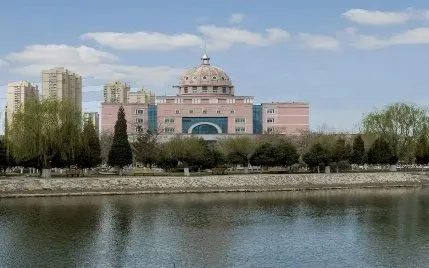
Anshan Normal University
University · Anshan
Language courses · Bachelor's Degree · Master's Degree
辽宁科技大学
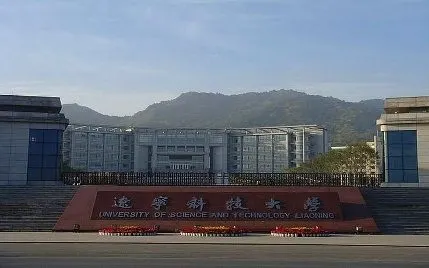
University of Science and Technology Liaoning accepts international students on programmes in the following fields: business, engineering, medicine, education, economics. Choose the level and programme that suit your goals.
A short language programme during the summer holidays: Chinese classes and getting to know the campus and the city. A convenient way to try studying in China before applying for a main programme.
Check upcoming application deadlines for this level with your Nihao Study adviser.
All programmes at this level →Chinese language study at the university — from a few weeks to a year or longer. Suitable for those starting from scratch or preparing for the HSK before entering a main programme.
self-funded · language programme
Cost: 6 000 ¥/semester
self-funded · language programme
Cost: 12 000 ¥/year
Foundation programme: language and core subjects before a bachelor's degree. It helps you strengthen your knowledge and get used to studying in China before the main programme begins.
self-funded
Cost: 15 000–17 000 ¥/year
self-funded
Cost: 6 000 ¥/semester
The first level of higher education: usually four years of study, specialised subjects, internships and a graduation thesis. It opens the way to working in your field and to a master's degree.
self-funded
Cost: 15 000–17 000 ¥/year
Advanced study after a bachelor's degree: research, applied projects and internships. It helps you become an expert in your chosen field and broaden your career opportunities.
scholarship-funded
Cost: up to 20 000 ¥/year
University of Science and Technology Liaoning is located in Anshan. Nihao Study consultants keep track of the deadlines and admission requirements of this university, and you can always check the most accurate and up-to-date information on its official website. In university rankings, it is ranked 191 in China and 1755 worldwide.
Come for a face-to-face meeting: together we will go through the requirements, deadlines, documents and study options that suit you.

At the meeting we will look at your situation, tell you which documents to prepare and by when, talk about possible programmes and help you decide on the next step.
University of Science and Technology Liaoning (USTL, 辽宁科技大学) is located in Anshan and is one of the notable technical universities of Liaoning Province. Russian-language texts use several other renderings of the name, as well as the short form Liaokeda. It is always the same comprehensive university: its core is engineering, but it also offers programmes in natural sciences, economics, management and law.
International applicants are drawn to USTL by its combination of a technical profile, English-taught programmes, the chance of a scholarship and its own international dormitory. If you are choosing between several cities and universities, first compare the universities as a whole, and then the requirements of specific programmes.
Below, Nihao Study has gathered the main facts about USTL for 2026 applicants: figures, programmes, scholarships, campus, accommodation and documents. If conditions change for the new intake, rely on the official invitation and the rules of your chosen programme.
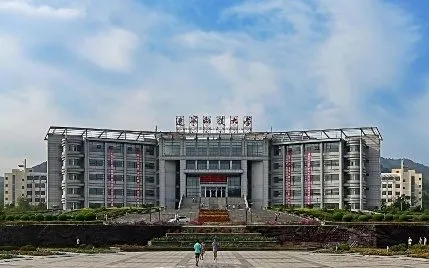
The university is a large complex: the campus covers 1.84 million square metres, and the library holds more than 1.59 million books and periodicals.
| Indicator | Value | What it gives students |
|---|---|---|
| Year founded | 1948 | The university builds on a long engineering and metallurgical tradition |
| Campus | 1.84 million square metres | Teaching buildings, housing and sports facilities are concentrated on a large university site |
| Full-time bachelor's students | More than 20,373 students | USTL has a large student community |
| Postgraduates | More than 3,122 students | Postgraduate training is well developed |
| Teaching staff | 1,236 people | Teaching is delivered by a large academic staff |
| Structure | 19 faculties and colleges | The choice is not limited to engineering |
These figures are best viewed together. Campus area on its own says nothing about the quality of a particular programme, but it does give a sense of the scale of the environment: lecture halls, laboratories, the library, dormitories and places to relax. A large student body points to well-developed internal infrastructure, but only decide to apply after checking the language of instruction, the programme content and the funding conditions.
USTL traces its history back to 1948 and is one of China's first metallurgical universities. It originally trained staff for the metallurgical industry, and over more than seven decades it has produced many engineers and technical specialists. Hence the university's unofficial nickname, ‘the cradle of metallurgical engineers’.
USTL is accredited by the Ministry of Education of the PRC and the Liaoning Provincial Department of Education. The university has officially admitted international students since 1996 and has taken part in the Chinese Government Scholarship programme (CSC) since 2014. So international education here is not a one-off project but an established part of the university's work.
Its metallurgical roots do not make USTL a narrow industry institute. Today it teaches engineering and natural sciences, economics, management and law. When choosing a programme, do not confuse the university's general reputation with what is in the curriculum of a specific programme: tradition sets the background, but you are applying for a specific level, language and field.
USTL is one of the leading technical universities in Liaoning Province.
In practice, what matters more than a single ranking line is how well the programme fits your goals. Check the language of instruction, the department's profile, the admission requirements, the accommodation conditions and the scholarship track. For an engineering university this is especially important: the laboratory facilities and the faculty's specialisation often mean more than the overall position in a league table.
Figures for other Chinese universities with similar English names do not apply to USTL. When checking documents, look for the Chinese name 辽宁科技大学, the English name University of Science and Technology Liaoning and the abbreviation USTL.
The university grew up around training specialists for metallurgy. That is why USTL is especially worth considering for those interested in materials, engineering, production processes and the scientific foundations of technical disciplines. Not every student studies metallurgy, but this history explains the applied character of the whole university environment.
The campus has 13 provincial-level laboratories. Those planning a master's degree should find out, before applying, about the department, a possible supervisor and what laboratory work the curriculum includes.
Because it is multidisciplinary, USTL suits more than future engineers: the university offers economics, management and law. If you choose one of these fields, check the language of the specific programme in advance, as the general English-language description of the university does not answer this question.
When comparing USTL with other universities, compare the same levels of study and the same language of instruction. Only then can accommodation conditions, scholarship availability and HSK requirements be compared fairly.
USTL offers international students English-taught bachelor's and master's programmes. The exact list of fields may depend on the level of study and the current admission round, so check it for your intake.
There are also Chinese-taught programmes and a bilingual format in which teachers support students in English. Before applying, find out the exact name of the programme, the main language of lectures and exams, and the requirements for the final thesis.
| Format | What is known | What to check before applying |
|---|---|---|
| Bachelor's in English | English-taught programmes available | The exact list of programmes and how to prove your English proficiency |
| Master's in English | English-taught programmes available | The department, research area and language in which the thesis is written |
| Chinese-taught programmes | Bachelor's: HSK 4; master's: HSK 5 or higher | Which version of the certificate is accepted and how long it is valid |
| Bilingual format | Teachers can help in English | How many courses are taught in each language |
| Language preparation | Courses follow the HSK standard | Duration, conditions and progression to the main programme |
Plan your HSK in advance, but check the required level against USTL's own conditions. The certificate is only one part of the application: the university also looks at your education, your documents and whether you are a good fit for the chosen level.
USTL has three main support programmes: the Chinese Government Scholarship (CSC), the Liaoning Provincial Government Scholarship and an academic scholarship awarded by the university itself. They work differently, so one cannot simply replace another.
The university has taken part in the CSC programme since 2014. It covers tuition and accommodation and also includes a monthly living allowance.
It is worth studying the CSC competition rules in advance, but always check the final conditions against the USTL intake specifically.
First-year students can apply for this scholarship; it covers tuition and accommodation for the whole academic year. Check which levels and programmes are included in your round when you apply.
This scholarship is partial. It is awarded to second- to fourth-year students based on academic results, so it is intended for those already studying at the university.
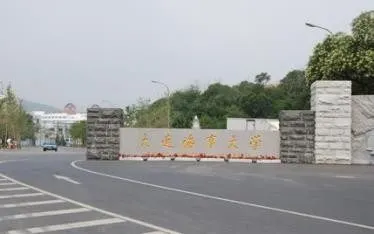
The USTL site covers 1.84 million square metres and is essentially a self-contained student town. It has teaching buildings with multimedia classrooms, laboratories and research centres, a library and sports facilities, as well as shops and supermarkets, canteens and cafeterias, a medical centre, bank branches and ATMs.
For sport there are tennis courts, basketball and volleyball courts, stadiums and gyms. The library holds more than 1.59 million items, and readers have access to electronic databases. So most everyday needs can be met without leaving the campus.
Having a facility is not everything: find out the access rules in advance too. For example, laboratory opening hours depend on the faculty, and the gym timetable may change. Photos give a first impression, but it is best to confirm your everyday expectations right before moving in.
There is a separate international dormitory on campus for international students. Its level of comfort is rated as higher than the average at Chinese universities, and the building is kept clean.
Each room has beds, a desk, bookshelves and a wardrobe, plus a TV and air conditioning. Every room has its own bathroom with a shower and toilet, and hot water is available around the clock. Internet access is via Wi-Fi or LAN.
There is a shared kitchen on every floor and a laundry room with washing machines on the ground floor. Being able to cook and do laundry without leaving the building saves unnecessary trips.
| Room type | Accommodation |
|---|---|
| Single | Allocated only if places are available |
| Double | The standard option for international students |
There are few single rooms, so most new international students are housed in double rooms.
When choosing between the two options, remember that sharing a room helps you settle into student life faster but requires a willingness to share space. A single room offers more privacy, but it cannot be guaranteed. Either way, the canteens, library, teaching buildings and sports facilities are all on campus.
It is best to check current accommodation and tuition costs, as well as what the scholarship covers, on the university's official website. A personal budget usually includes insurance, phone and internet, transport, food and document processing; the final amounts depend on your lifestyle.
The campus is flanked by two well-known tourist sites. To the east is Qianshan National Forest Park, a 5A-rated mountain resort under the national classification, known as the Principal Mountain of Eastern Liaoning. To the west is Jade Buddha Court, one of the country's first 4A-level resorts.
Jade Buddha Court is home to the world's largest jade Buddha, carved from a single piece of natural jade weighing more than 260 tonnes. Having such places nearby lets students balance intensive study with walks in nature and cultural outings. The university's page also links the scenic surroundings with the academic atmosphere of the campus.
Start by choosing your level and language of study. Until you have decided exactly what you are applying for, a bachelor's or master's degree, an English-taught, Chinese-taught or bilingual programme, it is too early to gather documents.
Do not confuse the requirements for the two levels. The personal statement and recommendations are needed for master's programmes, while the minimum age of 18 and 12 confirmed years of schooling are bachelor's conditions.
Make sure your name is spelled the same in all translations and documents. The order is: first good-quality scans, then notarised translations, then a check of the full set against the programme requirements. If you are applying for a scholarship, keep a separate list of documents for it: the scholarship application is linked to admission, but their forms and deadlines do not always match.
USTL is worth considering if you want a large multidisciplinary university with a technical foundation, are interested in engineering or natural sciences and want to live on campus. English-taught programmes let you start studying without switching fully to Chinese straight away, but Chinese will still be useful in everyday life and communication.
The university also suits those prepared to compete for a CSC scholarship, a Liaoning government scholarship or a USTL academic scholarship. If these conditions match your goals, check the requirements of the current intake.
Written requirements help you compare universities, while video lets you see everyday life. A student video showing the university, the campus, the study process and personal impressions helps you compare the official description with real experience.
A video does not replace the admission documents: it helps you get a feel for the atmosphere, but check figures, fees and requirements against the university's current conditions.
All of these variants appear in searches and in Russian-language texts, and the Russian version of this page uses one of the Russian translations. The official English name is University of Science and Technology Liaoning, abbreviated USTL, and the Chinese name is 辽宁科技大学. The other Russian names are translation variants, and one Russian form simply renders the abbreviated Chinese name.
The university is in Anshan, Liaoning Province. Its history began in 1948, and from the very start it was linked to training metallurgists, which is why it is called ‘the cradle of metallurgical engineers’.
There are more than 20,373 full-time undergraduates and more than 3,122 postgraduates. The university has 1,236 teaching staff, and its academic structure comprises 19 faculties and colleges.
Yes, you can study in English here at both bachelor's and master's level.
Chinese-taught bachelor's programmes require HSK 4 or a completed language course, and Chinese-taught master's programmes require HSK 5 or higher.
The scholarship pays for tuition and accommodation and also provides a monthly living allowance.
It is intended for first-year students and covers tuition and accommodation for the whole academic year.
This partial scholarship is awarded based on academic performance to second- to fourth-year students.
The main option is a double room; single rooms are allocated only when places are available. The cost depends on the room type; see the university's official website for current rates.
Yes. Each room has its own shower and toilet, air conditioning, a TV and furniture, and internet via Wi-Fi and LAN. Hot water is available around the clock. There is a kitchen on every floor and a shared laundry room on the ground floor.
You will need an application form, a copy of your passport, a notarised school certificate or diploma translated into Chinese, transcripts with translations, a medical certificate, photos and, if required, a language certificate. For master's programmes, a personal statement and two recommendation letters are added.
Anshan (鞍山) is known as China's steel capital. It is home to a 260-tonne jade statue of the Buddha, one of the largest in the world. The city is also famous for the Tanggangzi hot springs, which were prized by emperors of the Tang dynasty.
In Anshan, students will find an unhurried pace of life and very low tuition and accommodation costs. The local universities are strongest in technical subjects, above all metallurgy and engineering. There are beautiful parks for walks and the Qianshan Mountains for hiking. Winters here bring real snow. For parents, it matters that the city is safe and compact and easy to find your way around, that Shenyang and Dalian are easy to reach by rail, that there are sanatoriums and medical centres, and that the campuses are cosy.
You work with Nihao Study specialists. They will help you put together a portfolio and a set of documents, draw up a study plan and choose a university or college and a specialty that genuinely interest you.
We take care of every stage of admission, from choosing to enrolment
We will gather, prepare, certify and send your documents to the institution
We will show the admissions committee your strengths
We run training sessions and courses so you can prepare with more confidence
We will help you settle in at the start of your studies and keep moving forward
Nihao Study specialists select universities and colleges that match the applicant's goals and means. We make sure the teachers are practitioners and that the knowledge will be useful in your profession.
We examine curricula, talk to students and teachers and look at which specialties employers need, and use this information to select options for the applicant.
Advisers guide the applicant from the first consultation to enrolment, help build a plan and spot mistakes in time that could get in the way.
The cost of our support depends on the programme and the partner university; you'll get an exact quote after a free consultation.
Get a quoteA free 15-minute consultation: together we will choose a university or college and a programme that suit your goals and budget.
Apply with peace of mind: we handle the documents, deadlines and correspondence with admissions committees, and you save time and energy.
Don't want to wait for a call? Message us in the chat.
Message us in chat University · Anshan
Language courses · Bachelor's Degree · Master's Degree
University · Dalian
Language courses · Bachelor's Degree · Master's Degree
University · Dalian
Language courses · Bachelor's Degree · Master's Degree