Anhui Agricultural University
University · Hefei
- Language courses
- English
- Bachelor's Degree
- English
- Master's Degree
- English
USTC · 中国科学技术大学
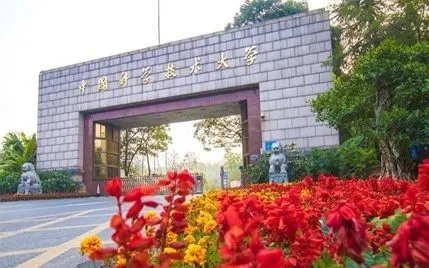
University of Science and Technology of China accepts international students on programmes in the following fields: business, engineering, medicine, humanities, natural sciences. Choose the level and programme that suit your goals.
Chinese language study at the university — from a few weeks to a year or longer. Suitable for those starting from scratch or preparing for the HSK before entering a main programme.
self-funded · language programme
The first level of higher education: usually four years of study, specialised subjects, internships and a graduation thesis. It opens the way to working in your field and to a master's degree.
self-funded
Advanced study after a bachelor's degree: research, applied projects and internships. It helps you become an expert in your chosen field and broaden your career opportunities.
self-funded
University of Science and Technology of China is located in Hefei. Nihao Study consultants keep track of the deadlines and admission requirements of this university, and you can always check the most accurate and up-to-date information on its official website. In university rankings, it is ranked 6 in China and 134 worldwide.
Come for a face-to-face meeting: together we will go through the requirements, deadlines, documents and study options that suit you.

At the meeting we will look at your situation, tell you which documents to prepare and by when, talk about possible programmes and help you decide on the next step.
USTC is located in Hefei, the capital of Anhui Province. The university's official English name is University of Science and Technology of China (USTC), and its Chinese name is 中国科学技术大学 (Zhōngguó Kēxué Jìshù Dàxué).
USTC is rightly counted among the top tier of China's research universities. It took part in Project 211 and Project 985, is a member of the C9 League and is now included in the national Double First-Class programme. Its standing as one of the country's leading universities is backed by rankings, not advertising: it is ranked 51st in the THE World University Rankings 2026 and 40th in ARWU 2025.
Below, Nihao Study has gathered what a 2026 applicant should know about USTC: statuses and rankings, programmes, HSK requirements and the CSCA exam, accommodation, scholarships and the application procedure.
| Item | Data |
|---|---|
| Founded: year and city | 1958, Beijing |
| Relocation to Hefei | 1970 |
| Status in the university system | 985, 211, C9, Double First-Class |
| Structure | 34 schools and institutes (8 of them integrated colleges) |
| Academic staff | 2,621 staff, including 817 professors |
| Students (according to USTC records) | 7,426 bachelor's, 5,641 master's and 3,651 doctoral students |
| Address | No. 96 Jinzhai Road, Baohe District, Hefei, Anhui, 230026 |
The figures may refer to different dates and be based on different counting methods. For example, THE in its 2026 ranking gives a total student population of 22,955. For an applicant it is more useful to look not at the exact number but at the scale of the research environment, and to bear in mind that international admissions are now handled by a separate unit, the International College.
USTC was founded by the Chinese Academy of Sciences in Beijing in September 1958, and the task of the new university was to train specialists for cutting-edge and interdisciplinary fields. Guo Moruo became its first president, and leading scientists were invited to teach, among them Yan Jici, Hua Luogeng and Qian Xuesen. The university's official history describes its founding as an important milestone for Chinese science and education.
In early 1970 the university moved to Hefei. In 1978 it launched a special class for gifted young people and China's first graduate school, after which the university took up the construction of large scientific facilities. Development of the National Synchrotron Radiation Laboratory began in 1983; in 1995 USTC joined Project 211, and in 1999 Project 985.
Today USTC is still directly linked with the Chinese Academy of Sciences. The university specialises in fundamental sciences, high technology and medicine, as well as a number of management and humanities fields. It was included in both rounds of Double First-Class, in 2017 and 2022; the university itself names 11 of its disciplines as world-class. The selection mechanism and the official status of the list are confirmed by the government announcement on the second round.
| Ranking | Position | What it shows |
|---|---|---|
| THE World University Rankings 2026 | 51 worldwide | Strong research reputation, citations, international outlook |
| QS World University Rankings 2026 | 134 worldwide | Overall world ranking; 7th among universities in mainland China |
| ARWU 2025 | 40 worldwide, 5 in China | The methodology depends heavily on research achievements |
| U.S. News Best Global Universities 2025 | 71 worldwide | This position is given in the USTC profile and in international reviews |
| EduRank 2026 | 204 worldwide, 8 in China | Independent scientometric model; not an official university ranking |
| Nature Index, March 2025 to February 2026 | 6th worldwide by overall Share; 2nd in natural sciences | A narrow indicator: publications in selected scientific journals |
Each ranking measures something different. THE and QS give a broad assessment of a university, ARWU more accurately reflects research output, and the Nature Index is not an overall ranking but a measure of publications in a particular set of journals. So you should not rely on a single position when choosing USTC. In the THE 2026 subject tables, the university ranks 32nd in physics, joint 44th in engineering and 49th in computer science.
USTC is associated with the Micius quantum satellite, built as a platform for experiments in space and for long-distance communication in quantum networks. The university's researchers work on photonic quantum computing (the Jiuzhang series) and quantum communication. Bear in mind that this is not a mass-enrolment bachelor's major but a research environment: students enter it through physics, mathematics, computer science and laboratory work.
The campus is home to the National Synchrotron Radiation Laboratory and large interdisciplinary centres. USTC has 15 national-level research organisations and 45 at provincial and ministerial level, as well as 24 Chinese Academy of Sciences units linked with the university. This base is especially useful in chemistry, materials science, engineering, biomedicine and particle physics.
In the Nature Index profile for the current period, USTC ranks 2nd in the world by Share in chemistry, 3rd in physical sciences and 6th in applied sciences. This is partly why the university is so attractive to those planning a research career. However, high positions guarantee neither a scholarship nor a place in a laboratory: selection is based on academic profile, documents and the results of an interview.
On the official international portal, programmes are grouped by area. These include physics, mathematics, chemistry and materials science; life sciences and engineering science; computer science, electronic information and cybersecurity; artificial intelligence and quantum information; geophysics, atmospheric and planetary sciences; environmental engineering; management; and space technology and nuclear engineering.
International applicants can choose from 38 bachelor's programmes grouped into 18 discipline categories, as well as 78 master's and 89 doctoral programmes. The list of master's and doctoral tracks for 2026 is divided into two parts: Chinese-taught and English-taught. The difference is fundamental: international students can complete a master's degree in English, whereas bachelor's programmes require confident Chinese and international students study in mixed groups.
Admission and support for international students are handled by the International College, a unit of USTC rather than a separate university. The university also warns that third-party agents have not been authorised by it to make admission decisions.
| Level | Language and duration | Main requirement |
|---|---|---|
| Bachelor's Degree | Chinese; usually 4 years | HSK 5 and a CSCA result |
| Master's Degree | Chinese or English; usually 2 or 3 years | Bachelor's degree, proof of language proficiency, interview |
| Doctoral (PhD) Programmes | Chinese or English; usually 3 or 4 years | Master's degree, research plan, interview |
| Research internship | English, non-degree | Current student status and a research plan |
In the 2026 intake, bachelor's applicants were required to take the CSCA: professional Chinese for STEM, mathematics and one more subject of their choice, physics or chemistry. Applications were accepted from 14 November 2025 to 31 March 2026, and the university carried out its internal assessment in April or May. These dates cannot automatically be carried over to the next intake.
Admission to master's and doctoral programmes for 2026 ran from 16 October 2025 to 31 January 2026. Applicants did not need to find a supervisor in advance: documents were passed to the schools, after which candidates had online interviews, and in some units entrance exams as well.
| Item | Condition |
|---|---|
| Room furnishings | Bed, desk, wardrobe and air conditioning; apartment units also have household appliances |
| Off-campus housing | Permitted after registering your place of residence |
Dormitory applications are submitted once the admission instructions arrive. The university offers several types of apartment units; the cost depends on the room and its size. Scholarship holders get places first, so self-funded students should not count on a guaranteed place.
On arrival in China, international students must register their address with the police within 24 hours, and apply for a study residence permit within 30 days of crossing the border. The main USTC campus is located in Baohe District. Do not confuse it with Nangang District, which is in Harbin. When choosing a flat, take into account the travel time to the teaching building you need.
Scholarship decisions in each intake are made by a selection committee, so promises of a "guaranteed scholarship" or some fixed "average rate" have no basis. The competition takes into account academic performance, language readiness, the research plan, letters of recommendation and the interview.
There are library branches on the west, east and south campuses. According to the university, their total area is about 35,000 square metres, with 20 reading rooms and over 3,000 seats. International students use their campus card as a library card.
For sport there are indoor halls and two football pitches, as well as courts: 10 for tennis, 13 for volleyball and 20 for basketball. Student clubs bring together enthusiasts of music, art, debating, charity work, dragon boating, football and basketball; international students can also join registered societies.
The campuses have canteens and shops, bank and post office branches, and mobile operator offices, and shuttle buses run between them. Students usually cover short distances on foot or by bicycle.
As a preparatory stage, you could consider Chinese language courses in Hefei. Check current HSK exam dates against the schedule.
| University | Type | Main focus |
|---|---|---|
| University of Science and Technology of China, USTC, 中国科学技术大学 | National-level research university under CAS, member of the C9 League | Fundamental sciences, quantum technology, engineering |
| Hefei University of Technology, HFUT | National-level engineering university | Mechanical engineering, transport, materials, management |
| Anhui University, AHU | Comprehensive university | A wide range of natural sciences and humanities fields |
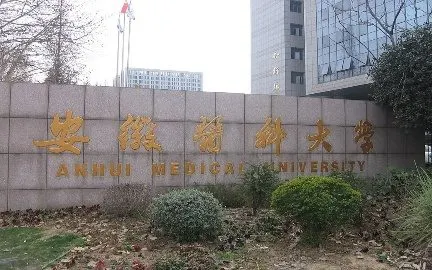
| Anhui Medical University, AHMU | Medical university | Medicine, public health, clinical disciplines |
USTC is most often confused with HFUT: both universities are in Hefei and have a technical focus, but they are different institutions, with different Chinese names and different application systems. There is also the Hong Kong University of Science and Technology (HKUST), which is located in Hong Kong and has nothing to do with USTC.
Russian speakers use one standard Russian name for the university; variant spellings and calques turn up in search queries but are not the university's name. The official English name is University of Science and Technology of China, and the official abbreviation is USTC. The short Chinese forms are 中国科大 and 中科大 (Zhōngkēdà), and the full Chinese name is 中国科学技术大学 (Zhōngguó Kēxué Jìshù Dàxué).
It is a research university under the Chinese Academy of Sciences. It took part in Projects 985 and 211, belongs to the C9 League and is in the Double First-Class programme. The word ‘leading’ is backed by facts here: 51st in THE 2026 and 40th in ARWU 2025.
English-taught master's and doctoral programmes are published in separate lists. For bachelor's programmes, international students need Chinese and HSK 5. There are no degree programmes taught in Russian.
For bachelor's programmes: the new HSK level 5, or a document showing that the applicant studied at a Chinese-medium school. For Chinese-taught master's and doctoral programmes: HSK level 4 or grounds for exemption from this requirement.
Yes. In the 2026 intake a CSCA result was a mandatory USTC requirement: the exam covered professional Chinese for STEM, mathematics, and physics or chemistry. The result was attached to the online application.
The fee depends on the room type and size. The university itself publishes current rates for tuition, accommodation and insurance, so check them on the USTC official website before applying.
Yes, but only if you win the competition. A USTC Fellowship can cover tuition, insurance and accommodation and also include a stipend; the monthly allowance depends on the level of study and differs for bachelor's, master's and doctoral students.
An HSK certificate is required for admission, but no open test centre at USTC has been announced for the current intake. Check available centres and dates on the official HSK exam platform.
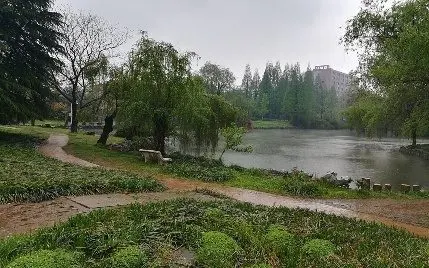
Main and legal address: No. 96 Jinzhai Road, Baohe District, Hefei, Anhui, 230026. The university has several campus areas, so before you travel, check exactly which building you need to be at.
An application form, passport, notarised copies of your school certificate and transcript, an HSK 5 certificate, a medical form, a school recommendation and a CSCA result. Applicants under 18 also need a document on their legal guardian in Hefei.
Hefei (合肥) is the capital of Anhui Province and a city of science: it is home to numerous national laboratories and the University of Science and Technology of China (USTC). The city is betting on artificial intelligence and electric vehicle manufacturing.
Here you can get a strong technical education and find your place in high-tech industries. The city has plenty of greenery, the large Chaohu Lake is nearby, and there is a metro and modern infrastructure, but none of the bustle and high prices of the big capitals. Parents value the safety and academic atmosphere, the good environment, new campuses with good facilities, high-speed trains to Nanjing and Shanghai and the low cost of living.
You work with Nihao Study specialists. They will help you put together a portfolio and a set of documents, draw up a study plan and choose a university or college and a specialty that genuinely interest you.
We take care of every stage of admission, from choosing to enrolment
We will gather, prepare, certify and send your documents to the institution
We will show the admissions committee your strengths
We run training sessions and courses so you can prepare with more confidence
We will help you settle in at the start of your studies and keep moving forward
Nihao Study specialists select universities and colleges that match the applicant's goals and means. We make sure the teachers are practitioners and that the knowledge will be useful in your profession.
We examine curricula, talk to students and teachers and look at which specialties employers need, and use this information to select options for the applicant.
Advisers guide the applicant from the first consultation to enrolment, help build a plan and spot mistakes in time that could get in the way.
The cost of our support depends on the programme and the partner university; you'll get an exact quote after a free consultation.
Get a quoteA free 15-minute consultation: together we will choose a university or college and a programme that suit your goals and budget.
Apply with peace of mind: we handle the documents, deadlines and correspondence with admissions committees, and you save time and energy.
Don't want to wait for a call? Message us in the chat.
Message us in chat University · Hefei
University · Hefei
Language courses · Bachelor's Degree · Master's Degree