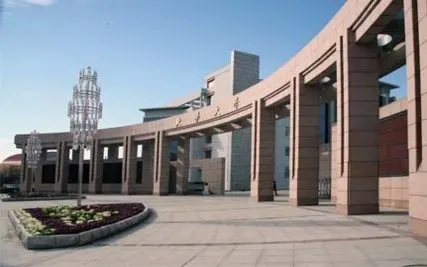
Beihua University
University · Jilin
Language courses · Bachelor's Degree · Master's Degree
NENU · 东北师范大学

Northeast Normal University accepts international students on programmes in the following fields: business, engineering, education, economics, it. Choose the level and programme that suit your goals.
Chinese language study at the university — from a few weeks to a year or longer. Suitable for those starting from scratch or preparing for the HSK before entering a main programme.
self-funded · language programme
The first level of higher education: usually four years of study, specialised subjects, internships and a graduation thesis. It opens the way to working in your field and to a master's degree.
self-funded
Advanced study after a bachelor's degree: research, applied projects and internships. It helps you become an expert in your chosen field and broaden your career opportunities.
self-funded
Northeast Normal University is located in Changchun. Nihao Study consultants keep track of the deadlines and admission requirements of this university, and you can always check the most accurate and up-to-date information on its official website. In university rankings, it is ranked 65 in China and 619 worldwide.
Come for a face-to-face meeting: together we will go through the requirements, deadlines, documents and study options that suit you.

At the meeting we will look at your situation, tell you which documents to prepare and by when, talk about possible programmes and help you decide on the next step.
Northeast Normal University (NENU for short; in Chinese 东北师范大学, Dōngběi Shīfàn Dàxué) is a public research university in the city of Changchun, Jilin Province. In Russian it is usually rendered as 'North-Eastern Pedagogical University'. The university's charter establishes three abbreviations: NENU, 东师 and 东北师大. Russian-language searches also turn up other variants, such as 'Pedagogical University of the North-East', the literal 'North-Eastern Normal University' or the pedagogical name with different capitalisation; this page treats Northeast Normal University as the main form.
The university is directly under the Ministry of Education of the PRC. It was in the first group of Project 211 universities and now takes part in the national Double First-Class programme. It is important not to get this wrong: NENU is not a Project 985 university. It received only a 985 innovation platform covering teacher education and priority disciplines, which is a narrower status.
On this page Nihao Study has gathered what a 2026 applicant needs to know: admission rules for 2026/27, HSK requirements, CSC scholarships, accommodation and an analysis of rankings. Before making a final decision, check the official admissions announcement for your chosen programme.

| Indicator | Data | What matters to applicants |
|---|---|---|
| Year founded | 1946 | The university was originally founded as a comprehensive university; its teacher training specialisation developed later |
| Supervising authority | Ministry of Education of the PRC | A centrally administered public university, not a provincial-level institute |
| Campuses | Two: on Renmin Street and Jingyue Street | Schools are located in the central and south-eastern parts of Changchun |
| Students | Over 15,000 bachelor's and 15,000 master's students, 3,000 doctoral students, and about 700 international students | International students make up only a small share of the student body at a large Chinese university |
| Teaching staff | More than 1,700 full-time teachers, including 560 professors | Master's and doctoral students have access to an extensive research environment |
| Academic structure | 21 schools and faculties; 72 bachelor's programmes | The university's specialisation is broader than teacher education alone |
| Double First-Class | Six national-level disciplines | This status applies to individual fields, not to all of the university's programmes |
| Main address | 5268 Renmin Street, Changchun, Jilin, 130024 | Home to the International Office and the Renmin campus |
NENU's size is best seen in the structure of its degrees. At doctoral level there are 24 first-level programmes and 6 categories of professional programmes; at master's level, 36 first-level programmes and 25 professional categories; and there are 24 postdoctoral research stations. These figures refer to the university as a whole, while the list of programmes open to international students is published separately every year.
The university traces its history to Northeast University, founded in February 1946 in the city of Benxi. In its early years the university moved from one city in Northeast China to another; in 1948 it merged with the then Jilin University, and it finally settled in Changchun in July 1949. NENU's official description calls it the first comprehensive university established by the Communist Party of China in the north-east of the country.
The university received its current name, Northeast Normal University, in April 1950, along with the task of training secondary school teachers. In 1958 it came under the administration of Jilin Province and was renamed Jilin Normal University. In 1978 the university returned to the Ministry of Education system, and in 1980 its name 东北师范大学 was restored. Because of these name changes, NENU is still confused with the separate Jilin Normal University.
A new stage began in 1996, when the university was included in Project 211. In 2004 it opened a Graduate School, in 2007 NENU became part of the 985 innovation platform for teacher education, and in 2017 it was among the first-round Double First-Class universities. It kept this status in the second round; in 2026 the Ministry of Education stated explicitly that six NENU disciplines underpin the updated model of teacher training.
Applicants should distinguish between three different labels. Project 211 is a historical national status; NENU's place in the first group is confirmed by its charter, approved by the Ministry of Education. Double First-Class is a current programme that assesses both universities and individual disciplines. NENU's 985 platform is an innovation hub for strong teacher-education disciplines; it does not make the university a member of the main 985 list.
NENU's disciplines currently on the Double First-Class list are education, Marxist theory, chemistry, statistics, world history, and materials science and engineering. In the first round, in 2017, mathematics held the place now taken by education, so the lists from the two rounds should not be confused.
| Ranking | Position | What the result means |
|---|---|---|
| ARWU 2025 | 501–600 worldwide | An overall research ranking; it says nothing about how easy admission is |
| ShanghaiRanking by Subject 2025 | Statistics 76–100, chemistry 151–200 | NENU's research strengths show up more precisely in the subject rankings |
| CWUR 2025 | World 656, Asia 181, China 114 | Takes into account education, graduate employment, faculty and research |
| EduRank 2026 | 987 worldwide and 69 in China | An independent bibliometric aggregator; not an official ranking of the PRC |
| QS Sustainability 2026 | 1401–1500 | A sustainability ranking — do not confuse it with the general QS World University Rankings |
NENU has a profile on Times Higher Education, but it gives no numerical band. The U.S. News 2025/26 release describes the methodology and coverage — more than 2,250 universities — but does not give NENU a separate position.
The university reports that plant and animal science, engineering, materials science and chemistry are in the global top 1% in ESI. This information dates from 2018. When choosing a supervisor, it is more reliable to look at the lab's recent publications and the subject rankings.
The word Normal in NENU's English name is well deserved. The university was the first to propose the U-G-S model, in which a teacher-training university, local authorities and schools jointly take part in the practical training of future teachers. In 2026 the Ministry of Education noted that this model had grown into a multi-party teacher-training system, supported by 28 teacher-education programmes and 54 national first-class courses. For anyone planning to study educational technology, school management, teaching methodology or pedagogy, this is a strong argument.
World history is on the current list of Double First-Class disciplines. The university hosts the Research Center of World Civilization History, one of the Ministry of Education's key bases for research in the humanities and social sciences. The 2026 international catalogue includes a four-year doctoral programme in World History taught in English.
NENU's highest subject position in ShanghaiRanking 2025 is in statistics, in the 76–100 band. At the same time, materials science, chemistry and statistics are all included in Double First-Class. So the word ‘Normal’ in the name should not mislead you: the university has a serious research base in the natural sciences and quantitative fields.
NENU's programmes span 12 disciplinary categories, including philosophy, economics, natural sciences, engineering, agriculture and the arts. For an international applicant it is easier to choose not from the list of internal departments, but according to what they want to do in the future.
| Level | Language and duration | Main requirements |
|---|---|---|
| Bachelor's Degree | Usually in Chinese, four years; sculpture — five years | CSCA, school-leaving certificate, proof of language; age 18 to 25 |
| Master's Degree | Programmes in Chinese and some in English; usually three years | Bachelor's degree; HSK 5 with 180+ for Chinese-taught programmes, TOEFL 80+ or IELTS 6.0+ for English-taught ones |
| Doctoral (PhD) Programmes | Research programmes in Chinese and English; usually four years | Master's degree; age up to 40; a research proposal of at least 1,000 words and the signature of the prospective supervisor |
For the 2026 bachelor's intake the university requires CSCA results — the China Scholastic Competency Assessment. The subjects depend on the major; for computer science, for example, they are mathematics, physics and the science-track version of Chinese. A Chinese Language applicant with HSK 4 and at least 180 points is exempted from part of Humanities Chinese, but all other stages of the procedure still apply.
Independent applications for self-funded study — bachelor's, master's and doctoral — in the 2026/27 cycle were accepted until 22 June 2026 (Beijing time). This date applies to that specific intake and is no guarantee for the future: check the deadlines for the next cycle in the new official announcement.
Tuition fees depend on the level and field: arts and sport have their own rate, and doctoral fees vary by discipline. In addition, there is a non-refundable application fee, and medical insurance is compulsory. Current amounts are published in the admission rules and the programme catalogue on the official website nenu.edu.cn — check them before applying.
According to the university, international students are offered single rooms. The final accommodation fee depends on the move-in dates, holidays and which room types are available; the university assigns the building itself at check-in.
Besides accommodation, your budget should cover meals (the university publishes an official guideline for these), transport, mobile phone, study materials, warm winter clothing and personal expenses. A full CSC scholarship can cover tuition and on-campus accommodation, but even then the university, not the student, chooses the room.
The Renmin campus is at 人民大街5268号, postcode 130024; the Jingyue campus is at 净月大街2555号, postcode 130117. Before booking a dormitory, find out which campus your school is on. Usually mathematics, geography, history, education and some language programmes are on the Renmin campus, while arts, business and some digital programs are on Jingyue; the definitive answer is in the Campus column of the 2026 catalogue.
The monthly stipend under a full CSC scholarship differs for bachelor's, master's and doctoral students. The scholarship is not guaranteed: the competition assesses the applicant's documents and how well they fit the chosen programme. It is best to study the Type A and Type B rules and the list of CSC host universities in advance.
Both campuses have student canteens, dormitories, sports grounds and venues for cultural events. The university also highlights its Museum of Natural History, Comprehensive Gymnasium and Northeast Folk Museum. The library covers 38,300 square metres and holds over 3.8 million printed books, about 320,000 volumes of rare ancient Chinese editions and more than 110 databases.
Chinese language courses in Changchun are run by NENU's International School of Chinese Studies. The school is officially based on the Renmin campus, and its website publishes separate information on language training. The university also has its own HSK centre — this is clear from the rules of one of the scholarships: candidates recommended by the centre could apply for the International Chinese Language Teachers Scholarship. The HSK exam schedule changes, so check it before registering.
The university's international life is not limited to language courses. NENU has set up a joint institute with Rutgers University Newark and also coordinates the Association of Universities of China and Mongolia. According to the university, it has established working exchanges with universities and research organisations in Russia. Russian-speaking applicants may be interested in programmes in Russian language and literature, comparative education, international Chinese language education and world history.
| University | City and type | Distinguishing features |
|---|---|---|
| Northeast Normal University, 东北师范大学, NENU | Changchun; a research-oriented teacher-training university under the Ministry of Education | Official domain nenu.edu.cn; the name contains 师范 |
| Jilin University, 吉林大学, JLU | Changchun; a large comprehensive university in Projects 211 and 985 and Double First-Class | No Normal or 师范 in the name; official domain jlu.edu.cn |
| Changchun Normal University, 长春师范大学 | Changchun; an independent teacher-training university | Its Chinese name has 长春 instead of 东北; it has no connection with NENU |
| Northeastern University, 东北大学, NEU | Shenyang; an engineering university with a campus in Qinhuangdao | Northeastern is one word in English, abbreviated NEU, with no Normal |
| Jilin Normal University, 吉林师范大学 | Main campus in Siping, second campus in Changchun | Today a separate university, although NENU bore this name in 1958–1980 |
A simple check: the official names of the university you want are NENU, Northeast Normal University and 东北师范大学. If a letter mentions NEU, JLU or Changchun Normal University, it refers to a different institution.
The main form on this page is the Russian for ‘North-Eastern Pedagogical University’. A variant with a capital letter in the second part of ‘North-Eastern’ is a spelling variation of the search query. A Russian version meaning ‘North-Eastern Normal University’ translates the English ‘Normal University’ literally but fits Russian educational terminology less well. ‘Pedagogical University of the North-East’ is a calque, not the main form. The official English name is Northeast Normal University and the official abbreviation is NENU; 东北师大 and 东师 are Chinese abbreviations, and the full Chinese name is 东北师范大学 (Dōngběi Shīfàn Dàxué).
Yes: the university was in the first group of Project 211 and now takes part in Double First-Class. However, the 985 platform that NENU has does not mean membership of the main Project 985.
Fees depend on the level, field and specific programme, and doctoral rates vary by discipline. Current rates for the 2026/27 intake are published in the admission rules on the official website, nenu.edu.cn.
Most programmes taught in Chinese require HSK 5, with at least 180 points for master's and doctoral programmes. Some majors have their own requirements, so check the exact threshold in the admission rules for your chosen programme.
Yes, mainly at master's and doctoral level. The 2026 catalogue lists comparative education, higher education, educational management and policy, and world history as taught in English. As a rule, TOEFL 80 or above, IELTS 6.0 or above, or another officially accepted alternative is required.
Yes. NENU accepts Type A applications and runs its own High-level Graduates Type B competition. A full scholarship covers tuition, dormitory, a monthly allowance and medical insurance. Selection is competitive.
The rate for a single room is published in the 2026/27 admission rules on the university website. The room type, building and payment period are finally confirmed after enrolment.
Both campuses are in Changchun: Renmin at Renmin Street 5268 and Jingyue at Jingyue Street 2555. Be sure to check the Campus column in the programme catalogue.
According to the university, yes: its own HSK test centre is mentioned in the rules of the International Chinese Language Teachers Scholarship. It is worth checking the upcoming sessions and available places in advance.
Yes. For the 2026/27 intake, NENU requires CSCA results from all bachelor's candidates and treats them as an important part of the academic assessment. Which subjects you take depends on the major.
NENU specialises in teacher education, and its strong fields are history, statistics, chemistry and materials. Jilin University is a much larger comprehensive university with medicine, engineering, earth sciences and many other faculties. Choose based on the programme, supervisor and budget, not just the overall ranking.
Changchun (长春) is called the city of cars and cinema: it is the centre of China's car industry, home to FAW factories, and an important base of Chinese film-making. Among its best-known sights are a sculpture park and the palace of Puyi, the last emperor of China.
Here you can get a solid engineering education in a calm setting. The city has plenty of forests and parks — green spaces cover 40% of its area — and in winter snow towns appear. For parents, it matters that Changchun is safe and affordable, the seasons change clearly and predictably, international students receive well-thought-out support, and high-speed trains run to Beijing and Harbin.
You work with Nihao Study specialists. They will help you put together a portfolio and a set of documents, draw up a study plan and choose a university or college and a specialty that genuinely interest you.
We take care of every stage of admission, from choosing to enrolment
We will gather, prepare, certify and send your documents to the institution
We will show the admissions committee your strengths
We run training sessions and courses so you can prepare with more confidence
We will help you settle in at the start of your studies and keep moving forward
Nihao Study specialists select universities and colleges that match the applicant's goals and means. We make sure the teachers are practitioners and that the knowledge will be useful in your profession.
We examine curricula, talk to students and teachers and look at which specialties employers need, and use this information to select options for the applicant.
Advisers guide the applicant from the first consultation to enrolment, help build a plan and spot mistakes in time that could get in the way.
The cost of our support depends on the programme and the partner university; you'll get an exact quote after a free consultation.
Get a quoteA free 15-minute consultation: together we will choose a university or college and a programme that suit your goals and budget.
Apply with peace of mind: we handle the documents, deadlines and correspondence with admissions committees, and you save time and energy.
Don't want to wait for a call? Message us in the chat.
Message us in chat University · Jilin
Language courses · Bachelor's Degree · Master's Degree
University · Changchun
Language courses · Bachelor's Degree · Master's Degree