
Anshan Normal University
University · Anshan
Language courses · Bachelor's Degree · Master's Degree
NEU · 东北大学
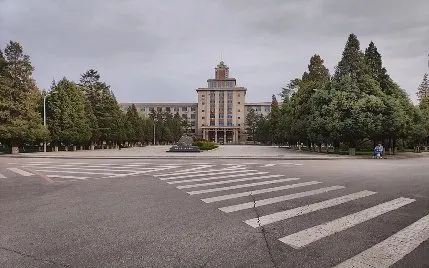
Northeastern University accepts international students on programmes in the following fields: business, engineering, medicine, education, economics. Choose the level and programme that suit your goals.
Chinese language study at the university — from a few weeks to a year or longer. Suitable for those starting from scratch or preparing for the HSK before entering a main programme.
self-funded · language programme
The first level of higher education: usually four years of study, specialised subjects, internships and a graduation thesis. It opens the way to working in your field and to a master's degree.
self-funded
Advanced study after a bachelor's degree: research, applied projects and internships. It helps you become an expert in your chosen field and broaden your career opportunities.
self-funded
Northeastern University is located in Shenyang. Nihao Study consultants keep track of the deadlines and admission requirements of this university, and you can always check the most accurate and up-to-date information on its official website. In university rankings, it is ranked 42 in China and 707 worldwide.
Come for a face-to-face meeting: together we will go through the requirements, deadlines, documents and study options that suit you.

At the meeting we will look at your situation, tell you which documents to prepare and by when, talk about possible programmes and help you decide on the next step.
Northeastern University, known in English as Northeastern University (NEU for short) and in Chinese as 东北大学 (Dōngběi Dàxué), is a public research university in the city of Shenyang, Liaoning Province. Russian-language sources use other forms of the name too, translating as 'Northeastern University', 'University of the North-East' and 'Northeastern University of China'; this page adds 'China' to make clear which university is meant. Students call it by short names: 东大 (Dōngdà), after its current name, and 东工 (Dōnggōng), after its former one. The clarification matters: this is 东北大学 in Shenyang, not the private Northeastern University in Boston, which has the same English name.
NEU is under the Ministry of Education of the PRC. The university took part in the historic Projects 211 and 985, and joined the Double First-Class programme in the second round. The national list assigns it two world-class disciplines: metallurgical engineering, and control science and engineering. The university's profile is built around automation, industrial artificial intelligence, metallurgy and materials science, complemented by technology transfer.
On this page Nihao Study has gathered what a 2026 applicant needs to know about NEU: status, rankings, programmes, HSK requirements, accommodation, CSC scholarships and the application procedure.
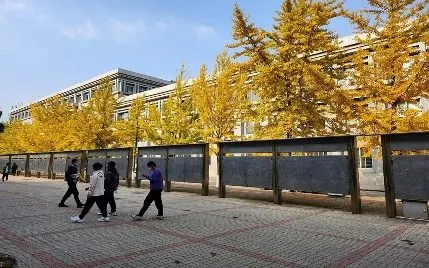
The latest official statistics cover the university as a whole: all campuses and all levels of study. So the total number of students should not be compared with the quota of any single programme for international students.
| Item | Data | Comment |
|---|---|---|
| Year founded | 1923 | Opened in April |
| Status | Ministry of Education, 211, 985, Double First-Class | Public research university |
| Students | More than 50,000 | Bachelor's, master's and doctoral students combined |
| International students | More than 1,200 | As of December 2025 |
| Staff | 4,399, including 2,929 teachers | Figure for the university as a whole |
| Academic structure | 29 schools and units | School and College are internal units of NEU |
| Bachelor's majors | 82 (39 are national first-class programmes) | Only part of the list is open to international students |
| Doctoral disciplines | 27 first-level | Plus 23 postdoctoral research stations |
| Campus area | Land: 2.646 million m², building area: 1.947 million m² | Sites in Shenyang, Qinhuangdao and elsewhere |
| Main address | No. 3-11 Wenhua Road, Heping District, Shenyang, 110819 | Nanhu campus |
The university opened in April 1923. From August 1928 to January 1937 it was headed by Zhang Xueliang, a political and military figure whose name is tied to the history of Northeast China. The Mukden Incident of 1931 forced the university to leave Shenyang; classes continued in Beiping, Xi'an, Kaifeng and Santai. NEU's history is not just a series of name changes: even during years of long relocations, the university never stopped its teaching and research.
In 1949 the Shenyang Institute of Engineering was formed from the engineering units and some of the natural science units. As early as 1950 it was renamed Northeast Institute of Technology, and the historical name 东北大学 was restored in March 1993. In 1997 the Shenyang Gold Institute was merged into the university; since September 1998 the university has been directly under the Chinese Ministry of Education.
Its engineering roots show in the achievements NEU itself regards as landmarks: it produced China's first analogue electronic computer, the first Chinese-developed CT scanner, the first super steel and technologies for controlling metallurgical processes. The university founded the country's first university science park and was behind the creation of the company Neusoft, so ties with industry and applied research remain part of its character.
Each ranking system relies on its own data. With NEU, the main thing is not to confuse the Chinese university with Northeastern University in the US: the ranking page should show China, Shenyang or the domain neu.edu.cn.
| Ranking | Position | Edition |
|---|---|---|
| THE World University Rankings | 501-600 worldwide | 2026 edition |
| THE Engineering | 301-400 | 2026 subject edition |
| ARWU | 201-300 | 2025 edition |
| CWUR | 348th worldwide, 52nd in China | 2025 edition |
| EduRank | 735th worldwide, 46th in China | 2026 update |
| ShanghaiRanking China | 38th nationally | 2026 edition |
The THE band and the CWUR position do not contradict each other. THE combines indicators of research, teaching and international activity, CWUR relies more on measurable outcomes, and ARWU is especially sensitive to publications and citations. When choosing a programme, it is more useful to look at the subject profile: according to EduRank, the Chinese NEU ranks 18th in the world for mining engineering and 26th for automation and control. These positions match the university's official Double First-Class disciplines and its industrial specialisation.
For NEU, control science and engineering is included in the national Double First-Class list. This field brings together control theory, automation, pattern recognition, robotics, navigation and optimisation of production processes. In 2015 NEU opened its Institute of Robotics, created in partnership with the Shenyang Institute of Automation of the Chinese Academy of Sciences and the company Siasun. Applicants get a strong applied environment, but whether they get into a particular laboratory depends on the programme and the supervisor.
Metallurgical engineering is NEU's second Double First-Class discipline; its history begins with the department of mining and metallurgy opened in the 1920s. In today's school, metallurgy is combined with materials, energy and environmental science, as well as resource processing and intelligent control. The university's materials science is in the top 0.1 per cent of the global ESI list, and the university links this result to super steel and continuous rolling technologies. This field suits those interested not only in metal production but also in the digitalisation of industrial supply chains.
NEU has grown technology companies through its own science park. The university's official history describes Neusoft as the first company to emerge from a Chinese university and be listed on a stock exchange. Today computer science and software engineering are developing side by side with medical informatics, information security, industrial AI and automation. This is what sets it apart from a university with a purely metallurgical profile: here you can build a path at the intersection of programming, equipment and production data.
NEU's official structure includes schools of metallurgy; materials science; mechanical engineering and automation; robotics; computer science; information science; software; resources and civil engineering; business; foreign languages; humanities and law; medicine and bioinformatics. The words School, College and 学院 refer to internal units of NEU, not independent colleges.
For an international applicant, it is easier to look at the fields in these groups:
The university reports 82 bachelor's programmes, but international students are admitted to only some of them. So the existence of a department does not necessarily mean the programme is available to an international student.
| Level | Duration | Language requirements |
|---|---|---|
| Chinese Language | A semester or a year | Levels: beginner, intermediate, advanced; no HSK required for admission |
| Bachelor's Degree | Usually 4 years | For Chinese-taught study: HSK 5 with at least 180 points |
| Master's Degree | From 2 to 3 years | Chinese, or selected programmes in English |
| Doctoral (PhD) Programmes | 4 years | Chinese or English; supervisor's consent required |
In the 2026 master's intake, English-taught programmes were offered by the schools of business, metallurgy, software engineering, and medicine and bioinformatics. The language of instruction should be checked in the entry for each specific programme. There are no degree programmes taught in Russian.
Long-term Chinese courses start in March and September. There are 22 to 24 academic hours a week; HSK preparation is included in the course at no extra cost if the student wishes. Such a course suits those who do not yet have HSK 5 and serves as a stepping stone to a bachelor's or master's programme.
The tuition fee depends on the level, programme and school, and English-taught and joint programmes may have their own rate; in addition to tuition, there is an application fee and insurance. Check the current amounts in the admission rules on the official website, neu.edu.cn. Note that, under university rules, personal insurance does not replace the mandatory policy, without which an international student will not be registered.
In Shenyang itself, NEU has three main campuses: Nanhu, Hunnan and Shenhe. In addition, there is a branch in Qinhuangdao, and master's students can do research at a site in Foshan. Addresses: Nanhu, Wenhua Road 3-11, Heping District; Hunnan, Chuangxin Road 195; Shenhe, Wenhua East Road 89. The single name NEU covers different registration addresses, so be sure to check your campus against your admission letter.
The university reports more than 100 research organisations and 12 national science and technology platforms. Its structure specifically lists a library, sports grounds, an innovation and entrepreneurship centre, and national laboratories for digital steel, industrial automation and intelligent metal mining. The engineering environment here is rich, but access to specific facilities depends on the campus and programme.
International students are offered single, double and triple rooms. The fee depends on the room type; current rates are published in the admission rules on the university website.
Language course students are housed in International Dormitories No. 2, 3 and 4. Depending on the building, the bathroom and kitchen are either within the unit or shared. The language dormitory rate for autumn 2026 was still being agreed. Photos give an idea of the possible layout but do not guarantee a specific room.
It is worth checking the building name, room type, whether there is a private bathroom and the check-in rules before you arrive. Scholarship holders whose grant covers accommodation are given an assigned double or triple room and do not choose the rate themselves.
Bachelor's applicants apply for CSC through the Chinese embassy or consulate in their country. A full scholarship may include tuition, an assigned dormitory, medical insurance and a monthly living allowance.
For master's students there is CSC Type B; NEU's code is 10145. In the 2026 intake, the grant provided free tuition, a dormitory, insurance and a monthly allowance for two to three years. If a student was allowed to live off campus, a monthly allowance was provided instead of a free room.
Doctoral students can apply for CSC and for the Liaoning Provincial Government Scholarship. In the 2026 intake, both programmes included free tuition, an assigned dormitory, insurance and a monthly living allowance; CSC was awarded for four years and the provincial scholarship for three. A grant is not guaranteed: according to NEU's official FAQ, there are usually about 50 to 100 scholarship holders a year.
Conditions and quotas are reviewed every year, so check the list of universities participating in CSC and the official announcement for the new intake.
In 2026, self-funded master's and doctoral applicants could apply until 30 May, while scholarship applications closed on 28 February. These are dates for a specific cycle; deadlines for the next intake should be checked in the new announcement. Also check the HSK exam date in advance against the official schedule.
| University | Location and type | Distinguishing features |
|---|---|---|
| Northeastern University, 东北大学, NEU | China, Shenyang; public university, member of 985, 211 and Double First-Class | Founded in 1923; domain neu.edu.cn |
| Northeastern University | USA, Boston; private research university | Domain northeastern.edu, campuses in the US, co-op programme |
| Tohoku University, 東北大学 | Japan, Sendai; Japanese national university | Japanese reading Tohoku, domain tohoku.ac.jp |
| Northeast Normal University, 东北师范大学 | China, Changchun; teacher training university | English abbreviation NENU; the Chinese name contains 师范 |
The American Northeastern and the Chinese NEU share the same English name, and the Japanese Tohoku is written with the same traditional characters, 東北大学. Three features reliably identify the right university: the official domain neu.edu.cn, the Chinese spelling 东北大学 and the city of Shenyang. Photos with Boston skyscrapers, English-language signs and the domain northeastern.edu belong to a different university.
The main form on this page is the Russian for ‘Northeastern University (China)’; a variant meaning ‘Northeastern University of China’ also occurs. A Russian spelling with a capital letter in the second part of ‘North-Eastern’ turns up in searches, but lower case is preferable in Russian. ‘University of the North-East’ is a calque rather than the main name. The official English name is Northeastern University, and the abbreviation NEU is set out in the university's charter. The full Chinese name is 东北大学 (Dōngběi Dàxué); 东大 and 东工 are Chinese abbreviations.
It is Northeastern University, a public university in Shenyang, China. Its main registered address is No. 3-11 Wenhua Road, Heping District, Shenyang, Liaoning, 110819. Check your specific campus in your admission letter.
Yes. The university was in the first groups of the 211 and 985 projects and joined Double First-Class in the second wave. Its official world-class disciplines are control science and engineering, and metallurgical engineering.
Some master's and doctoral programmes are taught in English, primarily in metallurgy, business, software engineering and biomedical informatics. There are no degree programmes taught in Russian. Check the language of instruction for each programme in the application system.
For the 2026 intake, bachelor's and master's programmes taught in Chinese required HSK 5 with a score of at least 180. If your level is lower for now, you can start with a language course.
Tuition fees depend on the level, the major and the school, and dormitory fees on the building and the room type. Current rates are published in the admission rules on the official website, neu.edu.cn.
Yes, if the candidate wins the competition. In 2026 the CSC master's scholarship covered tuition, an assigned dormitory place, insurance and a monthly allowance. Type B requires the university code 10145, while bachelor's applicants usually apply through the Chinese embassy in their own country.
Yes. Long-term courses start in March and September, with 22 to 24 hours of classes a week; HSK preparation is optional. An HSK certificate is not required for admission to the language programme.
The Chinese NEU is in Shenyang, is called 东北大学 and uses the domain neu.edu.cn. The American Northeastern is in Boston and its domain is northeastern.edu. The programmes, rankings, campuses and photos of these universities must not be mixed up.
A school certificate with a translation, a school transcript, a study plan of at least 800 words, your passport and a blank page of it, a medical form, a language certificate and a police clearance certificate. If the candidate is not yet 18, a letter of guarantee from a guardian will be needed.
For the main Nanhu campus, the address is Heping District, Wenhua Road 3-11. The Hunnan campus is at Chuangxin Road 195 (Hunnan District) and the Shenhe campus at Wenhua East Road 89 (Shenhe District). Plan your route only after you have checked your campus in the admission notice.
Shenyang (沈阳) is the largest metropolis in Northeast China and was once the capital of the Manchus. It is home to the Imperial (Mukden) Palace, which in terms of preservation is second only to the Forbidden City in Beijing.
Here students get the scale of a big city, while prices are 2–3 times lower than in Beijing. Shenyang has strong universities, a metro and developed industry, and there are ski resorts nearby. For parents, it matters that the city has consulates, healthcare is of a good standard (including traditional Chinese medicine), there are direct flights, the level of safety is high, and buildings are heated in winter.
You work with Nihao Study specialists. They will help you put together a portfolio and a set of documents, draw up a study plan and choose a university or college and a specialty that genuinely interest you.
We take care of every stage of admission, from choosing to enrolment
We will gather, prepare, certify and send your documents to the institution
We will show the admissions committee your strengths
We run training sessions and courses so you can prepare with more confidence
We will help you settle in at the start of your studies and keep moving forward
Nihao Study specialists select universities and colleges that match the applicant's goals and means. We make sure the teachers are practitioners and that the knowledge will be useful in your profession.
We examine curricula, talk to students and teachers and look at which specialties employers need, and use this information to select options for the applicant.
Advisers guide the applicant from the first consultation to enrolment, help build a plan and spot mistakes in time that could get in the way.
The cost of our support depends on the programme and the partner university; you'll get an exact quote after a free consultation.
Get a quoteA free 15-minute consultation: together we will choose a university or college and a programme that suit your goals and budget.
Apply with peace of mind: we handle the documents, deadlines and correspondence with admissions committees, and you save time and energy.
Don't want to wait for a call? Message us in the chat.
Message us in chat University · Anshan
Language courses · Bachelor's Degree · Master's Degree
University · Dalian
Language courses · Bachelor's Degree · Master's Degree
University · Dalian
Language courses · Bachelor's Degree · Master's Degree