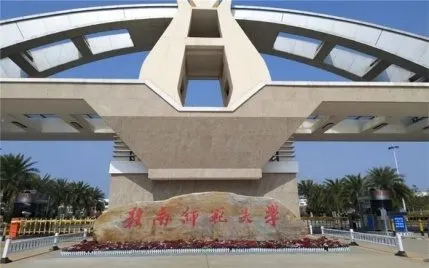
Gannan Normal University
University · Ganzhou
- Language courses
- English, Chinese
- Bachelor's Degree
- English, Chinese
- Master's Degree
- English, Chinese
NCU · 南昌大学
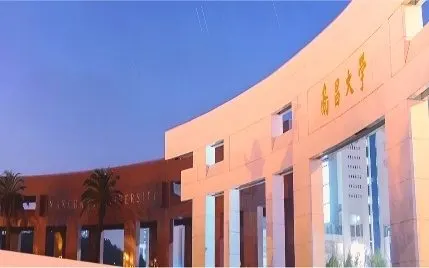
Nanchang University accepts international students on programmes in the following fields: engineering, medicine, education, humanities, natural sciences. Choose the level and programme that suit your goals.
Chinese language study at the university — from a few weeks to a year or longer. Suitable for those starting from scratch or preparing for the HSK before entering a main programme.
self-funded · language programme
The first level of higher education: usually four years of study, specialised subjects, internships and a graduation thesis. It opens the way to working in your field and to a master's degree.
self-funded
Advanced study after a bachelor's degree: research, applied projects and internships. It helps you become an expert in your chosen field and broaden your career opportunities.
self-funded
Nanchang University is located in Nanchang. Nihao Study consultants keep track of the deadlines and admission requirements of this university, and you can always check the most accurate and up-to-date information on its official website. In university rankings, it is ranked 135 in China and 12676 worldwide.
Come for a face-to-face meeting: together we will go through the requirements, deadlines, documents and study options that suit you.

At the meeting we will look at your situation, tell you which documents to prepare and by when, talk about possible programmes and help you decide on the next step.
Nanchang University (NCU, 南昌大学, pinyin Nánchāng Dàxué) is a large public research university in Jiangxi Province. Its main campus is in Nanchang, in the Honggutan district. Among themselves, Chinese students call the university simply 南大, "Nanda". Russian-language texts also use other variants, including adjectival forms with different spellings. The university's charter sets out its official names in Chinese and English, as well as the abbreviations NCU and 南大.
It is important to understand the university's statuses precisely. In 1997 NCU was included in the national 211 project, and today it takes part in the national Double First-Class (双一流) initiative. NCU's discipline on the initiative's official list is materials science and engineering. For applicants, this means nationally recognised status, a wide choice of programmes and a research base that is particularly strong in medicine, engineering, food science and materials science.
Below, Nihao Study has gathered the essentials about NCU for applicants from Uzbekistan: statuses, rankings, programmes, language requirements, accommodation, scholarships and the application procedure.

Figures are as of July 2026. Students of the main university are counted separately from the clinical bases.
| Item | Value |
|---|---|
| Founded | 1921 |
| Campuses (according to the current profile) | Qianhu, Qingshanhu, Donghu |
| Main Qianhu campus: area | more than 4,260 mu |
| Number of academic units | 42 |
| Bachelor's students (full-time) | more than 37,060 |
| Master's and doctoral students | more than 20,200 |
| Staff of the main university | 4,216 staff |
| International students | more than 950 on bachelor's and postgraduate programmes |
Reference sources cite either three or four campuses: the charter also mentions the Poyanghu campus. When choosing where to study, look not at the total number of sites but at which campus your programme is taught on — this is stated in the admission notice.
Today's university grew out of three separate traditions. The medical one begins with the Jiangxi Public Medical School, opened in 1921. The humanities and natural sciences trace their origins to National Chung Cheng University, founded in 1940. The engineering line goes back to the Jiangxi Industrial College of 1958.
Nanchang University was formed in 1993 through the merger of Jiangxi University and Jiangxi Industrial University. In 2005, the former Jiangxi Medical College joined it, creating today's comprehensive university with a large medical division. That is why clinical medicine, engineering labs, humanities majors and food science develop side by side at NCU.
Today NCU develops with joint support from China's Ministry of Education and the Jiangxi provincial government. However, this status applies to the university as a whole: scholarship quotas, language of instruction and requirements are set separately for each level and intake, and competition and funding depend on the programme.
The university joined Project 211 in 1997. This status is now considered historical, but it still indicates significant state funding; new stages in the development of Chinese universities now come under the Double First-Class initiative.
In the second round of Double First-Class, NCU is represented again — once more by materials science and engineering. Precision matters here: the university takes part in the initiative, but the official list highlights one specific discipline. It would be wrong to claim that all of NCU's schools are world-class.
According to the university's latest profile, 18 of its disciplines are in the ESI top 1 per cent, and three of them are in the top 1 per mille. Agricultural sciences, with food science at their core, are in the top 0.174 per mille. These figures reflect publications and citations and do not guarantee the quality of every individual programme.
Each international ranking measures its own indicators, so positions vary considerably. It makes more sense to look at the overall range and the subject results than to take a single figure as the final word.
| Ranking | Position | What it measures |
|---|---|---|
| ARWU 2025 | 301 to 400 worldwide | Research indicators |
| ShanghaiRanking China 2026 | 74th in China | Comparison of universities within China |
| CWUR 2026 | 411th worldwide, top 2 per cent | Research and graduate outcomes |
| EduRank 2026 | 931st worldwide, 61st in China | Publications, citations, reputation |
| QS by Subject 2026 | 551 to 700 | Presence in subject rankings |
NCU's most notable subject result is in ShanghaiRanking: in the 2025 subject ranking, Food Science and Technology is 11th in the world. Chemical engineering is in the 76–100 band, and nanoscience, energy and biotechnology in the 101–150 band. So when choosing, it is more important to compare the labs and curricula for your specific major.
Abroad, NCU is best known for food science. In the fourth round of the national discipline evaluation, Food Science and Engineering received an A grade and third place in the country. At the university, this field is linked to agricultural sciences, bioengineering, nutrition and food processing. It suits those interested not in general biology but in an applied path — from laboratory research to food production.
Materials science is officially part of Double First-Class. One of the university's main achievements, by its own account, is the development of an efficient blue LED on a silicon substrate: in 2015 this project received the State Technological Invention Award (first prize). For students, this is an environment where physics, chemistry, semiconductor materials and manufacturing come together.
NCU runs five directly affiliated hospitals and cites 19 national key clinical specialties. Bachelor's programmes include dentistry, clinical medicine, anaesthesiology, nursing, preventive medicine and medical imaging. International students should find out in advance which language clinical training is conducted in, whether the track they want is open, and what the rules for medical registration are.
Study at NCU covers 13 fields of knowledge, including interdisciplinary studies, humanities and natural sciences, law, economics, education, medicine, agronomy, engineering, management and the arts. According to its latest profile, the university has 96 bachelor's programmes, as well as 50 master's and 27 doctoral first-level disciplines.
At bachelor's level, the choice is especially wide in software engineering, computer science, electrical engineering, automation and cybersecurity, as well as economics, management, architecture, chemistry and ecology. The official list also includes Russian, but not all majors in the general catalogue are open to international applicants every year.
At doctoral level you can choose materials science, food science, chemistry, clinical medicine, dentistry, public health, pharmacy, as well as computing and management fields. Whether a programme is open in the current year and whether a suitable supervisor is available should be checked in advance.
| Level | Main document and age | Language requirement |
|---|---|---|
| Bachelor's Degree | school-leaving certificate; usually aged 18 to 25 | HSK 4 (taught in Chinese) |
| Master's Degree | bachelor's degree; usually aged 18 to 35 | HSK 5 (taught in Chinese) |
| Doctoral (PhD) Programmes | master's degree; usually aged 18 to 45 | as required by the programme |
| English-taught programmes | certificate of the previous level of education | IELTS 6.0, TOEFL 82 or the NCU test |
An exception is made for the bachelor's programme in Teaching Chinese to Speakers of Other Languages: no HSK is required for admission, and the age limit is raised to 28. In all other cases HSK 4 or HSK 5 is the baseline, and the school may ask for a higher score.
The language centre runs a one-year Chinese course of 448 academic hours, starting in March or September, as well as intensive HSK preparation courses for levels 3, 4 and 5. Bear in mind that the preparation course and registering for the exam are separate procedures, so check test dates in the current HSK schedule.
The university published its base fees on 18 April 2024 and stated straight away that they may be adjusted under the established rules. Besides tuition, a student's budget also includes travel, food, dormitory accommodation, insurance, a medical check-up, study materials and registration costs. Check the current fees on the university's official website before applying.
The main Qianhu campus is at 999 Xuefu Avenue, Honggutan District, Nanchang, Jiangxi Province, postcode 330031. The campus itself covers more than 4,260 mu, and all the campuses together more than 5,460 mu. On this scale, it is worth finding out in advance exactly where your school and dormitory are.
The campus is home to a university science and technology park, a national key laboratory and a national engineering technology research centre, as well as Ministry of Education laboratories and engineering centres. Students have access to libraries, sports grounds and a stadium. The university has also published a map of the Qianhu campus showing where its services are located.
Nanchang is the capital of Jiangxi Province. Metro Line 2 runs through Honggutan District, with stations including Qianhu Avenue and Nanchang West Railway Station. Once you know your accommodation address, it is easiest to plan your route to your building in a Chinese maps app.
NCU's international apartments have shared kitchens and laundry rooms. The university offers four accommodation options, and availability depends on the campus and programme.
| Room type | Facilities |
|---|---|
| Double room, main campus | kitchen, living room, bathroom, balcony |
| Triple room, main campus | kitchen, living room, bathroom, balcony |
| Standard double room, medical school | shared kitchen, bathroom, balcony |
| Double room at a reduced rate, language programmes | shared kitchen, bathroom, balcony |
The reduced-rate option is available only to Chinese language programme students and Teaching Chinese to Speakers of Other Languages students; it does not apply to medical, engineering or other programmes. Check the room type, campus, deposit terms and which utilities are included in the price before you move in.
The university accepts Chinese Government Scholarship holders. A full CSC scholarship covers tuition, a dormitory place or an accommodation allowance, medical insurance and a monthly living stipend.
For master's students starting in 2026 who study Chinese language and literature or teaching Chinese to speakers of other languages, NCU has announced a separate CSC Silk Road programme. The scholarship covers tuition, insurance and a dormitory place, plus a monthly allowance. Its terms apply only within this particular call and do not extend to all CSC recipients.
Bachelor's, master's and doctoral students and language programme students can also apply for the Jiangxi Provincial Government Scholarship, and high-achieving international students for the NCU President's Scholarship. The International Chinese Language Teachers Scholarship has its own requirements and deadlines.
Scholarships are awarded competitively, and a preliminary nomination by the university does not yet mean final CSC approval. Applying early, a high GPA, a language certificate and a clear study plan improve your chances; it is also sensible to have a self-funded back-up option.
Applicants of Chinese origin face an additional condition: their passport or other foreign document must have been valid for at least four years, and they must have lived outside China for at least two of the last four years, as calculated under the approved method. In a non-standard situation, a short table is not enough to decide.
| University | Type of institution | Main focus |
|---|---|---|
| Nanchang University, NCU, 南昌大学 | public, comprehensive; Project 211, Double First-Class | medicine, engineering, materials, food science |
| Nanchang Hangkong University, NCHU, 南昌航空大学 | public, engineering-focused | aviation, unmanned systems, aircraft manufacturing |
| Jiangxi Normal University, JXNU, 江西师范大学 | public, teacher-training and comprehensive | education, humanities and natural sciences |
| Nanchang Normal University, 南昌师范学院 | provincial teacher-training college | teacher training |
The most common mix-up in searches is between Nanchang University and Nanchang Hangkong University. Hangkong is Chinese for 'aviation', and the second university's abbreviation has an extra letter H. The second source of errors is Jiangxi Normal University: in 1949–1953 it was called Nanchang University, but today it is a separate university.
Before applying, it helps to put together a single calendar and mark separately the deadlines for the university, scholarship calls, the HSK exam and the visa process, so that the requirements of different stages do not get mixed up.
This page uses one main Russian form of the name. An adjectival Russian variant is natural and also common, while another spelling has an extra letter “g”. The official English name is Nanchang University and the official abbreviation is NCU. The original Chinese name is 南昌大学 (pinyin Nánchāng Dàxué), and 南大, “Nanda”, is its Chinese abbreviation. The official variants are set out in the NCU charter.
It is a public comprehensive university in Nanchang, the capital of Jiangxi province. The main campus is in Honggutan District, at 999 Xuefu Avenue (postcode 330031).
Yes. The university was included in Project 211 in 1997, and in the current Double First-Class initiative it holds the discipline of materials science and engineering.
There are English-taught programmes, but the intake depends on the level and admission year. As a rule, IELTS 6.0, TOEFL 82 or a pass in NCU's own test is required. Check the current programme catalogue to see whether an English track is open for your chosen programme.
For a Chinese-taught bachelor's programme, the basic requirement is a valid HSK 4 certificate; for a master's, HSK 5. Individual faculties may raise the bar. See the official HSK schedule for upcoming exam dates.
The fee depends on the level of study and on whether the programme is medical or not; rates may be revised. Current terms are published on the university's official website — check them before applying.
The price depends on the campus and room type. The most affordable option is only for certain language programmes; standard rooms cost more. Check the current terms on the university's official website.
Yes, NCU accepts Chinese Government Scholarship holders. The full package covers tuition, accommodation or an accommodation allowance, insurance and monthly living payments. Places are awarded competitively, while the terms depend on the programme and the application channel.
Yes. The university reports a one-year language programme of 448 hours and separate intensive HSK preparation courses for levels 3, 4 and 5. Whether a group will open and what the timetable will be should be checked in advance.
At a minimum, a passport, your previous education certificate and a transcript of grades. Higher-level programmes usually also require recommendation letters, a study or research plan, a language certificate, a medical report and a police clearance certificate.
NCU is a comprehensive Project 211 and Double First-Class university, best known for medicine, materials science and food science. Nanchang Hangkong University (NCHU) is a separate engineering university specialising in aviation. Check the Chinese name and note the extra letter H in the abbreviation.
Nanchang (南昌) is called the city of heroes: it was here that the uprising broke out that marked the beginning of the history of the Chinese People's Liberation Army. Its sights include the Tengwang Pavilion and the giant Star of Nanchang Ferris wheel.
Nanchang gives students a solid education in aviation and engineering at low prices. The city is growing fast, it has a metro (4 lines), and youth life buzzes around Poyang Lake. For parents, it matters that it is stable and safe here, accommodation is inexpensive, the city is developing as a major transport hub, and there are modern hospitals and campuses.
You work with Nihao Study specialists. They will help you put together a portfolio and a set of documents, draw up a study plan and choose a university or college and a specialty that genuinely interest you.
We take care of every stage of admission, from choosing to enrolment
We will gather, prepare, certify and send your documents to the institution
We will show the admissions committee your strengths
We run training sessions and courses so you can prepare with more confidence
We will help you settle in at the start of your studies and keep moving forward
Nihao Study specialists select universities and colleges that match the applicant's goals and means. We make sure the teachers are practitioners and that the knowledge will be useful in your profession.
We examine curricula, talk to students and teachers and look at which specialties employers need, and use this information to select options for the applicant.
Advisers guide the applicant from the first consultation to enrolment, help build a plan and spot mistakes in time that could get in the way.
The cost of our support depends on the programme and the partner university; you'll get an exact quote after a free consultation.
Get a quoteA free 15-minute consultation: together we will choose a university or college and a programme that suit your goals and budget.
Apply with peace of mind: we handle the documents, deadlines and correspondence with admissions committees, and you save time and energy.
Don't want to wait for a call? Message us in the chat.
Message us in chat University · Ganzhou
University · Xinyu
Language courses · Bachelor's Degree · Master's Degree