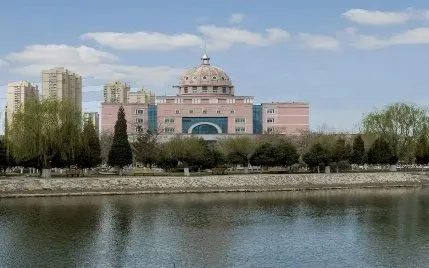
Anshan Normal University
University · Anshan
Language courses · Bachelor's Degree · Master's Degree
LNUTCM · 辽宁中医药大学
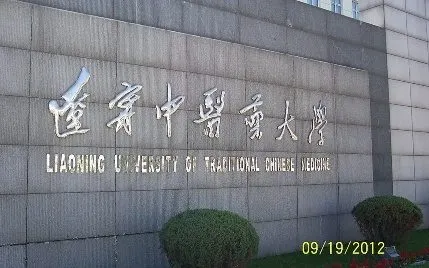
Liaoning University of Traditional Chinese Medicine accepts international students on programmes in the following fields: medicine, economics, humanities, natural sciences. Choose the level and programme that suit your goals.
Chinese language study at the university — from a few weeks to a year or longer. Suitable for those starting from scratch or preparing for the HSK before entering a main programme.
Check upcoming application deadlines for this level with your Nihao Study adviser.
All programmes at this level →Liaoning University of Traditional Chinese Medicine is located in Shenyang. Nihao Study consultants keep track of the deadlines and admission requirements of this university, and you can always check the most accurate and up-to-date information on its official website.
Come for a face-to-face meeting: together we will go through the requirements, deadlines, documents and study options that suit you.

At the meeting we will look at your situation, tell you which documents to prepare and by when, talk about possible programmes and help you decide on the next step.
Liaoning University of Traditional Chinese Medicine (LNUTCM, 辽宁中医药大学, Liáoníng Zhōngyīyào Dàxué) is one of the main specialist medical universities in north-east China. It is the leading centre in Liaoning Province for training doctors of traditional Chinese medicine; the provincial capital is Shenyang. In Russian the name is often rendered with the word order reversed, as "University of Chinese Medicine of Liaoning Province", or as "Liaoning TCM University". Chinese students call the university simply 辽中医 (Liáozhōngyī), and in international rankings it is listed as LNUTCM (LUTCM and LUCM also occur). Official Russian-language documents use the full form of the name.
The university was founded in 1958 as the Liaoning College of Traditional Chinese Medicine (辽宁中医学院) and became a university in 2006. Today it follows a "one university, three campuses" model (一校三区): in addition to the main campus in Shenyang, it has branches in Dalian and Benxi. The same city is also home to Liaoning University (辽宁大学), a classical comprehensive university that must not be confused with LNUTCM. Because both names begin with the same word, many applicants mix them up; more on this in a separate section below.
This Nihao Study overview brings together information that will be useful to a 2026 applicant: key figures, ranking positions, strongest disciplines, the admission procedure and CSC scholarships, as well as similarly named universities that are often confused with LNUTCM.
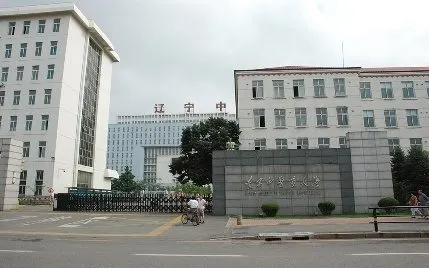
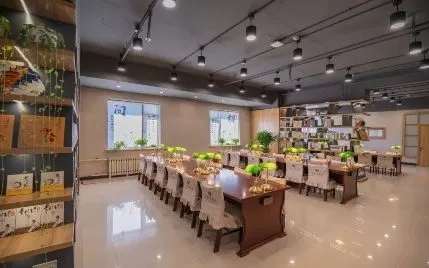
To get an immediate sense of the university's scale, take a look at its key figures — they come from its official website.
| Item | Data |
|---|---|
| Year founded | 1958 (university status since 2006) |
| Campuses | three: Shenyang, Dalian and Benxi |
| Students | about 14,000 |
| Schools (二级学院) | 18 |
| Bachelor's programmes | 27 in 7 branches of science |
| National TCM Masters (国医大师) | 3; in addition, 4 nationally renowned TCM physicians |
| Own clinical bases | 4 Grade 3A hospitals |
| Disciplines in the ESI top 1% | 2: pharmacology and clinical medicine |
| Partner countries | 35 |
The university's roots go back before 1958. As early as 1955, the Liaoning Provincial Advanced Training School for Chinese Medicine Doctors was founded, followed in 1956 by the provincial hospital of Chinese medicine. It was on their basis that the Liaoning College of Traditional Chinese Medicine (辽宁中医学院) opened in 1958 — one of the first higher education institutions in this field in China.
In the decades that followed, the specialised college grew into a full-fledged university offering bachelor's, master's and doctoral programmes. It was one of the first in China to gain the right to award master's degrees and to admit international students — hence the maturity of its current international programmes. The university officially received its new name, Liaoning University of Traditional Chinese Medicine, in 2006.
One of the most important recent events came in 2024, when the university became a jointly administered institution (共建高校), overseen by both the National Administration of Traditional Chinese Medicine and the Liaoning provincial government. For applicants, this signals stable state support and priority development. The university covers 1036.83 mu (about 69 hectares) and publishes four academic journals, including the peer-reviewed Chinese Journal of Traditional Chinese Medicine (中华中医药学刊).
The university is not part of Project 985 or 211, nor is it on the national Double First-Class (双一流) list. It does, however, hold significant status at the level of individual disciplines. The university has one National Key Discipline (国家重点学科) — basic theory of Chinese medicine (中医基础理论). Four fields have been named first-class disciplines of Liaoning Province: Chinese medicine (中医学), integrated Chinese and Western medicine (中西医结合), Chinese pharmacy (中药学) and pharmacy (药学). In addition, the university has 26 disciplines designated as key by the National Administration of TCM.
For a specialised medical university, its standing in independent rankings is about what you would expect: strong positions in its core disciplines and middling ones in overall tables. The main results are summarised in the table.
| Ranking | Rank (year) |
|---|---|
| EduRank, world | 4229 of 14,131 (2026) |
| EduRank, China | 347 of 960 (2026) |
| EduRank, Shenyang | 10 of 24 (2026) |
| EduRank, pharmacology (China) | 107 (2026) |
| ShanghaiRanking, TCM universities in China | 12 (2026) |
The most telling picture comes from the ShanghaiRanking (软科) subject rankings. In them, TCM clinical medicine and Chinese medicine were rated B+ and placed 14th and 17th respectively — in the upper part of the national list; Chinese pharmacy is in 31st place. For such a specialised university, it is the subject tables rather than the overall ones that give the most objective picture.
LNUTCM does not aim to be a broad comprehensive university. Its reputation rests on three interconnected areas, each of which matters directly to a future medic.
Basic theory of TCM (中医基础理论) is the university's only National Key Discipline and also its historical core. A strong academic school studying the canonical texts and theory took shape here, and its tradition of mentorship leads back to scholars such as Li Yuqi (李玉奇), who was among China's first cohort of National TCM Masters (国医大师). The university currently has four nationally renowned physicians and three National TCM Masters — a high concentration of recognised specialists for a specialised university.
The second distinguishing feature is the maturity of its research. Two of the university's disciplines are in the global top 1% of ESI: first pharmacology and toxicology (药理学与毒理学), then clinical medicine (临床医学), added based on data as of March 2023. In the independent EduRank ranking, the university's pharmacology is 107th in China and counts among the country's strongest. For applicants planning research in Chinese pharmacy or the evidence-based evaluation of herbal medicines, this opens the door to labs whose work is visible internationally.
The third pillar is clinical practice. All four of the university's directly affiliated hospitals hold the top Grade 3A (三级甲等) rating. They include a hospital of integrated medicine, a provincial proctology hospital, and the Liaoning Provincial Hospital of Chinese Medicine together with the province's Research Institute of Chinese Medicine. Altogether, the university's clinical network includes 7 national regional TCM centres and 11 national key clinical specialties, with more than ninety clinical teaching bases. This allows theory to turn into real practice at the patient's bedside.
The university is made up of 18 schools and runs 27 bachelor's programmes across seven branches of science — medicine, natural sciences, humanities, engineering, management, law and agriculture. Nevertheless, its foundation remains medical.
The fields can be grouped into several clusters. The core is Chinese medicine itself: TCM therapy and diagnostics, the classical canons, and traumatology and orthopaedics of Chinese medicine. Next comes acupuncture and tuina (针灸推拿学): this programme has traditionally been in high demand among international students, and ShanghaiRanking rates it at level B. Another cluster brings together Chinese pharmacy and pharmacology — medicinal raw materials, processing technologies, quality control and the clinical pharmacology of herbs. Standing apart are rehabilitation, nursing, integrated medicine combining Chinese and Western approaches, and applied fields such as medical informatics.
The degree system here is complete. Doctoral studies include three first-level programmes and 19 specialisations, master's studies four first-level programmes and 26 specialisations; there is also a postdoctoral programme with three research stations. An international student can complete the whole path at one university — from a bachelor's to a doctoral degree.
International students live in on-campus dormitories. There is a choice of double rooms and single units with upgraded facilities; the price depends on the room type. It is best to check the current accommodation rates, as well as the registration fee and medical insurance, on the university's official website.
The main campus is in Shenyang's Huanggu District (皇姑区), at 79 Chongshan East Road. Students have access to the well-developed infrastructure of this north-eastern metropolis of about 9 million people. Shenyang is the historical centre of Liaoning Province: it has a metro, major railway stations and direct transport links with other regions of China. Winters in the city are truly snowy — something to bear in mind if you are coming from a warmer place.
The main route to free study is the Chinese Government Scholarship (CSC, China Scholarship Council). LNUTCM is on the list of universities that accept CSC scholarship holders and admits bachelor's, master's and doctoral students under this scheme. A full scholarship covers tuition, a dormitory place and a monthly living allowance.
CSC payment amounts are the same across the country, and the package also includes comprehensive medical insurance. Applications for this programme usually open in the autumn and close by the end of April, so it is best to prepare your documents in advance. Conditions for individual majors and the number of scholarship places change from year to year — check them directly with the university.
The university operates on a "one school, three sites" model. Shenyang is home to the main campus — the university's administrative and clinical centre, housing its main schools and affiliated hospitals. The Dalian campus is on the Yellow Sea, in the Shuang D Port area; another site operates in Benxi. This lets students choose where to live: in a large industrial centre or in Dalian with its milder maritime climate.
All of the university's facilities are geared towards medicine. Its own hospitals serve as training bases, the library and research centres support research, and students and postgraduates can publish in the four university journals. International ties are also well developed: the university works with partners from 35 countries, has opened Chinese medicine centres in Japan, Singapore, Thailand, Belarus, Slovakia, Austria and Chile, and runs a joint bachelor's programme in nursing with Ara Institute in New Zealand.
For international students applying to self-funded programmes, the procedure is quite straightforward. The basic process consists of six steps.
Liaoning University of Traditional Chinese Medicine is often confused with other universities — the shared word "Liaoning" and the medical focus of several Shenyang universities can be misleading. To make sure you send your documents to the right place, check the table.
| University (Chinese name) | Type | Main focus |
|---|---|---|
| Liaoning University of Traditional Chinese Medicine (LNUTCM), 辽宁中医药大学 | specialised medical university | traditional Chinese medicine (the subject of this overview) |
| Liaoning University (LNU), 辽宁大学 | comprehensive university | humanities, natural sciences and economics |
| China Medical University, 中国医科大学 | medical university | modern Western medicine, Shenyang |
| Shenyang Pharmaceutical University, 沈阳药科大学 | pharmaceutical university | pharmacy and pharmaceutical manufacturing technology |
| Changchun University of Chinese Medicine, 长春中医药大学 | specialised medical university | Chinese medicine; located in Jilin Province |
The key difference: in Liaoning Province, 辽宁中医药大学 is the only university specialising in traditional Chinese medicine. Liaoning University (辽宁大学) is an entirely different, comprehensive university. China Medical University and Shenyang Pharmaceutical University are also in Shenyang, but the former focuses on Western medicine and the latter on pharmacy. Changchun University of Chinese Medicine and Heilongjiang University of Chinese Medicine have the same profile but are located in neighbouring north-eastern provinces.
Let's go through the variants one by one. There is a standard Russian form of the name, used in documents and on Wikipedia, while two misspelt Russian variants (one with an extra letter under the influence of “Liaoning”, one with a missing letter) are common mistakes best avoided. Russian forms such as “Liaoning Province University of Chinese Medicine” or “Liaoning TCM University” are calques from English: not strictly accurate, but they have caught on in everyday speech. Liaoning University of Traditional Chinese Medicine is the official international name, and LNUTCM (also LUTCM or LUCM) is the Latin abbreviation used in rankings and correspondence. 辽中医 (Liáo Zhōngyī) is the slang name among Chinese students, and the full Chinese name is 辽宁中医药大学, in pinyin Liáoníng Zhōngyīyào Dàxué.
This is Liaoning University of Traditional Chinese Medicine — a specialised medical university in Liaoning province founded in 1958, with its main campus in Shenyang. It is known for its strong school of TCM fundamental theory, two disciplines in the ESI top 1% — pharmacology and clinical medicine — and its own network of four Grade 3A hospitals.
Most clinical programmes, including the main bachelor's programme in Chinese medicine, are taught in Chinese. Some fields — integrative medicine, for example — open in English in certain years if a group is formed; check with the admissions office whether there is such an intake in the year you need. Either way, most international students will need Chinese first.
Chinese-taught programmes require a new HSK certificate at level 4 or higher with a score of at least 180. If your level is lower for now, start with the university's language courses, and check exam dates in the official HSK schedule.
No. LNUTCM is not part of Projects 985 and 211 and is not on the national Double First-Class list. However, the university has one national key discipline — TCM fundamental theory — as well as four provincial first-class disciplines and two disciplines in the ESI top 1%.
The price depends on the room type — a double room or a single unit. In addition to the accommodation fee, a registration fee is paid and medical insurance is arranged on check-in. The current amounts are published on the university's official website.
Yes. The university accepts recipients of the Chinese Government Scholarship (CSC). It covers tuition and accommodation and provides a monthly allowance for bachelor's, master's and doctoral students; the amounts are set at national level.
The HSK is held across the country, and you cannot be admitted to Chinese-taught programmes without a result. The exam is taken at accredited centres, and session dates are published in the official HSK schedule.
The main campus is in Shenyang's Huanggu District, at 79 Chongshan East Road; two more sites operate in Dalian and Benxi. Shenyang is a major transport hub of the Northeast, with an international airport, a metro and high-speed trains to Beijing, Dalian and Harbin.
Liaoning University (辽宁大学) is not a medical university but a comprehensive one, with an emphasis on the humanities and economics. China Medical University (中国医科大学) in Shenyang trains doctors of modern Western medicine. Only 辽宁中医药大学 specialises in traditional Chinese medicine.
The standard set: an HSK 4 certificate (at least 180 points), a passport, a school certificate with grades, a medical certificate in the form required for foreigners and — for admission from 2026 — a CSCA test result. Documents for the current year are submitted between 1 January and 30 June.
Shenyang (沈阳) is the largest metropolis in Northeast China and was once the capital of the Manchus. It is home to the Imperial (Mukden) Palace, which in terms of preservation is second only to the Forbidden City in Beijing.
Here students get the scale of a big city, while prices are 2–3 times lower than in Beijing. Shenyang has strong universities, a metro and developed industry, and there are ski resorts nearby. For parents, it matters that the city has consulates, healthcare is of a good standard (including traditional Chinese medicine), there are direct flights, the level of safety is high, and buildings are heated in winter.
You work with Nihao Study specialists. They will help you put together a portfolio and a set of documents, draw up a study plan and choose a university or college and a specialty that genuinely interest you.
We take care of every stage of admission, from choosing to enrolment
We will gather, prepare, certify and send your documents to the institution
We will show the admissions committee your strengths
We run training sessions and courses so you can prepare with more confidence
We will help you settle in at the start of your studies and keep moving forward
Nihao Study specialists select universities and colleges that match the applicant's goals and means. We make sure the teachers are practitioners and that the knowledge will be useful in your profession.
We examine curricula, talk to students and teachers and look at which specialties employers need, and use this information to select options for the applicant.
Advisers guide the applicant from the first consultation to enrolment, help build a plan and spot mistakes in time that could get in the way.
The cost of our support depends on the programme and the partner university; you'll get an exact quote after a free consultation.
Get a quoteA free 15-minute consultation: together we will choose a university or college and a programme that suit your goals and budget.
Apply with peace of mind: we handle the documents, deadlines and correspondence with admissions committees, and you save time and energy.
Don't want to wait for a call? Message us in the chat.
Message us in chat University · Anshan
Language courses · Bachelor's Degree · Master's Degree
University · Dalian
Language courses · Bachelor's Degree · Master's Degree
University · Dalian
Language courses · Bachelor's Degree · Master's Degree