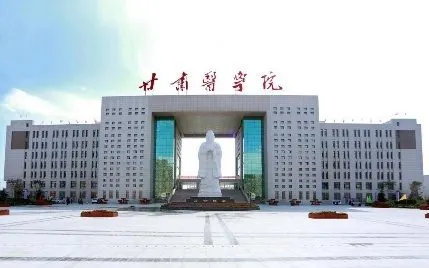
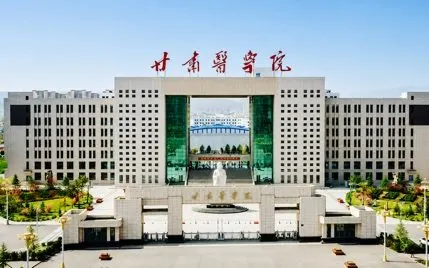
Gansu University of Chinese Medicine
University · Lanzhou
Language courses · Bachelor's Degree · Master's Degree
LU · 兰州大学
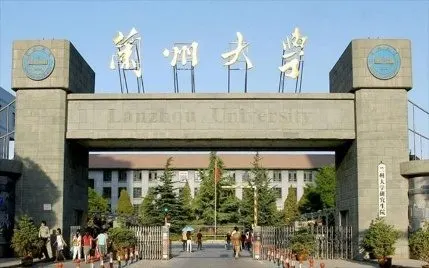
Lanzhou University accepts international students on programmes in the following fields: business, engineering, economics. Choose the level and programme that suit your goals.
Chinese language study at the university — from a few weeks to a year or longer. Suitable for those starting from scratch or preparing for the HSK before entering a main programme.
self-funded · language programme
The first level of higher education: usually four years of study, specialised subjects, internships and a graduation thesis. It opens the way to working in your field and to a master's degree.
self-funded
Advanced study after a bachelor's degree: research, applied projects and internships. It helps you become an expert in your chosen field and broaden your career opportunities.
self-funded
Lanzhou University is located in Lanzhou. Nihao Study consultants keep track of the deadlines and admission requirements of this university, and you can always check the most accurate and up-to-date information on its official website. In university rankings, it is ranked 57 in China and 460 worldwide.
Come for a face-to-face meeting: together we will go through the requirements, deadlines, documents and study options that suit you.

At the meeting we will look at your situation, tell you which documents to prepare and by when, talk about possible programmes and help you decide on the next step.
Lanzhou University (Chinese: 兰州大学, pinyin Lánzhōu Dàxué) is a public research university located in Lanzhou, the administrative centre of Gansu Province, and directly under the Ministry of Education of China. Russian Wikipedia uses a name meaning "University of Lanzhou"; other Russian-language texts use an adjectival form and variants with a simplified spelling of Lanzhou. The abbreviation LU is used in university catalogues, while the university's own materials, international rankings and English-language correspondence usually use LZU. Chinese students call the university simply 兰大 (Lándà), an abbreviation of its full name.
The university took part in the historic 211 and 985 projects and is now part of the current Double First Class (双一流) programme. In the second round of this initiative it was assigned four disciplines: chemistry, atmospheric sciences, ecology and grassland science. This is a significant indicator of research standing, but each programme has its own admission requirements — the language of instruction, curriculum and campus need to be checked separately.
This Nihao Study overview brings together information that will be useful to a 2026 applicant: the university's statuses and rankings, academic fields, HSK language requirements, dormitories, CSC scholarships and a step-by-step application procedure.

| Item | Value | What it means |
|---|---|---|
| Year founded | 1909 | The longest tradition of higher education in north-west China |
| Type | Public research university under the Ministry of Education of the PRC | Administered at national rather than provincial level |
| Statuses | Projects 211 and 985, Double First Class | Priority status in the past and participation in the current development programme |
| Fields of study | 31 doctoral discipline groups, 96 bachelor's programmes | A wide range: from the humanities to medicine |
| ESI | Top 1 percent: 18 disciplines; top one-thousandth: two | Research output is particularly notable |
| Academic staff | Over 3,300 staff engaged in teaching and research | A large research community and many departments to choose from |
| Number of students | 35,629 students, of whom 578 are international (ShanghaiRanking profile data) | There are international students, but their share is small |
| Campuses | Chengguan and Yuzhong | Your school determines where classes take place and how daily life is organised |
| Main contact address | 222 South Tianshui Road, Lanzhou 730000 | The international office is here, which is useful when processing documents |
The abbreviation LZU is used in the university's own English-language publications and in the Nature Index database, so when searching for a supervisor, ranking positions or the official domain, use it as well, not just LU.
The university's history begins in 1909, when the Gansu School of Law and Politics opened. In 1928 it was reorganised as Lanzhou Sun Yat-sen University, and from 1946 the institution has been known as National Lanzhou University. When the country restructured its higher education system, the university was among China's fourteen key comprehensive universities. This explains the combination characteristic of today's LZU: strong fundamental sciences sit alongside law, history, medicine and the study of border regions.
Two mergers broadened the university's profile: the Gansu Grassland Ecological Research Institute joined in 2002, and Lanzhou Medical College returned in 2004. This strengthened the fields in which the university still stands out: grassland science together with dryland ecology, as well as basic and clinical medicine. The first round of Double First Class in 2017 included LZU, and four of its fields were granted world-class discipline status.
The university's motto is 自强不息,独树一帜: it speaks of continuous self-improvement and of staying true to one's own path. In 2009, for the centenary, a stone bearing these words was placed at the university gates. This detail tells an applicant more than it seems: LZU deliberately links its academic identity to the western regions of China, since their climate, ecology and cultural heritage offer science rare topics.
211 and 985 are historical government programmes under which Lanzhou University received priority support. The university reports that it took part in both. So today it is more accurate to say that LZU participated in Projects 211 and 985: these lists were settled long ago, and no new status is granted in them each year.
Today the benchmark is the Double First Class programme. The PRC Ministry of Education included Lanzhou University in the second round of this programme, naming four fields: chemistry, atmospheric sciences, ecology and grassland science. So the information that the university holds 985, 211 and 双一流 status is correct, provided the historical projects are distinguished from the current initiative.
In its 2026 admissions materials, the university describes itself as a Double First Class university with national status and a research profile, and 985 and 211 are no longer referred to there as active programmes. In practice, status helps you gauge the university's national importance and research base, but you should choose based on the specific programme, laboratory and language of instruction.
| Ranking | Position | What it measures |
|---|---|---|
| QS World University Rankings 2027 | 721–730 band | Reputation, internationalisation, academic indicators |
| QS World University Rankings 2026 | 791–800 band | Shows the year-on-year change under the same methodology |
| ARWU 2025 | 201–300 band | Greater weight on research output |
| Best Chinese Universities 2026 | 40th | Comparison of universities in mainland China |
| CWUR 2026 | 46th in China, 296th worldwide | Quality of education, graduate outcomes, faculty, research |
| EduRank 2026 | 38th in China, 614th worldwide | Publication metrics, reputation, alumni influence |
| U.S. News 2025 or 2026 | 460th worldwide | Global visibility of research |
| SCImago 2026 | 758th among institutions worldwide | Research, innovation, societal impact |
Such discrepancies are to be expected. The methodologies weigh reputation, citations, internationalisation and research output differently, which is why QS rates LZU noticeably more harshly than ARWU and CWUR. Lanzhou University does have a profile in Times Higher Education, but the public version does not yet show a verifiable position in the 2026 edition, so it would be wrong to quote a recent THE band without a published result.
If you look at research specifically, the picture is stronger than the overall QS ranking suggests. Among academic institutions worldwide in the natural sciences, Nature Index Research Leaders 2026 places the university 26th. In the 2025 edition of ShanghaiRanking, LZU's atmospheric and agricultural sciences are singled out as particularly prominent subject areas.
Chemistry is on the official Double First Class list and is in the top one-thousandth of ESI. According to the current 2026 profile, environment and ecology has joined the same group. Besides chemistry, the university develops mathematics, physics, biology, materials science and earth sciences; 18 disciplines are already in the ESI top 1 per cent. Master's and doctoral applicants should look at the labs and publications of their prospective supervisor rather than going by the name of the school alone.
Lanzhou lies in a zone where research into climate, water resources, dust, grasslands and plateaus finds immediate practical use. Of LZU's four Double First Class disciplines, three — atmospheric sciences, ecology and grassland science — are specially highlighted by the Ministry of Education. The university's official description adds research on drylands, sand dynamics, the Loess and Tibetan plateaus, and pastoral agriculture. This combination is especially well suited to those who see their future in climatology, geography, ecosystem modelling or sustainable agriculture.
The university's regional specialisation is not limited to the natural sciences. LZU develops nuclear physics and radiochemistry, and also studies Dunhuang, Central Asia, and ethnic and religious processes. The disciplines characteristic of the university include history, geography, atmospheric sciences, nuclear technology and radiation protection. The School of History and Culture includes the Institute of Dunhuang Studies and a centre that studies ethnic minorities. This brings together natural-science and humanities expertise on western China within a single university — a combination that is rarely found.
According to the university's 2026 data, it offers 96 bachelor's programmes, 44 master's discipline groups and 29 professional master's degrees, as well as 31 first-level doctoral discipline groups and seven professional doctoral tracks. These figures describe the university as a whole rather than the list of programmes for international students, so whether a particular field is open to international applicants needs to be checked separately.
For a first look, the catalogue can be grouped into four broad clusters:
The words School and College in the English names refer to units of LZU, not separate colleges. The university has 339 partner universities and research organisations in 59 countries and regions; it runs three Confucius Institutes and carries out joint projects with partners from the UK, the USA and Australia. The opportunities for academic mobility depend on the school and the programme.
The most recent detailed admission rules for self-funded international students were published for 2022. Under them, study lasts four years for a bachelor's degree and the same for a doctorate, five years for clinical medicine, and two to three years for a master's degree. These durations are a useful guide, but the 2026 conditions should be confirmed with the school before you apply.
| Level | Language and format of study | What to check |
|---|---|---|
| Bachelor's Degree | Chinese; some tracks in English | Major, HSK level, possible CSCA requirement, campus |
| MBBS | English; five years according to the previous fee schedule | Whether admission is currently open, where clinical training takes place, whether the degree is recognised |
| Master's Degree | English or Chinese, usually two to three years | Supervisor, research plan, language of instruction |
| Doctoral (PhD) Programmes | English or Chinese, around four years | Publications, supervisor's consent, scholarship |
| Chinese Language | One semester or an academic year | Class level, number of hours, visa duration |
In 2022, Chinese-taught bachelor's programmes required HSK 4: at least 210 points for literature, philosophy and history, and at least 195 for other fields. In addition, the Chinese Language and International Chinese Language Education majors required the intermediate HSKK with 60 points. Master's and doctoral programmes in the humanities asked for HSK 5 with at least 180 points, and many other majors for HSK 4 with at least 210 points.
According to the same document, English-taught programmes required IELTS 5.5, TOEFL 80 or other proof of English proficiency. These thresholds cannot be assumed to apply to later intakes without checking — always refer to the current year's rules.
The 2022 fee schedule included a long-term language course lasting a semester or an academic year. The exchange programme for the 2025 or 2026 academic year also lists a Chinese Language and Culture Program run by the School of International Cultural Exchange. So the language programme is running, but the fees for a new intake need to be requested separately.
There is no public HSK or BCT test centre on campus, even though the university sets HSK requirements. Check exam dates and the cities where you can sit them on the official Chinese Test Service platform.
The university last published detailed fees for international students for the 2022 intake, so they cannot be considered current. Check the current tuition fee, registration fee and medical insurance cost on LZU's official website or with its international office; note that the fees for Chinese citizens do not apply to international students.
Under the 2022 admission rules, international students were offered double rooms with their own bathroom and shower. The final cost depends on how the contract counts months, semesters and holidays, so go by the accommodation confirmation rather than your own calculations.
Different conditions apply to Chinese students — for example, rooms for four in Yuzhong. This gives an idea of the campus facilities but has nothing to do with the dormitory for international students.
Chengguan campus is set among city buildings, close to the metro and the railway station, while Yuzhong is about 47 kilometres from the central campus; university buses run between them. Before you buy a ticket, find out where your classes will be held and where you will be housed: your transport costs depend on this far more than on the formal label "Lanzhou city".
LZU has admitted international students under the Chinese Government Scholarship programme. According to the university, the 2022 scholarship package included a tuition waiver, a free place in a double dormitory room, a stipend and medical insurance. It also set an age limit of under 35 for master's and under 40 for doctoral programmes, and Chinese-taught programmes required HSK 4 with at least 180 points.
If you apply through the university, your application falls under Type B; LZU's code in the CSC system is 10730. These are technical details of this particular application channel, while the opening dates, the list of available majors and the deadlines change every year — check them against the new announcement.
There is also a separate option — the International Chinese Language Teachers Scholarship. LZU's official guide describes scholarships under this scheme for bachelor's, master's and language study, each with its own HSK and HSKK requirements. In addition, provincial or university scholarships may be announced. There is no reliable average approval rate for an individual applicant: the outcome depends on the quota, the country, the programme, the documents and the academic profile.
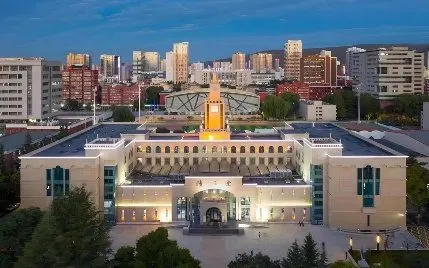
The Yuzhong campus is very different from urban Chengguan. The main place for reading and independent study here is the Kunlun Library. The university museum opened for LZU's centenary in 2009: its 9,600 square metres house more than 200,000 items — fossils, historical artefacts, biological specimens and materials on the Yellow River.
For sport there are three multi-purpose gyms, a swimming pool and four standard stadiums with 400-metre running tracks. The Tianshan teaching building in Yuzhong has 129 classrooms with more than 13,000 seats. Entry to the museum in Yuzhong and the history museum in Chengguan is free, but check the opening hours and whether advance booking is required before you visit.
1. Decide on your level of study, major and language. In the official admission system, check whether the programme is open to international students, which campus it is taught on and what the school requires.
2. Check the language requirements. Previously, the official thresholds ranged from HSK 4 to HSK 5 for Chinese-taught programmes and IELTS 5.5 or TOEFL 80 for English-taught programmes. Go only by the requirements for the current intake.
3. Find out whether an academic exam is required. From 2026, the CSCA applies to some bachelor's programmes at Chinese universities, but the subjects are set by the university and the major. Attach your result to the application only if LZU explicitly requires it.
4. Gather your documents. The official list includes a passport, a diploma with transcript and notarised translation, a medical form, a police clearance certificate, and proof of language proficiency and financial means. Master's and doctoral applicants will need two recommendation letters, and the personal statement previously had to be at least 800 words long.
5. Submit your application through the admission system at apply.lzu.edu.cn. According to the university, it is then checked by the international school, reviewed by the school offering the programme, followed by an interview and a final decision.
6. Once you are admitted, ask the university for an up-to-date invoice, as well as the registration date, the visa form and the dormitory rules. Do not use bank details from old PDF files for payment.
| University | Chinese name | Profile |
|---|---|---|
| Lanzhou University, LU or LZU | 兰州大学 | Comprehensive university: 985, 211, Double First Class |
| Lanzhou Jiaotong University | 兰州交通大学 | Engineering, transport and railways |
| Lanzhou University of Technology | 兰州理工大学 | Technology and applied engineering |
| Lanzhou University of Finance and Economics | 兰州财经大学 | Finance, economics and management |
According to EduRank, Lanzhou University ranks first among the twelve universities in the city it covers, but that does not make the other institutions its branches. In the uniRank database for Lanzhou, the transport, technology, finance and economics and other universities are listed separately. Before applying, check the Chinese name and the domain: the word Lanzhou in a name does not mean it is the same institution.
The Russian name used on this page matches the title of the Russian Wikipedia article; an adjectival form is also common, and some simplified spellings drop the soft sign — those forms are not used on this page. The official international name is Lanzhou University. The abbreviation LU appears in catalogues, while LZU is the university's usual international abbreviation. 兰大 (Lándà) is the short name Chinese students use, and 兰州大学 (Lánzhōu Dàxué) is its original Chinese name.
Both abbreviations refer to Lanzhou University. LU appears in university catalogues, while LZU is more often used in English-language publications, research databases and rankings.
Yes. The university's participation in Projects 985 and 211 is confirmed, and four of its disciplines are named in the current second-round Double First-Class list.
International admissions have included some English-taught programmes, including MBBS. There are no degree programmes taught in Russian. Check the official admissions announcement for the language of instruction of your chosen programme.
For 2022 bachelor's admission, HSK 4 was required, with the minimum score depending on the field; humanities master's and doctoral programmes required HSK 5 with at least 180 points. If you are applying in 2026, go only by the faculty's new rules.
The most recent detailed fees for international students were published for the 2022 intake and do not apply to new admissions. Tuition and dormitory costs for 2026 depend on the programme and room type — check the exact terms in a current invoice from LZU and on the university's official website.
Yes, LZU has published Chinese Government Scholarship terms: a tuition fee waiver, accommodation, a stipend and medical insurance. Check the current year's announcement to see whether places are available and for which programmes.
No: for 2026 there is no HSK or BCT centre open for testing at LZU. An HSK result is required for a number of programmes, so choose your exam venue using the current calendar of authorised centres.
The Chengguan city campus is at 222 South Tianshui Road; a large teaching campus is located in Yuzhong. Official admissions materials mention both sites. Find out which campus your programme will be on before booking accommodation.
LZU is a comprehensive university that took part in Projects 985 and 211 and has four Double First-Class disciplines. Lanzhou Jiaotong University is a separate university specialising in transport and engineering. They have different Chinese names and official domains.
The standard set is a passport, a school certificate with grades and translations, a medical form, a police clearance certificate, a language certificate and proof of financial means. Check the full list and the validity periods of documents in the current admissions announcement; previously, the medical report was considered valid for six months.
Lanzhou (兰州) stretches along the Yellow River and was one of the key points on the Silk Road. The city owes its worldwide fame to its beef noodles — Lanzhou lamian, now made in many countries.
For students, Lanzhou opens the way to the country's mysterious west. You can get a good education here — Lanzhou University is considered the leading university of the region — prices are low, and Islamic culture is closely intertwined with Chinese culture. For parents, it matters that the city is safe and distinctive, the climate is dry (convenient for those who cope poorly with damp), the railways are well developed, and the locals are hospitable.
You work with Nihao Study specialists. They will help you put together a portfolio and a set of documents, draw up a study plan and choose a university or college and a specialty that genuinely interest you.
We take care of every stage of admission, from choosing to enrolment
We will gather, prepare, certify and send your documents to the institution
We will show the admissions committee your strengths
We run training sessions and courses so you can prepare with more confidence
We will help you settle in at the start of your studies and keep moving forward
Nihao Study specialists select universities and colleges that match the applicant's goals and means. We make sure the teachers are practitioners and that the knowledge will be useful in your profession.
We examine curricula, talk to students and teachers and look at which specialties employers need, and use this information to select options for the applicant.
Advisers guide the applicant from the first consultation to enrolment, help build a plan and spot mistakes in time that could get in the way.
The cost of our support depends on the programme and the partner university; you'll get an exact quote after a free consultation.
Get a quoteA free 15-minute consultation: together we will choose a university or college and a programme that suit your goals and budget.
Apply with peace of mind: we handle the documents, deadlines and correspondence with admissions committees, and you save time and energy.
Don't want to wait for a call? Message us in the chat.
Message us in chat University · Lanzhou
Language courses · Bachelor's Degree · Master's Degree
University · Tianshui
Language courses · Bachelor's Degree · Master's Degree
College · Pingliang
Language courses · College