Beihua University
University · Jilin
Language courses · Bachelor's Degree · Master's Degree
JLU · 吉林大学
Jilin University accepts international students on programmes in the following fields: business, economics, agriculture. Choose the level and programme that suit your goals.
Chinese language study at the university — from a few weeks to a year or longer. Suitable for those starting from scratch or preparing for the HSK before entering a main programme.
self-funded · language programme
The first level of higher education: usually four years of study, specialised subjects, internships and a graduation thesis. It opens the way to working in your field and to a master's degree.
self-funded
Advanced study after a bachelor's degree: research, applied projects and internships. It helps you become an expert in your chosen field and broaden your career opportunities.
self-funded
Jilin University is located in Changchun. Nihao Study consultants keep track of the deadlines and admission requirements of this university, and you can always check the most accurate and up-to-date information on its official website. In university rankings, it is ranked 23 in China and 334 worldwide.
Come for a face-to-face meeting: together we will go through the requirements, deadlines, documents and study options that suit you.

At the meeting we will look at your situation, tell you which documents to prepare and by when, talk about possible programmes and help you decide on the next step.
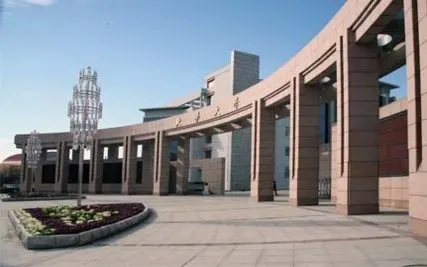
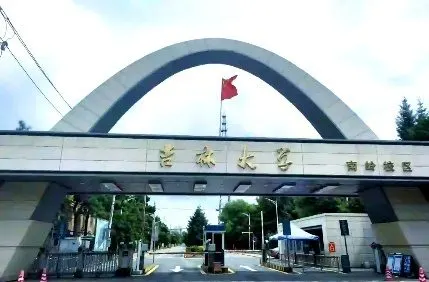
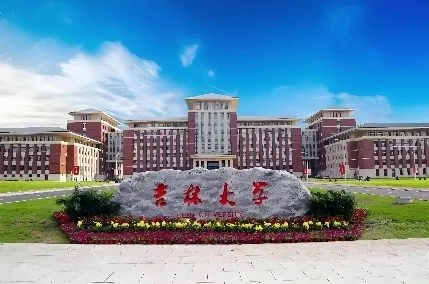
Jilin University (JLU, 吉林大学, pinyin Jílín Dàxué) is a national key comprehensive university located in Changchun, the capital of Jilin Province, and directly under the Ministry of Education of China. Russian-language sources also use other forms, including various transliterations of Jilin. Chinese students shorten the name to 吉大 (Jídà), from the first and third characters of the full name.
JLU took part in the historic 211 and 985 projects and is now part of the national Double First-Class (双一流) programme. The description "one of the largest" is based on scale, not advertising: the university reports 76 142 students, 6 279 full-time teaching staff and 7 campuses, and Times Higher Education counts JLU among the largest comprehensive universities in China. When choosing a programme, consider not only the university's status but also the language of instruction, the faculty, and the conditions and requirements for international students.
Below is what a 2026 applicant needs to know: statuses and rankings, strongest fields, programmes, HSK requirements, CSC scholarship options, dormitories and the application procedure. Questions about admission to JLU can be asked during a Nihao Study consultation.
| Item | Data | What applicants should know |
|---|---|---|
| Founded | 1946 | A major academic school with a long history |
| Status | 211, 985, first group of Double First-Class | A national priority university |
| Number of students | 76,142 students | One of the largest comprehensive universities in China |
| Teaching staff | 6,279, including 2,533 professors | A large academic community |
| Structure | 9 academic divisions, 48 schools and colleges | Fields from the humanities to engineering and medicine |
| Campuses | 7 campuses in 6 urban areas | Your school determines where classes take place |
| Central campus address | 2699 Qianjin Street, Changchun 130012 | For reference only: schools and dormitories may be at other addresses |
JLU has 317 partners, universities and research organisations from 45 countries and regions, as well as 50 joint platforms with institutions abroad. This scale is convenient for interdisciplinary choices but complicates logistics, so before applying it is worth finding out exactly which campus your programme is taught on.
The university was founded in 1946. Since 1960 it has been one of the national key universities, and in 1984 it was in the first group of 22 Chinese universities to open a graduate school. JLU was selected for Project 211 in 1995 and for Project 985 in 2001. No new rounds of these projects are held today, but their names still show the university's historical place in Chinese higher education.
Today's JLU was formed through mergers. In June 2000 the former Jilin University merged with Jilin University of Technology, Norman Bethune University of Medical Sciences, Changchun University of Science and Technology and Changchun Institute of Posts and Telecommunications, and in 2004 the University of Military Logistics joined. Hence the combination of strong schools of medicine, law, geology, automotive engineering and fundamental sciences in a single university.
JLU has long-standing ties with the Russian language: its Russian department has existed since 1950 and today trains specialists in Russian language and literature and in Chinese–Russian translation. Standard bachelor's programmes are not taught in Russian, but this base gives the university ground for academic exchanges.
JLU's membership of Projects 985 and 211 is confirmed. Its participation in the second round of Double First-Class is recorded in the 2022 list of the PRC Ministry of Education, which names six JLU disciplines: mathematics, physics, chemistry, biology, archaeology, and materials science and engineering.
Status does not guarantee that all of the university's programmes are equally strong. Double First-Class concerns specific fields of development, while JLU as a whole is much broader. In practice this means that priority status speaks to the university's national role and research base, but the programme itself should still be judged by its curriculum, language of instruction and research group.
| Ranking | Position | What it shows |
|---|---|---|
| QS World University Rankings 2027 | 488th | Global recognition and reputation |
| QS World University Rankings 2026 | 473rd | Lets you compare results over time |
| ARWU 2025 | 101–150 band | Strong research output |
| CWUR 2025 | 194th worldwide, 25th in China | Heavy weighting of research |
| EduRank 2026 | 386th worldwide, 21st in China | Independent bibliometric methodology |
| SCImago 2026 | 117th among organisations worldwide | Research, innovation and societal impact |
THE lists only an old overall position for JLU from its 2022 edition, the 1001–1200 band, so it should not be used as current data. For comparison it is better to rely on the latest editions of QS, ARWU, CWUR and SCImago, bearing their methodologies in mind.
Subject rankings say more about the university than the overall list. In ARWU 2025, JLU is 12th in Instrument Science and Technology, 19th in Nanoscience and Nanotechnology and 25th in Chemistry. The university itself reports that 20 of its disciplines are in the top 1 percent of ESI, 5 in the top one-thousandth and one more in the top one ten-thousandth.
Changchun is one of China's major car-manufacturing centres, and JLU's College of Automotive Engineering combines mechanical engineering training with transport research. The college reports more than 2,000 undergraduates, about 800 master's students and almost 400 doctoral students, and its engineering discipline is in the top one-thousandth of ESI. In the EduRank 2026 model, JLU ranks 10th in the world for automotive engineering. For an international student it is a good choice, provided the programme's language and the school's requirements suit them.
JLU's official Double First-Class list includes mathematics, physics, chemistry, biology and materials science. In the ARWU subject rankings, chemistry and chemical engineering, nanotechnology, instrument science and materials science stand out. With this profile, the laboratory and supervisor may matter more to a student than the university's overall QS position.
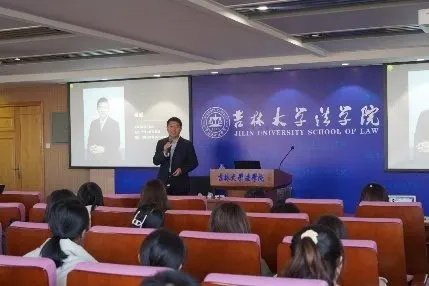
JLU's medical school traces its roots to Norman Bethune University of Medical Sciences, which joined the merged university in 2000. Archaeology is one of JLU's six disciplines in the second round of Double First-Class. The law school runs separate English-taught programmes for master's students: the 2026/27 catalogue lists international relations and law programmes.
Officially, JLU has 48 schools and colleges, grouped into nine divisions: arts and humanities, social sciences, sciences, engineering, information sciences, earth sciences, medical sciences, agriculture and interdisciplinary studies. To begin with, it is easier to navigate not by dozens of units but by four broad areas:
The words School and College in names refer to units within JLU, not to independent colleges. Once you have chosen a field, check the catalogue for international students: programme availability, language of instruction and conditions vary by level.
In the 2026/27 intake, 35 Chinese-taught programmes and 2 English-taught programmes are open to international students: Pharmacy (4 years) and MBBS (6 years). The Chinese-taught list includes humanities, social science, natural science, engineering and agricultural fields.
Most Chinese-taught programmes expect HSK 4 with a score of at least 180. Some fields set a higher or combined bar: diplomacy, for example, requires HSK 5 plus proven English on a set scale. A BCT certificate does not automatically replace HSK: whether it is accepted is decided by the individual programme.
According to the 2026/27 catalogue, 169 Chinese-taught, 76 English-taught and 2 Korean-taught graduate programmes are available. Master's applicants normally need a bachelor's degree and doctoral applicants a master's degree. For self-funded students the age limit is 40 for master's and 55 for doctoral programmes. The CSC Type B scholarship has stricter limits: no older than 35 for master's and no older than 40 for doctoral programmes.
| Level | Language, duration | Sample programmes |
|---|---|---|
| Bachelor's Degree | Chinese; usually 4 years | International Economics and Trade, Chinese Language |
| Bachelor's Degree | English; 4 or 6 years | Pharmacy, MBBS |
| Master's Degree | Chinese, English or Korean; usually 2 to 3 years | International Relations, Environmental Science |
| Doctoral (PhD) Programmes | Chinese or English; usually 4 years | Archaeology, Applied Physics, Internal Medicine |
For language study, JLU has a stand-alone Chinese Language and Culture Study programme with spring and autumn intakes. A semester lasts about 15 weeks, with roughly 20 hours of Chinese a week. Students are placed in groups based on an entrance test, and the electives include preparation for HSK 4, HSK 5 and HSK 6.
This option suits those who mainly need to improve their language; admission to a degree programme requires a separate application. For official HSK exam dates, see the Chinese Test Service website, which has the 2026 schedule.
Tuition at JLU depends on the level, language and specific programme and is approved separately for each academic year, so check the current amounts on the university's official website or during a consultation. Note that health insurance is paid separately, and payment details should only be taken from the university's official documents.
For the 2026/27 intake, the international dormitories are Youyi Guesthouse, Daxuecheng Dormitory and Hexie Jiayuan Dormitory; together these three buildings have 412 rooms and 753 beds. When matching roommates, the university takes the student's programme and preferences into account, but which building you end up in is decided by allocation.
| Dormitory | What to check |
|---|---|
| Youyi Guesthouse | Room type to be confirmed in advance |
| Daxuecheng Dormitory | A wider choice of accommodation options |
| Hexie Jiayuan Dormitory | Suite-style accommodation: number of residents and facilities confirmed separately |
Besides tuition and accommodation, your budget should include food, transport, the visa, the medical examination, a deposit, flights and personal expenses.
An international student should know about at least three options. The first is CSC Type A (bilateral program): you normally apply through the authorised body in your own country. Under JLU's 2026/27 rules it covers the registration fee and tuition, insurance, a monthly stipend and a dormitory accommodation subsidy.
The second option is the High-level Graduate Program CSC Type B for master's and doctoral students. The package includes tuition, comprehensive health insurance, living funds and a dormitory subsidy. Chinese-taught programmes require HSK 4; applications are first selected by JLU itself and then assessed by the CSC. Deadlines change every year, so follow the current year's instructions rather than last year's list.
The third option is linked to studying Chinese: the International Chinese Language Teachers Scholarship. JLU accepts holders of this scholarship; the requirements depend on the category, and some semester programmes require HSK and HSKK certificates. Check all conditions against JLU's official website.
A scholarship is not a discount granted automatically. When selecting for Type B, the university assesses academic performance, research potential, language level, study plan and recommendations. So documents for the competition need to be gathered earlier than for ordinary self-funded admission.
With seven campuses in six parts of the city, JLU works more like a network of sites across Changchun. The main landmark is Qianjin Street, but medical, automotive and other units may be on other campuses, so it makes sense to sort out accommodation once your school is confirmed.
Among the events, the official prospectus mentions concerts, sports competitions, an international cultural festival, social projects and cultural activities. The QS profile describes libraries, sports facilities and network infrastructure, but some of the figures there are out of date and should not be taken as current.
Longjia International Airport can be reached from Changchun by rail, which makes your first arrival easier. According to the city plan, public transport is built around the metro and light rail lines. Winter in north-east China calls for proper warm clothing, and when choosing a room it is worth checking the heating and the route to your teaching building in advance.
The most concrete example of JLU's Russian–Chinese cooperation is its partnership with Tomsk Polytechnic University. Joint physics teaching has run since 2002; according to the university, the programme includes Russian language study, and those who meet its conditions can receive documents from both universities. In 2013 the PRC Ministry of Education approved this project as a joint bachelor's programme.
It is important to understand that this is a separate programme with its own rules, not a Russian-taught stream open to any international student. It may well be intended for China's national intake, so it is best to clarify availability and admission procedures in writing before gathering documents.
Do not hand original documents or money to intermediaries unless you have a verifiable contract with them. For documents issued in languages other than Chinese or English, find out the requirements for notarised translation and legalisation in advance.
| University | Status and city | Main focus |
|---|---|---|
| Jilin University, 吉林大学 | National comprehensive university, Changchun | 985, 211, Double First-Class |
| Jilin Agricultural University, 吉林农业大学 | Provincial university, Changchun | Agricultural and life sciences |
| Jilin University of Finance and Economics, 吉林财经大学 | Specialised university, Changchun | Finance, economics and management |
Jilin Normal University also carries the province's name, but it is located in Siping, not Changchun. When filling in your application, check against the Chinese name 吉林大学, the abbreviation JLU and the domain jlu.edu.cn.
Our Russian page uses the form 'University Jilin'. The adjectival 'Jilin University' is a common Russian variant, while forms spelling the name with 'Dzh' are other ways of rendering it that are not used here. Jilin University is the official international name, and JLU is the accepted Latin abbreviation. 吉大 (Jídà) is the Chinese short form, which can be rendered as 'Jida'. The original Chinese name is 吉林大学, Jílín Dàxué.
JLU is a national key comprehensive university under the Ministry of Education of the PRC. Its campuses are in Changchun (Jilin Province); the central reference address is 2699 Qianjin Street, postcode 130012.
Yes. The university confirms its participation in Projects 985 and 211, and JLU and six of its disciplines are included in the official list of the second round of Double First-Class.
In the 2026/27 intake, Pharmacy and MBBS can be studied in English; at master's and doctoral level there are several dozen English-taught fields. There is no Russian-taught stream for general admission.
For most Chinese-taught bachelor's programmes, the benchmark is HSK 4 with a score of 180 or more. Some fields require HSK 5 and additional language results, so check the requirements of your chosen programme separately.
The tuition fee depends on the level and language of the programme, and the accommodation fee on the dormitory and room type. Current rates for each academic year are published on the university's official website.
JLU considers applications for CSC Type A and Type B. Whether the coverage is full depends on the category, and the decision is made on a competitive basis. For graduate students, Type B includes tuition, insurance, living expenses and a dormitory subsidy.
Yes. A semester of the language programme lasts about 15 weeks, Chinese takes up about 20 hours a week, and optional preparation for HSK 4, HSK 5 and HSK 6 is available.
JLU's archive contains a notice about issuing HSK certificates through the university's test centre, but the document is archived, and current sessions need to be confirmed separately. Check the exam date and venue in the official Chinese Test Service calendar.
The main set: passport, school certificate and transcript, proof of language level, the Foreigner Physical Examination Form and, for the 2026/27 cycle, a CSCA result as well. The full list is given in the appendix to the current year's prospectus.
Your school's campus and dormitory are first checked against the admission notice. The official contact address of the admissions office for international students is Room 216, Youyi Guesthouse, 1505 Xiuzheng Road, Changchun 130012; JLU's address on Qianjin Street is a general reference point for the central campus.
Changchun (长春) is called the city of cars and cinema: it is the centre of China's car industry, home to FAW factories, and an important base of Chinese film-making. Among its best-known sights are a sculpture park and the palace of Puyi, the last emperor of China.
Here you can get a solid engineering education in a calm setting. The city has plenty of forests and parks — green spaces cover 40% of its area — and in winter snow towns appear. For parents, it matters that Changchun is safe and affordable, the seasons change clearly and predictably, international students receive well-thought-out support, and high-speed trains run to Beijing and Harbin.
You work with Nihao Study specialists. They will help you put together a portfolio and a set of documents, draw up a study plan and choose a university or college and a specialty that genuinely interest you.
We take care of every stage of admission, from choosing to enrolment
We will gather, prepare, certify and send your documents to the institution
We will show the admissions committee your strengths
We run training sessions and courses so you can prepare with more confidence
We will help you settle in at the start of your studies and keep moving forward
Nihao Study specialists select universities and colleges that match the applicant's goals and means. We make sure the teachers are practitioners and that the knowledge will be useful in your profession.
We examine curricula, talk to students and teachers and look at which specialties employers need, and use this information to select options for the applicant.
Advisers guide the applicant from the first consultation to enrolment, help build a plan and spot mistakes in time that could get in the way.
The cost of our support depends on the programme and the partner university; you'll get an exact quote after a free consultation.
Get a quoteA free 15-minute consultation: together we will choose a university or college and a programme that suit your goals and budget.
Apply with peace of mind: we handle the documents, deadlines and correspondence with admissions committees, and you save time and energy.
Don't want to wait for a call? Message us in the chat.
Message us in chat University · Jilin
Language courses · Bachelor's Degree · Master's Degree
University · Changchun
Language courses · Bachelor's Degree · Master's Degree