Anhui Agricultural University
University · Hefei
- Language courses
- English
- Bachelor's Degree
- English
- Master's Degree
- English
HFUT · 合肥工业大学
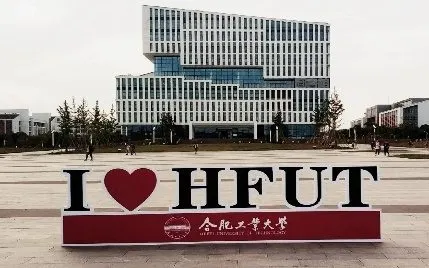
Hefei University of Technology accepts international students on programmes in the following fields: business, engineering, education, economics, it. Choose the level and programme that suit your goals.
The first level of higher education: usually four years of study, specialised subjects, internships and a graduation thesis. It opens the way to working in your field and to a master's degree.
self-funded
Advanced study after a bachelor's degree: research, applied projects and internships. It helps you become an expert in your chosen field and broaden your career opportunities.
self-funded
Chinese language study at the university — from a few weeks to a year or longer. Suitable for those starting from scratch or preparing for the HSK before entering a main programme.
self-funded · language programme
Hefei University of Technology is located in Hefei. Nihao Study consultants keep track of the deadlines and admission requirements of this university, and you can always check the most accurate and up-to-date information on its official website. In university rankings, it is ranked 809 in China and 82 worldwide.
Come for a face-to-face meeting: together we will go through the requirements, deadlines, documents and study options that suit you.

At the meeting we will look at your situation, tell you which documents to prepare and by when, talk about possible programmes and help you decide on the next step.
Hefei University of Technology, or HFUT (合肥工业大学, *Héféi Gōngyè Dàxué*), is a public research university located in Hefei, the administrative centre of Anhui Province. The English name and the abbreviation HFUT are set out in its charter, and the short Chinese form 合工大 can be rendered as "Hegongda". Russian-language sources call the university by different names — translations meaning "Hefei Technological University" or "University of Technology of Hefei", and sometimes a misspelt version. In Russian, this page uses the variant meaning "Technological University Hefei".
It is important to describe the university's status without exaggeration. HFUT was first included in the 211 project and later received an innovative disciplines platform under the 985 project, but it is not a full member of the 985 project. Today the university is part of the Double First-Class programme, where in the second round it was assigned the discipline of Management Science and Engineering. In essence, it is a strong university at the intersection of engineering and management, but it cannot be fully equated with its neighbour USTC.
Below, Nihao Study has gathered what matters to a 2026 applicant: admission requirements, rankings, scholarships and practical details. Bear in mind that outdated figures from catalogues are no substitute for the official guide: for the 2026 intake of international students, the university publishes its own deadlines, requirements and fees.
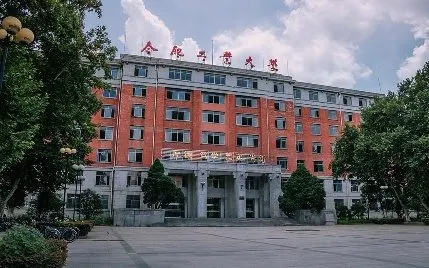
The Chinese version of the university's profile was updated as of May 2026, so its information is more reliable than the English-language overview, where statistics are given for 2018. The key facts are summarised in the table.
| Indicator | Data |
|---|---|
| Founded | 1945 |
| Students | Over 33,000 bachelor's students, plus 14,000 master's and 3,000 doctoral students |
| Teaching staff | Full-time teaching staff of more than 2,400 |
| Bachelor's Degree | 84 admission programmes; 48 of them are national first-class programmes |
| Academic degrees | 20 doctoral and 38 master's first-level disciplines |
| ESI | 13 disciplines in the top 1%, three in the top 0.1% |
| Main address | Tunxi Road, 193, Hefei, Anhui, 230009 |
The university is directly under China's Ministry of Education and is jointly supported by the ministry itself, Anhui Province and sectoral government bodies. Besides the Intelligent Manufacturing Institute, there are the Tunxi Road, Feicui Lake and Lu'an Road campuses within Hefei; another campus is located in Xuancheng.
The university traces its history back to 1945. Over time the institution was known as Anhui Provincial Industrial College, Huainan Coal Mining Industrial College and Hefei Mining Institute, and it received its current name — Hefei University of Technology — in 1958. In 1960 it became a national key university, and in 1979 Deng Xiaoping personally wrote its name in calligraphy.
In 1997 the former HFUT and Anhui Institute of Technology merged into one university, and in 1998 the merged university came under the direct administration of the Ministry of Education. Its current reputation is explained by the following milestones: Project 211 since 2005, the Project 985 innovation platform for disciplines since 2009, and Double First-Class since 2017.
It is wrong to call HFUT simply a "985 university". The university itself clarifies that this refers to the 985 Project Innovation Platform — support for strong fields — rather than membership of the original list of Project 985 universities. As for Double First-Class, in the second round the state assigned HFUT the discipline of Management Science and Engineering.
Each ranking assesses a different aspect of a university's work, so the overall picture matters more than any single figure. CWUR takes into account education, graduate employment, faculty and research. EduRank relies mainly on publications and their citations, and ARWU on the scale of research.
| Ranking | Position | How to read it |
|---|---|---|
| CWUR 2026 | No. 440 worldwide, No. 78 in China | Top 2.1% of 21,291 universities assessed |
| ARWU 2025 | 401-500 band | Global ranking of research activity |
| EduRank 2026 | 991st worldwide, 70th in China, second in Hefei | A model based on bibliometrics and reputation |
| QS by Subject 2026 | 501-550 band | Individual subjects are assessed, not the university as a whole |
| U.S. News 2025 | No. 743 worldwide | The original U.S. News page is closed, so the data could not be verified |
In EduRank's subject sections, HFUT's engineering ranks 368th in the world. By individual field, the picture is as follows: automotive engineering 115th, automation and control 131st, industrial engineering 134th, computer science 430th. These results, rather than scattered figures from reference cards, most accurately show the university's specialisation. HFUT has a page on Times Higher Education, but the public version shows no current position, so it is wrong to attribute any THE band to the university.
Management Science and Engineering is HFUT's discipline with official Double First-Class status. For a student, it combines analytics, optimisation, logistics, information systems and production management. The field is designed for those planning to work where engineering meets business processes, not for those interested in management for its own sake, unconnected to technology.
HFUT's applied focus is confirmed by its subject results in automotive engineering, automation, industrial engineering and transportation. In the university's structure these correspond to the schools of Mechanical Engineering, Electrical Engineering and Automation, and Automotive and Transportation Engineering, plus separate institutes working on artificial intelligence and integrated circuits.
According to university data as of May 2026, 13 of its disciplines are in the ESI top 1%, and Engineering, Agricultural Science and Computer Science are in the top 0.1%. The research base comprises Ministry of Education centres, a national engineering laboratory, a national key laboratory and more than 70 other provincial or ministerial-level platforms. It is worth remembering that ESI reflects the citation of research papers, while the quality of specific degree programmes may vary.
The official structure includes engineering, natural science, economics and humanities units. The word *School* in their names means a faculty of the university, not an independent school.
The current full list of units is on the HFUT website. The university reports that its bachelor's intake includes 84 programmes, but only some of them are open to international students. Choose your programme from the admissions appendix for the relevant year, taking the language of instruction into account.
The HFUT archive confirms that a memorandum of intent was signed in 2013: the parties planned to develop China–Russia cooperation and an alliance of automotive faculties. However, the 2026 international student admissions do not list any current degree-awarding joint programme with a specific Russian university. The possibility of obtaining a Russian diploma or studying in Russian should be confirmed by a separate letter from the university.
| Level | Duration and language | Key requirement |
|---|---|---|
| Bachelor's Degree | Usually 4 years, some programmes 5 years | School-leaving certificate, CSCA result, proficiency in the programme's language |
| CSC Type B master's programmes | 3 years | Bachelor's degree with an average of 75% or higher, age under 35 |
| CSC Type B doctoral programmes | 4 years | Master's degree, research output, age under 40 |
| Exchange | One semester under an inter-university agreement | Nomination by your home university |
To enter a Chinese-taught bachelor's programme in 2026 you need HSK 4 or higher. English-taught programmes accept IELTS 6.0, TOEFL 85, TOEFL Essentials 9 or Duolingo 100; in some cases the test can be replaced by a certificate confirming the language of your previous education. In addition, bachelor's applicants need previous academic results of at least 75%, a CSCA pass and must be no older than 25.
Those who do not yet have HSK 4 can take separate Chinese language courses in Hefei. Of the official language-course guides, the most recent and detailed one describes the autumn 2024 intake: the course lasts a year and consists of two 18-week semesters, with 20 to 24 class hours a week. These terms cannot be automatically applied to the next intake — check them against the university's current information.
The official 2026 guide for international bachelor's students lists the compulsory first-year payments: tuition, dormitory, insurance and registration. Check the exact amounts on the official HFUT website; on top of these you will need money for food, transport, study materials, the visa, flights and a deposit.
International bachelor's students can live in an on-campus dormitory for an annual fee. It is best to check the room size, number of roommates, kitchen facilities and deposit amount with the university in advance.
The university's main administrative address is 193 Tunxi Road, postcode 230009. The Feicui Lake campus covers 1,500 mu, and metro line 3 runs nearby. According to the official description, it has teaching buildings, a library, canteens, laboratories, a gym and an engineering training centre. The campus buildings are designed for more than 25,000 students, and the engineering museum has been designated a science education base of Anhui Province.
Programmes may be held on different campuses, so when applying it is important to find out exactly where you will study. Commuting daily between Tunxi Road, Feicui Lake and the remote Xuancheng campus is not feasible. The English-language profile put the distance from Hefei to Xuancheng at about 194 kilometres.
The scholarship is not awarded automatically. The university decides the type of support after a comprehensive assessment of the candidate and then reviews it every year: depending on the outcome, the level may be changed and payments suspended or cancelled.
At the heart of the Feicui Lake campus are a green valley and ponds. The library operates as a single system with the Tunxi Road campus; its building has spaces for independent study and a museum of the university's history. Nearby are the Architecture and Art Hall, laboratory buildings, canteens, a gym and sites for engineering practice.
For students of Chinese, the international school has organised calligraphy, paper-cutting and tai chi classes — but this description comes from the 2024 guide, so check the current activity plan after enrolment. The university reports partnerships with more than a hundred foreign universities and joint projects run every year with more than 30 organisations.
Being required to pass the HSK and being able to take the HSK or BCT at the university itself are not the same thing. Find a test site through the official test centre search, and check dates against the official exam calendar.
If you have any doubts about your documents, resolve them well in advance. It is especially important to check translations and the validity of the medical form in time: according to the official guide, medical examination results and the police clearance certificate are valid for only six months.
| University and Chinese name | Location | Differences |
|---|---|---|
| Hefei University of Technology, HFUT, 合肥工业大学 | Hefei and Xuancheng | Project 211, Double First-Class, engineering and management profile |
| Hefei University, HU, 合肥大学 | Hefei | An independent municipal university, founded in 1980 |
| University of Science and Technology of China, USTC, 中国科学技术大学 | Hefei | An independent research university of the Chinese Academy of Sciences, unrelated to HFUT |
| Hebei University of Technology, HEBUT, 河北工业大学 | Tianjin | A Hebei Province university; only its similar English name coincides with HFUT |
A simple rule: Hefei is a city, while Hebei is a province. HFUT and USTC are also different universities and must not be confused with each other.
Hefei University of Technology is the official English name, HFUT is the official abbreviation, 合肥工业大学 (*Héféi Gōngyè Dàxué*) is the original Chinese name, and 合工大 (Hegongda) is its short Chinese form. Our Russian page uses the form 'Technological University of Hefei'. 'University of Technologies of Hefei' and 'Hefei Technological University' are understandable calques, although they are not used here. The variant that spells the city's name differently renders it poorly.
It is a public university with national key university status, located in Hefei and under the Ministry of Education of China. HFUT is part of Project 211 and the Double First-Class programme.
Not in the usual sense. Official materials mention a Project 985 innovation platform for disciplines, which the university received in 2009. It would be wrong to treat HFUT as a full member of the original Project 985.
Yes. In the second round of the programme, the university was assigned the discipline of Management Science and Engineering.
For Chinese-taught bachelor's programmes in the 2026 intake, HSK 4 or higher is required. For CSC Type A, the minimum score has been specified as 180. Check the dates of the next sessions in the official HSK schedule.
There are English-taught programmes; candidates are expected to have IELTS 6.0, TOEFL 85, TOEFL Essentials 9 or Duolingo 100. There are no degree programmes taught entirely in Russian in the 2026 intake.
The official guide lists the tuition fee, accommodation, insurance and registration fee separately; personal expenses are not included. Check the current amounts on HFUT's official website.
Yes, the university accepts CSC scholarship holders. Type A and Type B can cover tuition, accommodation, insurance and a monthly allowance, but selection is competitive and the results are reviewed every year.
The HSK requirement is confirmed, but whether HFUT serves as a test centre for the HSK or BCT depends on the specific session. Check the venue and date through the official Chinese Test Service and do not register for an exam based on an outdated announcement.
The main contact address is 193 Tunxi Road, Hefei, Anhui, 230009. In addition, Hefei is home to the Institute of Intelligent Manufacturing and the Feicui Lake and Lu'an Road campuses, and another campus operates in Xuancheng.
The main set includes a CSCA result, a language certificate, passport, school certificate (or a graduation letter) with grades for the senior years, a study plan, a medical form, a financial guarantee and a police clearance certificate. Documents not in Chinese or English must be accompanied by a notarised translation.
Hefei (合肥) is the capital of Anhui Province and a city of science: it is home to numerous national laboratories and the University of Science and Technology of China (USTC). The city is betting on artificial intelligence and electric vehicle manufacturing.
Here you can get a strong technical education and find your place in high-tech industries. The city has plenty of greenery, the large Chaohu Lake is nearby, and there is a metro and modern infrastructure, but none of the bustle and high prices of the big capitals. Parents value the safety and academic atmosphere, the good environment, new campuses with good facilities, high-speed trains to Nanjing and Shanghai and the low cost of living.
You work with Nihao Study specialists. They will help you put together a portfolio and a set of documents, draw up a study plan and choose a university or college and a specialty that genuinely interest you.
We take care of every stage of admission, from choosing to enrolment
We will gather, prepare, certify and send your documents to the institution
We will show the admissions committee your strengths
We run training sessions and courses so you can prepare with more confidence
We will help you settle in at the start of your studies and keep moving forward
Nihao Study specialists select universities and colleges that match the applicant's goals and means. We make sure the teachers are practitioners and that the knowledge will be useful in your profession.
We examine curricula, talk to students and teachers and look at which specialties employers need, and use this information to select options for the applicant.
Advisers guide the applicant from the first consultation to enrolment, help build a plan and spot mistakes in time that could get in the way.
The cost of our support depends on the programme and the partner university; you'll get an exact quote after a free consultation.
Get a quoteA free 15-minute consultation: together we will choose a university or college and a programme that suit your goals and budget.
Apply with peace of mind: we handle the documents, deadlines and correspondence with admissions committees, and you save time and energy.
Don't want to wait for a call? Message us in the chat.
Message us in chat University · Hefei
University · Hefei
Language courses · Bachelor's Degree · Master's Degree