Admission to Hainan Normal University
HNNU · 海南师范大学
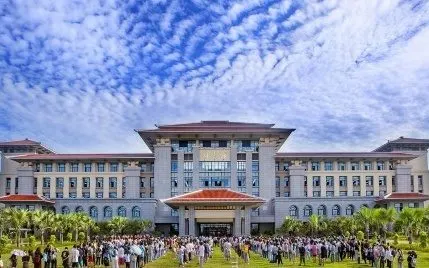
Programmes and application deadlines
Hainan Normal University accepts international students on programmes in the following fields: business, engineering, education, economics, arts, humanities. Choose the level and programme that suit your goals.
Language courses
Chinese language study at the university — from a few weeks to a year or longer. Suitable for those starting from scratch or preparing for the HSK before entering a main programme.
-
self-funded · language programme
Programmes
- Chinese Language Studies
Bachelor's Degree
The first level of higher education: usually four years of study, specialised subjects, internships and a graduation thesis. It opens the way to working in your field and to a master's degree.
-
self-funded
Programmes
- International Economics and Trade
- Business Administration
- Business Chinese
- Computer Science and Technology (IT)
- Finance
- Chinese Language
Master's Degree
Advanced study after a bachelor's degree: research, applied projects and internships. It helps you become an expert in your chosen field and broaden your career opportunities.
-
self-funded
Programmes
- International Economics and Trade
- Business Administration
- Business Chinese
- Computer Science and Technology (IT)
- Finance
- Chinese Language
About the university
- Country
- China
- City
- Haikou, Hainan
- Ranking in China
- 352
- Ranking worldwide
- 2591
- Grants and scholarships
- Yes
- Application status
- Open
- Language of instruction
- English, Chinese
- Official website
- hainnu.edu.cn
Hainan Normal University is located in Haikou. Nihao Study consultants keep track of the deadlines and admission requirements of this university, and you can always check the most accurate and up-to-date information on its official website. In university rankings, it is ranked 352 in China and 2591 worldwide.
Consultation at our office
Come for a face-to-face meeting: together we will go through the requirements, deadlines, documents and study options that suit you.

Leave with a clear admission plan
At the meeting we will look at your situation, tell you which documents to prepare and by when, talk about possible programmes and help you decide on the next step.
More about the university
Hainan Normal University (HNNU, 海南师范大学, Hǎinán Shīfàn Dàxué) is a provincial-level public university. It is located in Haikou, the administrative centre of the island province of Hainan. Russian-language searches spell the name in various ways: as different translations meaning "Hainan Pedagogical University" or "Pedagogical University of Hainan", and sometimes as a phonetic transliteration of the English "Hainan Normal University". In China the university is known for short as 海师大 (Hǎishīdà), an abbreviation of the full Chinese name; its international abbreviation is HNNU.
Read in full
In terms of status, HNNU is a key provincial university jointly supported by the Ministry of Education of China and the Hainan government. However, it is not included in the 211 and 985 projects and is not a Double First-Class (双一流) university. In the second round of the official 双一流 list, Hainan Province is represented by Hainan University (in the discipline of crop science), while Hainan Normal University is absent; HNNU is also missing from the official 211 and 985 lists published by the Ministry of Education. In 2026 the university itself set the goal of moving closer to the Double First-Class group only by 2030 — in other words, this is a strategic target rather than an existing status.
Below, Nihao Study has gathered the essentials about HNNU for 2026 applicants: key figures, history, rankings, programmes, HSK requirements, accommodation, scholarships and the application procedure.


HNNU in figures: 2026 data
About 25,000 people study full-time at the university. The table shows current data from the 2026 admissions campaign.
| Item | Value | What this means for applicants |
|---|---|---|
| Year founded | 1949 | Today's university grew out of the province's first public higher education institution |
| Campuses | Longkunnan and Guilinyang, about 3,100 mu | Check the study and accommodation site for your programme |
| Academic structure | 25 colleges, 65 bachelor's programmes | Besides education, there are science, humanities and technical fields |
| Degrees | Master's: 19 first-level academic disciplines and 21 professional categories; doctoral: 6 first-level disciplines | You can go all the way from a bachelor's to a doctorate |
| Students | more than 500 international students among roughly 25,000 full-time students | There is a noticeable number of international students, but they make up a small share of the overall intake |
| Staff | 2,166, including 1,397 teaching and research staff | In scale, this is a large regional university, not a narrowly focused teacher-training institute |
| International admissions | International students admitted since 1988 | The International College has its own admissions and language courses |
HNNU's journey: from Qiongtai Academy to doctoral programmes
Officially, HNNU traces its cultural roots to Qiongtai Academy, founded in 1705. The present university was established in autumn 1949 as National Hainan Normal College, and in 1952 it was renamed Hainan Normal Specialised School. When higher education was reorganised, some of its units became part of Hainan University as its education department. Hainan Normal College became independent again in 1986.
In 1999 Hainan Institute of Education merged into the college. Since 2003 the university has been able to award master's degrees, and in 2007 it took its current name, 海南师范大学. It gained authority to train doctoral students in 2013 and then opened doctoral programmes. Since 2015 HNNU has been developed as a joint project of the Ministry of Education and the provincial government, and in 2019 it opened its first postdoctoral research centre.
The university sees its main task as training teachers and developing education in Hainan. Over its history it has produced more than 200,000 teachers and other specialists, and over 125,000 teachers in the province have taken its professional development courses. So the word "Normal" in its name accurately describes the university's academic core, although today it also admits students to economics, law, IT, chemistry, ecology, sport and the arts.
Hainan Normal University rankings: what they show
For HNNU, the most informative sources are China's national ranking, subject bibliometrics and research data. In the ShanghaiRanking Best Chinese Universities Ranking, the university was 224th in 2024, 226th in 2025 and 227th in 2026. This movement does not indicate any significant decline in quality: neighbouring positions can shift because of changes in methodology and in other universities' results.
| Ranking | Position | How to read it |
|---|---|---|
| ShanghaiRanking BCUR 2026 | 227th in China | Position among the country's universities; this is not the global ARWU |
| EduRank 2026 | 3,693rd in the world, 300th in China | An independent bibliometric ranking, not an official status |
| EduRank 2026, Haikou | 2nd of the city's 5 universities included | The result of a city comparison depends on which universities are in the database |
| EduRank, zoology | 1,158th in the world | Reflects the visibility of its biodiversity research |
| ESI | 3 disciplines are in the top 1 per cent by citations | Describes individual disciplines and does not mean membership of 双一流 (Double First-Class) |
Do not apply figures from outdated sources to HNNU or confuse it with Hainan University or Hunan Normal University. Being in the ESI top 1 per cent also needs to be understood correctly: it reflects research citations in individual disciplines, but does not make the university part of 211, 985 or Double First-Class.
HNNU's strengths: education, tropical science, Chinese language
HNNU's first area of strength is teacher training. It runs 26 first-class teacher-education majors, trains future primary and secondary school teachers, and has been involved in regional professional development programmes for more than 18 years. This is worth bearing in mind if you plan to study education, early childhood education, psychology, educational technology, or methods of teaching mathematics or Chinese.
The second area is research linked to the tropical island. According to HNNU, it has three key laboratories of the Ministry of Education, five ministry-level humanities platforms and 21 academic innovation centres. International students are officially admitted to chemistry, ecology, biotechnology, pharmaceutical engineering, mathematics and data analysis. Thanks to the island location, ecology, biodiversity and ecosystem restoration are not token subjects here but fields that matter to the whole region.
The third area is teaching Chinese to international students. HNNU is an HSK test centre, and it hosts holders of CSC scholarships, Hainan Provincial Government scholarships and the International Chinese Language Teachers Scholarship. The International College runs courses for beginner, intermediate and advanced learners and prepares students for HSK. This is convenient for anyone coming for a language year: study and the exam take place at the same university.
HNNU's colleges and fields of study
HNNU's colleges and schools are structural units of a single university: when a name contains College or 学院, it does not refer to a separate university. The fields of study are easiest to look at in groups.
Education, languages, humanities
This group includes education, psychology, primary and early childhood education, history, law, Chinese language and literature, journalism, foreign languages and teaching Chinese as a foreign language. At master's level, there is official admission to principles of education, comparative education, curriculum and teaching methods, educational technology, special education and educational management.
Natural sciences, engineering, data
This group covers mathematics, statistics, physics, electronics, automation, computer science, artificial intelligence, chemistry, pharmaceutical engineering, ecology and biology. Among the bachelor's programmes for international students, the university lists computer science and technology, automation, pharmaceutical engineering, data science and big data technology, and artificial intelligence, among others.
Economics, management, arts, sport
Here you can choose economics, finance, taxation, accounting, international business, design, fine arts, music or physical education. Creative and sports majors require a subject interview, so you should agree the format of the assessment (portfolio, video or practical task) in advance with the college you are applying to.
What HNNU offers international students in 2026
The university admits international students to language courses and bachelor's, master's and doctoral programmes. The usual length is 4 years for a bachelor's, 2 or 3 years for a master's and 4 years for a doctorate. The language of instruction depends on the major: humanities programmes are mostly taught in Chinese, English is possible on some science master's and doctoral tracks, and some programmes in foreign Marxism are advertised in Russian for native speakers.
| Level of study | Fields (examples) | Language and duration |
|---|---|---|
| Chinese language courses | General and medical Chinese, intensive course, HSK preparation | From 1 month to 1 year |
| Bachelor's Degree | Education, economics, IT, automation, design, sport | Mainly Chinese; 4 years |
| Master's Degree | Education, international Chinese language education, chemistry, ecology, business, translation | Chinese, English or Russian, depending on the programme; 2 or 3 years |
| Doctoral (PhD) Programmes | Chinese literature, chemistry, ecology, mathematics, foreign Marxism | Chinese, English or Russian, depending on the programme; 4 years |
Applicants to Chinese-taught bachelor's programmes need a valid new HSK certificate at level 4 or above. If your Chinese is not yet good enough, you can first spend a year on intensive language courses and then demonstrate the required level. Humanities master's programmes require HSK 5 with a score of at least 180, and international Chinese language education requires at least 210. For science master's programmes, HSK 4 or above is enough.
Where HNNU's international students live
International students are offered places in double rooms; check the current accommodation fee on the university's official website. Rooms have air conditioning, a water heater and a private bathroom. Internet, water and electricity are not included and are paid separately.
When applying, it is worth asking straight away which campus you will live on and whether places are available. According to the International College, the Longkunnan campus address is No. 99 Longkun South Road, Qiongshan District, Haikou, postcode 571158. The Guilinyang campus is at No. 3 Xiaoji First Road, Meilan District, Haikou, postcode 571127. The university decides which building a student is housed in, taking the programme into account.
Scholarships at HNNU: confirmed programmes
According to the International College, HNNU admits students under the following programmes: the Chinese Government Scholarship (CSC), the International Chinese Language Teachers Scholarship, the Hainan Provincial Government Scholarship, and a provincial Chinese language support programme for overseas Chinese.
- CSC High-Level Graduate 2026/2027, for master's and doctoral students: free tuition, a free place in a double room, insurance and a monthly stipend.
- According to the 2025 announcement, the Hainan Provincial Government Scholarship covered the registration fee, tuition, dormitory and medical insurance; students paid all other expenses themselves.
- The International Chinese Language Teachers Scholarship has its own requirements for HSK level, recommendation letters and application deadlines.
Student life at HNNU: two campuses, sport, the tropics
Longkunnan is the long-established campus within the city. According to the university's student materials, it covers about 334.3 mu; students note its convenient transport, teaching buildings and the fact that the International College is based there. Guilinyang is in the Meilan university district: it is more spacious, with modern buildings, sports grounds and plenty of greenery.
Everyday campus life is closely tied to the university's teacher-training profile: students do teaching placements in schools, teaching research groups are active, and there are programmes training teachers for rural areas. The International College offers international students language and culture courses, and since the university is an official HSK test centre, it is easier to fit the exam into your plans. Check specific session dates in the official Chinese Test system.
Applying to Hainan Normal University step by step
- Step 1. Decide on the level, major and language of instruction: make sure the programme is at the right level (language courses, bachelor's, master's or doctoral). In the 2026 catalogue, depending on the field, teaching is in Chinese, English or Russian.
- Step 2. Prove your language proficiency. Chinese-taught bachelor's programmes accept HSK 4 and above; humanities master's programmes require HSK 5 with at least 180 points, and international Chinese language education at least 210.
- Step 3. Prepare your documents: passport, school-leaving certificate or diploma, transcript, curriculum, medical form and police clearance certificate. Master's and doctoral applicants also need two recommendation letters from professors or associate professors.
- Step 4. Allow for additional assessments: bachelor's applicants need a suitable CSCA result, and for creative and sports fields the relevant college holds an interview.
- Step 5. Apply online: fill in the form, upload your documents and submit the package to HNNU.
- Step 6. Wait for the decision and your visa documents. According to the university, applications are reviewed within 1 to 14 working days. For self-funded students, the JW202 or DQ form is issued about 10 working days after payment.
HNNU and other universities in Haikou: how not to mix them up
Hainan Normal University is often confused in searches with Hainan University and, because of its teacher-training focus, with Qiongtai Normal University. In fact these are three independent universities with different status.
| University and Chinese name | Status | Main focus |
|---|---|---|
| Hainan Normal University, HNNU, 海南师范大学 | Public provincial university; not part of 211, 985 or 双一流 (Double First-Class) | Education, humanities and natural sciences |
| Hainan University, 海南大学 | Public university; 211 and Double First-Class | Comprehensive research university; crop science is included in 双一流 (Double First-Class) |
| Qiongtai Normal University, 琼台师范学院 | Public provincial university, bachelor's level | Training teachers for primary schools and early childhood education |
| Haikou University of Economics, 海口经济学院 | Private university, bachelor's level | Economics, management, engineering, arts |
The main difference between HNNU and Hainan University is that HNNU lacks the national 211 and Double First-Class statuses, but its teacher-training mission is stronger. Compared with Qiongtai Normal University, HNNU is larger, can award master's and doctoral degrees and has a broader research base.
FAQ about admission to HNNU
Which name is correct: Hainan Normal University, one of the Russian forms (meaning 'Hainan Pedagogical University' or 'Pedagogical University of Hainan', with or without a soft sign, or a colloquial shortening), HAINNU or Haishida?
The main Russian name is the one meaning 'Hainan Pedagogical University'. The spelling without the soft sign and the colloquial shortened form are search variants or mistakes. 'Pedagogical University of Hainan' is an understandable calque, but not the main form. Hainan Normal University is the university's international name. The abbreviation HNNU matches the form on the official English-language website; HAINNU is also used, and it will be understood, but it is less accurate. 海师大 (Hǎishīdà, Haishida) is the short Chinese name, and the full name is 海南师范大学 (Hǎinán Shīfàn Dàxué).
What does HNNU stand for and where is the university located?
HNNU is short for Hainan Normal University. The university is in Haikou and has two campuses, Longkunnan and Guilinyang, with a combined area of about 3100 mu.
Is HNNU part of Project 211, Project 985 or Double First-Class?
No. This university is not on the official lists for Project 985 or the second round of 双一流. Of Hainan's universities, it was Hainan University, not Hainan Normal University, that made the Double First-Class list.
Does HNNU offer programmes taught in English or Russian?
Yes, but only on some programmes. English is allowed on some master's and doctoral programmes in chemistry, ecology and mathematics, and courses on foreign Marxism for Russian speakers may be taught in Russian. Most bachelor's programmes are taught in Chinese.
What HSK level is required?
Chinese-taught bachelor's programmes require the new HSK 4 or higher. Humanities master's programmes require HSK 5 with a score of at least 180 points, international Chinese language teaching requires HSK 5 with at least 210 points, and science master's programmes require HSK 4 or higher.
How much does an HNNU dormitory cost?
International students are offered places in double rooms. The university publishes the current accommodation cost, so check its official website.
Can I study at HNNU for free on a CSC scholarship?
Yes: HNNU accepts applications under the CSC High-Level Graduate programme. The 2026/2027 announcement lists a tuition fee waiver, a free dormitory place, insurance and a monthly stipend.
Does HNNU hold HSK or BCT exams?
HNNU is an HSK test venue. Check the date and format of a specific session in the official Chinese Test system.
What is the address of HNNU's international school?
The address of the international school is No. 99 Longkun South Road, Qiongshan District, Haikou, Hainan, postcode 571158. It is easier to show a taxi driver the Chinese name 海南师范大学龙昆南校区; before you go, check which entrance is currently open.
What is the difference between HNNU, Hainan University and Qiongtai Normal University?
Hainan University is a separate comprehensive university with Project 211 and Double First-Class status. Qiongtai Normal University is a separate teacher-training institution at bachelor's level. HNNU has no national status, but it does offer master's and doctoral programmes and a large research base in education.
What documents are needed for a bachelor's programme?
You will need a passport, a school certificate or equivalent document, a transcript of grades, a valid HSK certificate, a CSCA result, medical documents and a police clearance certificate. For arts and sports programmes there is also a subject-specific interview.
About Haikou
- Safety
- 9/10
- Summer temperature
- from 26 to 33 °C
- Winter temperature
- from 17 to 24 °C
- Population
- 2,900,000
Haikou (海口) is the capital of Hainan, a tropical island known as China's Hawaii. It is summer here all year round, palm trees grow everywhere, and the island has free trade zone status. The city is developing as a centre of education and tourism.
Students get the chance to study in the tropics: it is warm all year, the tourism industry and international trade offer work experience, the air is considered the cleanest in China, there are beaches for relaxing, and the international community is gradually growing. Parents should bear in mind that this is a safe island city with a good environment and a healthy climate, modern healthcare, an international airport with direct flights and well-organised campuses; visiting their child can be combined with a beach holiday.
- Sanya Beaches
- End of the Earth (Tianya Haijiao)
- Nanshan Buddhist Cultural Park
We support you until admission
You work with Nihao Study specialists. They will help you put together a portfolio and a set of documents, draw up a study plan and choose a university or college and a specialty that genuinely interest you.
How we help
-
End-to-end support
We take care of every stage of admission, from choosing to enrolment
-
Document preparation
We will gather, prepare, certify and send your documents to the institution
-
Admission plan
We will show the admissions committee your strengths
-
Online classes and support
We run training sessions and courses so you can prepare with more confidence
-
Study advice
We will help you settle in at the start of your studies and keep moving forward
How we prepare you for admission
Nihao Study specialists select universities and colleges that match the applicant's goals and means. We make sure the teachers are practitioners and that the knowledge will be useful in your profession.
We study the needs
We examine curricula, talk to students and teachers and look at which specialties employers need, and use this information to select options for the applicant.
By your side at every stage
Advisers guide the applicant from the first consultation to enrolment, help build a plan and spot mistakes in time that could get in the way.
The cost of our support depends on the programme and the partner university; you'll get an exact quote after a free consultation.
Get a quoteNot sure what to choose?
A free 15-minute consultation: together we will choose a university or college and a programme that suit your goals and budget.
What you'll get
- Invitations from universities and colleges
- A complete set of documents
- Booking your place in advance
- A personal adviser from start to finish
Apply with peace of mind: we handle the documents, deadlines and correspondence with admissions committees, and you save time and energy.
Don't want to wait for a call? Message us in the chat.
Message us in chat