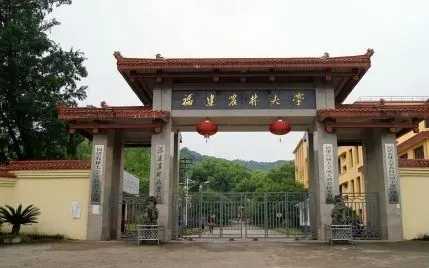
Fujian Agriculture and Forestry University
University · Fuzhou
Language courses · Bachelor's Degree · Master's Degree
- Accommodation from 9 600 ¥/year
FZU · 福州大学

Fuzhou University accepts international students on programmes in the following fields: engineering, education, agriculture, humanities, natural sciences. Choose the level and programme that suit your goals.
Chinese language study at the university — from a few weeks to a year or longer. Suitable for those starting from scratch or preparing for the HSK before entering a main programme.
self-funded · language programme
The first level of higher education: usually four years of study, specialised subjects, internships and a graduation thesis. It opens the way to working in your field and to a master's degree.
self-funded
Advanced study after a bachelor's degree: research, applied projects and internships. It helps you become an expert in your chosen field and broaden your career opportunities.
self-funded
Fuzhou University is located in Fuzhou. Nihao Study consultants keep track of the deadlines and admission requirements of this university, and you can always check the most accurate and up-to-date information on its official website. In university rankings, it is ranked 67 in China and 644 worldwide.
Come for a face-to-face meeting: together we will go through the requirements, deadlines, documents and study options that suit you.

At the meeting we will look at your situation, tell you which documents to prepare and by when, talk about possible programmes and help you decide on the next step.
Fuzhou University (abbreviated FZU, Chinese 福州大学, pinyin Fúzhōu Dàxué) is a public comprehensive university in Fuzhou, the capital of Fujian Province. In Russian it is also called by names translating as 'Fuzhou University' or 'University of the City of Fuzhou'; our Russian text uses one standard form. The abbreviation FZU is convenient for international correspondence, while Chinese students more often say simply 福大 (Fúdà), short for the full name.
FZU has a higher status than an ordinary city university: it took part in the former Project 211 and is now part of the Double First-Class (双一流) programme. In the second round of the programme, its chemistry was again granted world-class discipline status. The university is jointly overseen by the Ministry of Education of the PRC and the Fujian provincial government.
This Nihao Study overview brings together what matters to a 2026 applicant: 211 and Double First-Class statuses, rankings, programmes, HSK requirements, scholarships, dormitories and neighbouring universities in Fuzhou. Admission conditions change from year to year, so you should rely only on the official documents for your intake.

FZU combines the scale of a large research university with a strong engineering foundation. The figures in the table are current as of 20 November 2025.
| Item | Value |
|---|---|
| Founded | 1958 |
| Structure | 27 colleges and 1 affiliated provincial hospital |
| Bachelor's Degree | 83 programmes |
| Students | bachelor's — 40,352; master's and doctoral — 19,248 |
| Staff | 3,481 staff, including 2,502 full-time teachers |
| International partners | over 140 partners from more than 50 countries and regions |
| Campuses | main campus Qishan, plus 6 other sites |
| Address for international admissions | Alumni House, 2 North Wulongjiang Avenue, University Town, Fuzhou, Fujian, 350108 |
Ranking websites give other figures too: THE lists 44,604 students and QS 49,416. The discrepancy is because the sources use different reporting periods and counting methods. When planning your application, rely on FZU's official data and the brochure for your year.
The university was founded in 1958, when Fujian Province needed a strong engineering school of its own. A notable mark in the early years was left by the chemist Lu Jiaxi, later an academician and honorary president of FZU. According to the university's official history, his name is linked to the principle of rigorous, evidence-based research — one of the university's three traditions.
The university's current motto is 明德至诚,博学远志; in the official translation it speaks of striving for virtue and sincerity, breadth of knowledge and far-reaching aspirations. More than 330,000 people have graduated from FZU's full-time programmes. Having started by solving the region's engineering needs, the university gradually became multidisciplinary: today it covers natural sciences, medicine, economics, management, the humanities, law and art.
The turning points were Project 211, which FZU joined, and then both rounds of Double First-Class — the first and the second. Yet the university has not lost its original profile: science and engineering remain its foundation, and chemistry is officially recognised as a world-class discipline.
These statuses should not be confused. Project 211 is a historical national programme in which FZU took part. Double First-Class is a newer system for developing universities, and FZU is currently included in it. The university does not, however, hold 985 status. A short and accurate description would be: a Double First-Class university with chemistry as its flagship discipline, formerly part of Project 211.
| Ranking | Position | What it measures |
|---|---|---|
| THE World University Rankings 2026 | 801–1000 band | Overall international table |
| CWUR 2026 | world — 369, Asia — 93, China — 64 | Research, graduate employment, overall score |
| ARWU 2025 | 301–400 band | Research output by ShanghaiRanking's methodology |
| EduRank 2026 | world — 1247, China — 86, Fuzhou — 1 | Publications and citations, reputation, alumni |
| QS Asia 2026 | 343 in Asia | QS Asia ranking |
Engineering applicants will find subject rankings more useful. In THE 2026, FZU's engineering was in the 301–400 band, physical sciences in the 401–500 band and computer science in the 601–800 band. For 2025, ShanghaiRanking placed FZU's instrument science 46th in the world and chemical engineering 49th, and put chemistry, nanoscience and mining engineering in the 51–75 band.
Chemistry at FZU is an official Double First-Class discipline, not an advertising slogan. According to the university library, as of March 2025 chemistry, engineering and materials science were in the top 0.1 per cent of the ESI global ranking, and FZU's updated profile now names 13 disciplines in the ESI top 1 per cent. For applicants this means a strong research environment in areas such as catalysis, materials, chemical technology and related energy fields.
The research infrastructure includes 7 national engineering research centres, 3 national key laboratories and 1 more state-level key laboratory. In addition, 23 FZU programmes have passed engineering accreditation to standards set by the Ministry of Education and the industry construction authority. For those who care about lab facilities when choosing, not just the name of the major, this is a strong argument.
FZU is home to the Maynooth International Engineering College, and the university also runs 3 joint programmes based on foreign models. Together with Universiti Tunku Abdul Rahman in Malaysia it has set up a joint institute of future technologies.
FZU's programmes cover science, engineering, medicine, economics, management, literature, law and art. To make a first choice easier, they can be grouped into four clusters.
At master's level FZU has 39 first-level disciplines and 25 professional programmes; at doctoral level, 19 first-level disciplines and 5 professional programmes; there are also 12 postdoctoral stations. For an international applicant, though, what matters is not the general catalogue but the list of programmes open to international students in the relevant intake year.
The new 2026 bachelor's brochure for international students explicitly lists the Chinese Language programme at the College of Humanities and Social Sciences. It lasts 4 years and leads to a bachelor's degree — a full bachelor's programme, not the usual one-year language course. The one-year Chinese course still appears in the general fee table, but you need to ask separately about admission and timetables.
| Level | Language and options | Condition |
|---|---|---|
| Bachelor's Degree | Chinese Language, taught in Chinese | 4 years; candidates with HSK 4 get priority in scholarship selection |
| Master's Degree | All open programmes in Chinese; in English — Civil Engineering | Usually 3 years |
| Doctoral (PhD) Programmes | Chinese-taught programmes and some English-taught programmes | Usually 4 years |
| Chinese Language | One year or one semester (per the previous general table) | Check with the university whether admission is open |
Chinese-taught master's and doctoral programmes require HSK 5 with a score of at least 210. English-taught programmes require TOEFL iBT of at least 80 or IELTS Academic of at least 6.0 if your previous education was not in English. Note that the certificate requirement and whether the university hosts HSK or BCT exams are separate matters, so choose your test centre through the official testing system.
The tuition fee depends on the level and field of the programme. On top of that, budget for textbooks, personal expenses, medical insurance, a medical check-up and a residence permit — some of these costs remain even for scholarship holders. Current amounts for the relevant year are published in the admission brochure and on FZU's official website.
FZU's main site, Qishan, is in the university town on the south bank of the Min River. There are other campuses in Fuzhou, Xiamen and Quanzhou. According to THE, the university has a new campus on the south bank near Qishan Mountain and an old site on the north bank.
The university's buildings total 1.79 million square metres, with 218,000 square metres given over to sports facilities. The library holds 4.32 million printed books and 8.88 million e-books. The university is large and spread across several sites, so when choosing accommodation, check which campus your school is on, not just the FZU name.
Besides FZU, Fuzhou has universities with other profiles — teacher training, medicine, agriculture and technology — so it is worth comparing the engineering university with them.
The university houses international students mainly in double rooms. A doctoral student may get a single room, but only if places are available. The accommodation cost depends on the room type — see FZU's official website for current prices.
| Option | What to consider |
|---|---|
| Twin room | Main accommodation option |
| Single room | Mainly for doctoral students, subject to availability |
The published photos show simply furnished rooms: each student has their own bed and desk, and there is a shared kitchen, lockers, a bathroom and a laundry. Facilities may differ between buildings. Before confirming your booking, check the room type, whether there is air conditioning, a shower, a kitchen and bedding, as well as the deposit terms and how electricity is paid for.
FZU accepts candidates for the Chinese Government Scholarship. When applying through the university, you enter Agency Number 10386, category Type B. You can also double-check whether the university takes part in the programme in the list of universities that accept CSC scholarship holders.
Alongside CSC, an applicant may be considered for the Fujian Provincial Government Scholarship and the Fuzhou University Scholarship. No separate documents are needed: the university itself selects candidates from among those admitted. Both scholarships cover tuition, the dormitory and insurance, plus a living allowance. They are awarded for 1 year, and renewal depends on the results of the annual review.
A scholarship cannot be guaranteed in advance — it is all down to competition. It makes sense to apply to several available programmes at once and, in parallel, work out a financial plan in case you study as a self-funded student.
Fuzhou has several universities with Fujian or Fuzhou in their name. They are not part of FZU.
| University | Type | Main focus |
|---|---|---|
| Fuzhou University, FZU, 福州大学 | Public, Project 211 and Double First-Class | Chemistry, engineering, materials |
| Fujian Normal University | Public | Education and humanities |
| Fujian Agriculture and Forestry University | Public | Agricultural sciences, forestry, biology |
| Fujian University of Technology | Public, technology-focused | Applied engineering, construction |
Another common mix-up is Japan's Fukuoka University. Its English name starts in a similar way, but it is a completely different university in a different city and country. Always check the Chinese name 福州大学 and the abbreviation FZU in your application.
The main Russian form is the one meaning 'University of Fuzhou'. The adjectival form meaning 'Fuzhou University' is also understandable but less common, while 'University of the City of Fuzhou' is a descriptive calque, not an official name. The official English name is Fuzhou University and the international abbreviation is FZU. The full Chinese name is 福州大学 (Fúzhōu Dàxué) and the short form is 福大 (Fúdà).
It is a public university in Fuzhou, the capital of Fujian Province. Its main site, Qishan Campus, is in the university town. The address given by the International Affairs Office is 2 North Wulongjiang Avenue.
Yes. FZU was a member of Project 211 and is now part of Double First-Class, where chemistry became its world-class discipline in the second round. The university was not part of Project 985.
Some master's and doctoral programmes are taught in English, above all in Civil Engineering, Electrical Engineering and Urban and Rural Planning. There are no Russian-taught programmes in the 2026 intake.
For Chinese-taught master's and doctoral programmes you need HSK 5 with at least 210 points. The Chinese Language bachelor's programme has no single minimum HSK threshold, but candidates with HSK 4 get priority in scholarship selection.
Tuition fees depend on the level and programme, and dormitory fees on the room type. Current amounts for the relevant year are published in the admissions brochure and on FZU's official website.
FZU considers CSC applications in the Type B category, agency number 10386. The outcome depends on the competition, the candidate's academic profile and the quota, so a free place is not guaranteed in advance.
The fee schedule includes one-year and one-semester formats, and the 2026 intake includes a four-year Chinese Language bachelor's programme. Check with the university whether a separate language course is taking applicants in the year you need.
An HSK certificate is accepted for admission, and the exam venue should be chosen from the official list of test centres and checked against the official HSK calendar.
You need a passport, a notarised school certificate and transcript, two letters of recommendation, a language certificate (if you have one), a personal essay, a medical form, a police clearance certificate and photos. Documents that are not in Chinese or English must be translated and notarised.
FZU stands out for its Project 211 and Double First-Class status and its strong chemistry and engineering. For education and the humanities, Fujian Normal University is the more logical choice, and for agriculture, forestry and biology, Fujian Agriculture and Forestry University. Compare the specific programme, laboratory, language of instruction and total costs, not just the city in the name.
Fuzhou (福州) is the capital of Fujian Province, lying in the delta of the Min River; it is known as the city of banyan trees. It has hot springs right in the city centre and the historic Three Lanes and Seven Alleys quarter.
Fuzhou is a calm city with plenty of greenery and a good environment: its air is considered among the cleanest in China. The city has strong universities, notably Fuzhou University, a mild subtropical climate and beautiful nature. Parents are drawn by the safe and healthy environment, modern healthcare, developed infrastructure, the proximity of the sea and Taiwan, and campuses where international students receive support.
You work with Nihao Study specialists. They will help you put together a portfolio and a set of documents, draw up a study plan and choose a university or college and a specialty that genuinely interest you.
We take care of every stage of admission, from choosing to enrolment
We will gather, prepare, certify and send your documents to the institution
We will show the admissions committee your strengths
We run training sessions and courses so you can prepare with more confidence
We will help you settle in at the start of your studies and keep moving forward
Nihao Study specialists select universities and colleges that match the applicant's goals and means. We make sure the teachers are practitioners and that the knowledge will be useful in your profession.
We examine curricula, talk to students and teachers and look at which specialties employers need, and use this information to select options for the applicant.
Advisers guide the applicant from the first consultation to enrolment, help build a plan and spot mistakes in time that could get in the way.
The cost of our support depends on the programme and the partner university; you'll get an exact quote after a free consultation.
Get a quoteA free 15-minute consultation: together we will choose a university or college and a programme that suit your goals and budget.
Apply with peace of mind: we handle the documents, deadlines and correspondence with admissions committees, and you save time and energy.
Don't want to wait for a call? Message us in the chat.
Message us in chat University · Fuzhou
Language courses · Bachelor's Degree · Master's Degree

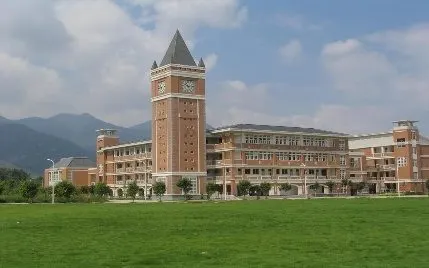
University · Fuzhou
Language courses · Bachelor's Degree · Master's Degree