
Anshan Normal University
University · Anshan
Language courses · Bachelor's Degree · Master's Degree
DUT · 大连理工大学
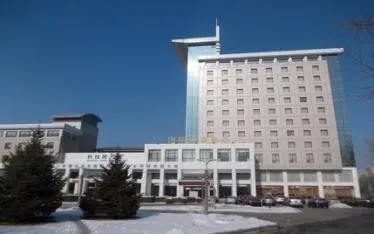
Dalian University of Technology accepts international students on programmes in the following fields: business, engineering, education, economics, it. Choose the level and programme that suit your goals.
Chinese language study at the university — from a few weeks to a year or longer. Suitable for those starting from scratch or preparing for the HSK before entering a main programme.
self-funded · language programme
Cost: 16 000 ¥/year
The first level of higher education: usually four years of study, specialised subjects, internships and a graduation thesis. It opens the way to working in your field and to a master's degree.
self-funded
Cost: 19 500–25 500 ¥/year
Advanced study after a bachelor's degree: research, applied projects and internships. It helps you become an expert in your chosen field and broaden your career opportunities.
self-funded
Cost: 23 000–29 500 ¥/year
Dalian University of Technology is located in Dalian. Nihao Study consultants keep track of the deadlines and admission requirements of this university, and you can always check the most accurate and up-to-date information on its official website. In university rankings, it is ranked 25 in China and 355 worldwide.
Come for a face-to-face meeting: together we will go through the requirements, deadlines, documents and study options that suit you.

At the meeting we will look at your situation, tell you which documents to prepare and by when, talk about possible programmes and help you decide on the next step.
Dalian University of Technology (DUT, 大连理工大学, Dàlián Lǐgōng Dàxué) is a public technical university in the seaside city of Dalian (大连), Liaoning Province. It reports directly to the Ministry of Education of the PRC and is considered one of the country's leading technical universities. DUT takes part in the national Double First-Class (双一流), Project 985 and Project 211 programmes, which places it among China's leading research universities.
Among Chinese students the university is known by the short name 大工 (Dàgōng). The official abbreviation DUT is used in business correspondence and international rankings. Official Russian-language documents use the full name, which corresponds to Dalian University of Technology.
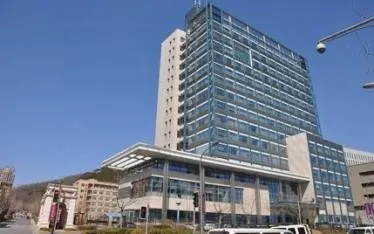
The table shows key data on the university for the current academic year, taken from the university's own information and international rankings.
| Item | Data |
|---|---|
| Founded | 1949 |
| Status | 211, 985, Double First-Class |
| City and province | Dalian, Liaoning |
| Total students | more than 50,000 |
| International students | 1,300 to 1,400 |
| Teaching staff | around 4,479 |
| Bachelor's fields | 77 fields |
| Campus area | around 4.3 million m² |
| QS World 2026 | № 482 |
| THE World 2026 | 401–500 band |
DUT has more than 50,000 students: around 25,900 on bachelor's programmes and roughly 24,900 on master's and postgraduate programmes. The university admits international students every year, an estimated 1,400 of them. It has roughly 4,479 teaching staff.
The university dates its history from April 1949, when an engineering department opened at Dalian University. In 1950 it became independent and was named Dalian Institute of Technology. In 1960 the institute was added to the list of national key universities directly under the Ministry of Education, establishing itself as one of the PRC's core technical centres.
The university has borne its current name, Dalian University of Technology, since March 1988. Its subsequent development ran in parallel with the formation of China's system of leading universities: in 1996 DUT joined Project 211, and in 2001 Project 985. In 2017 the university was designated a Class A world-class university, and in 2022 this status was confirmed in the second round of the Double First-Class programme. DUT is one of the country's nine leading technical universities and a member of the Excellence League (卓越联盟), an alliance of China's strong engineering universities.
In world rankings DUT sits comfortably in the top half of the list, and it is among the leaders of China's technical universities. Below are its positions for the current year.
| Ranking and year | Position |
|---|---|
| QS World University Rankings 2026 | № 482 |
| THE World University Rankings 2026 | 401-500 band |
| EduRank 2025 (world) | around No. 409 |
| EduRank, engineering (world) | № 89 |
| U.S. News Best Global | included in the main list |
| CWUR 2025 | in the Global 2000 list |
The QS World University Rankings 2026 place the university 482nd in the world, and Times Higher Education puts it in the 401–500 band. In EduRank the university is ranked 409th in the world and is among China's top thirty universities, rising to 89th in the world in the engineering subject ranking. Nine of DUT's subject areas are in the top 1% of the global ESI index; engineering, chemistry and materials science are even in the top 0.1%.
The first is engineering and mechanics. In these disciplines DUT is in the EduRank world top 100, and the disciplines themselves are in the top 0.1% of ESI. Mechanics and mechanical engineering, together with chemical engineering, form the basis of DUT's participation in the Double First-Class programme.
The second is ocean and coastal engineering. Research on offshore and port structures is a traditional strength of DUT, supported by a dedicated State Key Laboratory of Coastal and Offshore Engineering. In coastal Dalian, this field is directly linked to the local shipbuilding and port industries.
The third is fine chemistry and materials science. DUT's chemical engineering is a world-class discipline, and fine chemical synthesis is the focus of the State Key Laboratory of Fine Chemicals. In the EduRank chemistry subject ranking, the university is 172nd in the world.
For international applicants, including those from CIS countries, the conclusion is simple: employers regard a DUT degree in engineering, chemistry or materials science as carrying real weight. Behind the degree lies not just a well-known name but genuine research schools and the university's place in the global ESI top 1%. Another advantage is the international environment: every year around 3,000 students go abroad for internships (more than 150 exchange programmes exist for this), and the university invites over 600 foreign specialists.
DUT's programmes cover almost every area of modern science, with the main emphasis on engineering and technology. The university offers 77 bachelor's fields, 39 master's and 31 first-level doctoral programmes. It also has 28 postdoctoral research centres.
The core of the university is its engineering and technology block: shipbuilding, materials science, automation, chemical engineering, mechanical engineering, and civil and ocean engineering. These define the university's identity, and they are exactly what applicants from CIS countries are most often interested in.
The natural sciences block — mathematics, physics, chemistry and the life sciences — is closely linked to the university's applied laboratories. Economics, management and the humanities are developing as independent fields; in particular, DUT's business research has been noted for its citations in international reviews. Some engineering and chemistry programmes are taught in English, which matters for international students who are not yet fluent in Chinese.
International students can live in campus dormitories, such as the International Student Dormitory or the Nanshan Dormitory. The price of a place depends on the room type and length of stay: those staying a month or longer are charged monthly, while short visits are charged at a daily rate.
| Dormitory and room type | Length of stay |
|---|---|
| Nanshan — single room | from 1 month |
| International — double room | from 1 month |
| International — single room | from 1 month |
| International — double room | less than 1 month |
| International — single room | less than 1 month |
Rooms in the International Dormitory have their own bathroom with a shower and toilet; each floor has a shared kitchen, laundry and a lounge for studying. The student apartments have internet and hot water. Check the current accommodation price on the university's official website.
International students at DUT can apply for several types of funding: the Chinese Government Scholarship (CSC), the Liaoning Provincial Scholarship and the university's own scholarship; there are also programmes aimed at students from the CIS. The CSC government scholarship is the most sought-after: it can include tuition, campus accommodation and a monthly stipend.
DUT is accredited to host CSC scholarship students, so it makes sense to apply directly through the university. Applications for scholarship programmes usually close earlier than for self-funded places — roughly by April — so it is best to prepare well in advance. Candidates with a strong portfolio and a proven language level have better chances of a scholarship; preparation should begin six months to a year before the intake.
The university's main campus is Lingshui. Its address is 2 Linggong Road, Ganjingzi District, Dalian, Liaoning, postcode 116024. The second campus is in Jinpu (Development Zone), and another is in the city of Panjin, so DUT has several teaching sites.
The campuses cover a total of around 4.3 million m², and the library holds roughly 3 million volumes. The research base includes engineering research centres and state key laboratories of coastal and offshore engineering and of fine chemicals. There are sports grounds and green spaces for sport and leisure, and the teaching buildings are modern.
Dalian lies by the sea at the tip of the Liaodong Peninsula and is known as China's "Pearl of the North". Clean beaches, a mild maritime climate, a developed IT sector (Dalian Software Park) and many international companies create good conditions for study and internships. For parents, it matters that the city has a good environment and a high level of safety, as well as consulates and international clinics. Dalian is often described as one of the most "European" cities in China in spirit, which helps international students adjust to their new life more quickly.
The standard Russian form corresponds to 'Dalian Technological University': this is what the university is called in documents and on Wikipedia. Spelling the Russian adjective for 'Dalian' without the soft sign is a common typo. 'University of Technology of Dalian' is a literal translation from English; it is formally incorrect, although it does occur. The official international name is Dalian University of Technology; the abbreviation DUT is used in rankings and correspondence; 大工 (Dàgōng) is the abbreviation used by Chinese students; 大连理工大学 (Dàlián Lǐgōng Dàxué) is the original Chinese name. Note: strictly speaking, the name 'Dalian Polytechnic University' refers to a different university — 大连工业大学. When applying, check the spelling in Chinese.
It is the abbreviated name of Dalian University of Technology (known in Russian as 'Dalian Technological University').
Not in Russian. Some engineering and chemistry programmes are taught in English; the rest require Chinese.
Chinese-taught programmes usually require HSK 4–6, with the exact level depending on the field. It is best to check the HSK exam schedule in advance.
Yes. DUT is part of the Double First-Class programme in category A, and it has world-class disciplines.
The price depends on the dormitory, room type and length of stay. The university itself publishes current terms on its official website dlut.edu.cn.
Yes, DUT accepts CSC scholarship holders. The scholarship may include tuition, on-campus accommodation and a monthly stipend; applications for it usually close earlier than for self-funded places.
The main campus is in Dalian, in Ganjingzi District: 2 Linggong Road.
DUT is a technical university with 985/211/Double First-Class status. Dalian University is a comprehensive municipal university. Dalian Maritime University specialises in navigation and is one of the Project 211 universities.
An international passport, school-leaving certificate (notarised, with a translation), transcript of grades, language certificate and proof of financial means.
Dalian (大连) sits at the very tip of the Liaodong Peninsula. It is called the 'Pearl of the North' and the city of squares. Dalian is known for its European architecture and clean beaches, and as a centre of fashion and IT.
In atmosphere, Dalian is perhaps the least like a typical Chinese city, and it is a comfortable place to study: lots of greenery, sea air, a lively international scene, and internships in the well-developed IT industry, for example at Dalian Software Park. Parents value the good environment and climate, safety, consulates and international clinics, well-established international connections and well-organised campuses by the sea.
You work with Nihao Study specialists. They will help you put together a portfolio and a set of documents, draw up a study plan and choose a university or college and a specialty that genuinely interest you.
We take care of every stage of admission, from choosing to enrolment
We will gather, prepare, certify and send your documents to the institution
We will show the admissions committee your strengths
We run training sessions and courses so you can prepare with more confidence
We will help you settle in at the start of your studies and keep moving forward
Nihao Study specialists select universities and colleges that match the applicant's goals and means. We make sure the teachers are practitioners and that the knowledge will be useful in your profession.
We examine curricula, talk to students and teachers and look at which specialties employers need, and use this information to select options for the applicant.
Advisers guide the applicant from the first consultation to enrolment, help build a plan and spot mistakes in time that could get in the way.
The cost of our support depends on the programme and the partner university; you'll get an exact quote after a free consultation.
Get a quoteA free 15-minute consultation: together we will choose a university or college and a programme that suit your goals and budget.
Apply with peace of mind: we handle the documents, deadlines and correspondence with admissions committees, and you save time and energy.
Don't want to wait for a call? Message us in the chat.
Message us in chat University · Anshan
Language courses · Bachelor's Degree · Master's Degree
University · Dalian
Language courses · Bachelor's Degree · Master's Degree
University · Dalian
Language courses · Bachelor's Degree · Master's Degree