Hunan Normal University
University · Changsha
Language courses · Bachelor's Degree · Master's Degree
CSU · 中南大学
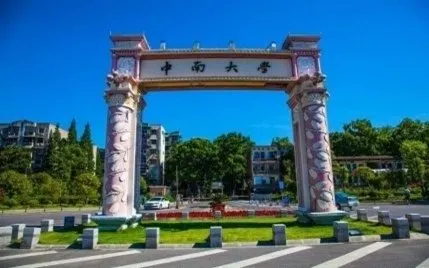
Central South University accepts international students on programmes in the following fields: business, engineering, medicine, economics, arts. Choose the level and programme that suit your goals.
Chinese language study at the university — from a few weeks to a year or longer. Suitable for those starting from scratch or preparing for the HSK before entering a main programme.
self-funded · language programme
The first level of higher education: usually four years of study, specialised subjects, internships and a graduation thesis. It opens the way to working in your field and to a master's degree.
self-funded
Advanced study after a bachelor's degree: research, applied projects and internships. It helps you become an expert in your chosen field and broaden your career opportunities.
self-funded
Central South University is located in Changsha. Nihao Study consultants keep track of the deadlines and admission requirements of this university, and you can always check the most accurate and up-to-date information on its official website. In university rankings, it is ranked 33 in China and 751 worldwide.
Come for a face-to-face meeting: together we will go through the requirements, deadlines, documents and study options that suit you.

At the meeting we will look at your situation, tell you which documents to prepare and by when, talk about possible programmes and help you decide on the next step.
Central South University (CSU, 中南大学, pinyin Zhōngnán Dàxué) is a public research university located in Changsha, the capital of Hunan Province. In Russian it is usually called the Central Southern University; searches also turn up several other renderings, such as a literal calque and 'University of the Central South'. In spoken Chinese the university is often called simply 中南, Zhongnan. The English name and the abbreviation CSU are officially set out in the university's charter, and its official address is in Changsha, not in Chongqing.
CSU was a member of Project 211, gained Project 985 status and is now part of the second round of the national Double First-Class (双一流) programme. For applicants this means something concrete: five of the university's disciplines are on the national list of First-Class Disciplines. According to the university itself, its research is particularly concentrated in mining, materials, medicine, engineering and transport.
This Nihao Study overview brings together CSU's statuses and rankings, programmes in Chinese and English, accommodation, HSK and CSCA requirements, CSC scholarships and the application procedure for 2026.
| Indicator | Data | What this means |
|---|---|---|
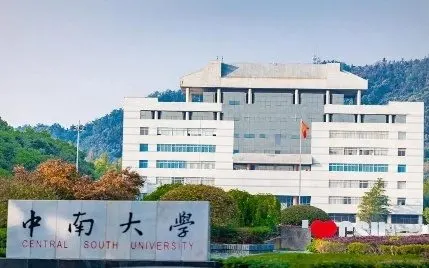
| Location | 932 Lushan South Road, Changsha (Hunan Province), postcode 410083 | the main address is near Yuelu Mountain, west of the Xiang River |
| Status | Ministry of Education university; Projects 211 and 985; Double First-Class, second round | both its former and current national statuses are confirmed |
| Area | 3.17 million sq m | campuses and hospitals are located in different parts of Changsha |
| Academic structure | 33 schools; 3 large Class III Grade A hospitals, plus a stomatological hospital | the engineering profile is complemented by the Xiangya medical system |
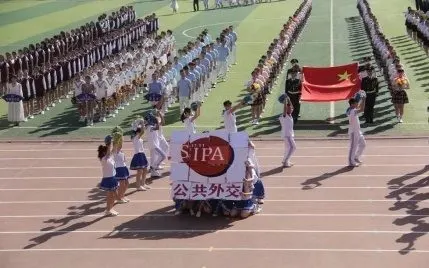
| Students | more than 64,000 full-time students, including over 36,000 bachelor's students and over 26,000 master's and doctoral students | CSU is a large comprehensive university |
| International students | more than 2,200 | the international community is noticeable but a minority among all students |
| Programmes | 104 bachelor's programmes, 89 of them recruiting | whether the programme you want is open to international students is checked separately |
| Research | 34 national research bases | fundamental research is closely linked to industry research |
| ESI | 20 disciplines are in the global top 1 per cent | this measures research citations, not the quality of each programme |
The university's information in this section is given as of 8 January 2026. What matters for admission is not the size of the university but whether the language, campus and faculty match your chosen programme.
Today's Central South University came into being on 29 April 2000, when three universities merged: Hunan Medical University, Changsha Railway University and Central South University of Technology. So 2000 is the date the modern institution was created, not the start of its entire academic history.
The technology line goes back to the Central South Institute of Mining and Metallurgy, which opened in 1952. In 1960 the institute became a national key university, in 1996 it joined Project 211, and in 1998 it came under the direct administration of the Ministry of Education. The railway line dates from 1953, when the Central South College of Civil Engineering and Architecture was founded.
The medical line is even older: Xiangya Medical School, the predecessor of Hunan Medical University, opened in 1914 and became one of China's first centres of Western medicine. The combination of metallurgy, railway construction and clinical medicine explains why CSU has such a broad profile. The university's motto, in its own translation, means creating knowledge and serving society, and the official history emphasises an educational heritage spanning more than a century.
| Ranking | Position and edition | What the result means |
|---|---|---|
| ARWU | 96th worldwide, 2025 edition | a strong result in a research-focused ranking |
| THE World University Rankings | band 251-300, 2026 edition | the result reflects teaching, research, citations and international outlook |
| QS World University Rankings | 491st, 2026 edition | lower than in ARWU: the methodology is different |
| QS World University Rankings | 452nd, 2027 edition | a more recent edition, published before the start of the 2027 calendar year |
| CWUR | 146th out of 21,291, 2026 edition | according to CWUR, CSU is in the top 0.7 per cent of the sample |
| U.S. News Best Global Universities | 146th, 2025-2026 edition | the position is confirmed by a summary table that states the edition year |
| EduRank | 415th worldwide, 23rd in China, 1st in Changsha (2026 update) | an independent bibliometric ranking, unrelated to admission rules |
The gap between 96th place in ARWU and 491st in QS is not a contradiction. ARWU gives more weight to publications, the number of highly cited researchers and the volume of research output, while QS weights reputation, graduate employment and internationalisation in its own way. That is why the overall ranking should be considered together with the subject rankings.
In the ShanghaiRanking Global Ranking of Academic Subjects 2025, CSU holds the following positions: mining and mineral engineering, 1st in the world; metallurgical engineering, 2nd; civil engineering, 9th; transportation science and technology, 16th; chemical engineering, 18th. It is these figures, rather than a single line in the overall ranking, that show the university's strengths.
Historically, CSU's first academic pillar is the former Institute of Mining and Metallurgy. Today this part of the university includes the schools of powder metallurgy, materials science, geosciences, metallurgy and environment, resource processing and safety. In ESI, materials science and engineering is in the global top 0.01 per cent, and in mining and metallurgy CSU holds top positions in the ShanghaiRanking subject rankings. For applicants, this means access to a strong industry environment, but it does not guarantee a job: you need to look at the laboratory, the academic supervisor and the language of the specific programme.
The legacy of the railway university lives on in the School of Traffic and Transportation Engineering and the School of Civil Engineering. Transportation engineering is one of the university's five First-Class Disciplines, and in the 2025 ShanghaiRanking subject ranking, transportation science and technology placed 16th. The university's national platforms include research centres for high-speed railways, advanced manufacturing and train safety.
CSU's medical system includes Xiangya Hospital, Second Xiangya Hospital, Third Xiangya Hospital and Xiangya Stomatological Hospital. Clinical medicine is in the global ESI top 0.1 per cent, and the university also has an eight-year medical education programme whose graduates are awarded the Doctor of Medicine. International students should check the clinical requirements in advance: some medical programmes require language certificates in both Chinese and English.
The university works in 11 broad fields of knowledge: medicine, engineering, natural sciences, economics, philosophy, law, education, literature, management, art and interdisciplinary studies. In practice, these fields can conveniently be grouped into four.
International students are not admitted to every school or at every level. The catalogue of international programmes is published as a separate appendix to the annual admissions announcement, so make your final choice from the list for your year of entry.
| Level | Duration and language | Main requirement |
|---|---|---|
| Bachelor's in Chinese | 4 to 5 years | school-leaving certificate, HSK at the required level, CSCA result |
| Joint English-taught bachelor's programme | 4 years, five engineering fields | IELTS 6 or TOEFL 85, CSCA, requirements of CSU and the University of Dundee |
| Master's Degree | 3 years, taught in Chinese and English | bachelor's degree, language certificate, academic document package |
| Doctoral (PhD) Programmes | 4 years, taught in Chinese and English | master's degree, research plan, recommendations, prior contact with an academic supervisor |
| Chinese Language | academic year or semester | school-leaving certificate, plus the programme's age and immigration status requirements |
The joint English-taught bachelor's programme includes five fields: civil engineering, mathematics, computing science, mechanical engineering, and mechanical engineering with a transport specialisation. Those who meet the requirements of both universities receive a CSU degree and an honours bachelor's degree from the University of Dundee. This is a separate joint programme with its own fees, not a general English-taught format for any programme.
CSU's language courses are divided into beginner, intermediate and advanced levels. The main course is 26 academic hours a week, with a separate module of 4 to 10 hours devoted to HSK and HSKK preparation. For the 2026 intake, two options were offered: an academic year (September 2026 to July 2027) or a semester (September 2026 to January 2027).
Chinese-taught bachelor's programmes in engineering and natural sciences require HSK 4 with a score of 260 or more, and humanities and medical programmes require HSK 5 with 200 or more. For English-taught bachelor's programmes, the benchmark is IELTS 6 or TOEFL 85. A preparatory course by itself does not mean the university operates an HSK or BCT test centre: before registering, check the test venue in the official testing system.
Tuition fees at CSU depend on the level, language and field of study; the university also charges a non-refundable registration fee. It is best to check the current tuition and accommodation fees on the university's official website, csu.edu.cn, before applying.
The international dormitories are located on four campuses: South Campus, Xiangya New Campus, Xiangya Old Campus and Railway Campus. In total, ten buildings offer 1,621 places. Rooms have a private bathroom, air conditioning, Wi-Fi and hot water, and are furnished with a bed, wardrobe, desk and chair. The buildings have shared kitchens and laundries.
| Room type | Comment |
|---|---|
| Xiangya, single room | medical campus |
| Shenghua, place in a double room | payment per place |
| Tianxin, place in a double room | conditions vary by building |
| Tianxin, single room | available in several buildings |
The room type usually depends on your programme's campus and on which places are actually available. It is best to confirm the building, payment arrangements (per place or per room), move-in date and which utilities are included in advance.
Several funding channels are available to international students, and they cannot be combined in a single application without checking the rules.
A grant is a competition, not a discount after admission. Even full funding is renewed only after a positive annual review of academic performance and compliance with the university's rules.
CSU's campuses spread across both banks of the Xiang River, not far from Yuelu Mountain. The international office is in the library of Yuelushan campus at 932 Lushan South Road, Changsha, Hunan 410083. Medical programmes may be based at Xinglin or Xiangya campus, so your route and accommodation are chosen after you receive your offer letter.
According to the university, it has 115 national first-class courses and 72 national first-class undergraduate programmes. The university works with 320 universities and research organisations from 65 countries and regions. The dormitories are secure: a 24-hour duty service, access control and cameras on each floor.
| University and Chinese name | Type | Main focus |
|---|---|---|
| Central South University, CSU, 中南大学 | national university, 985, 211, Double First-Class | mining, materials, transport, medicine, broad-based engineering |
| Central South University of Forestry and Technology, CSUFT, 中南林业科技大学 | provincial public university | forestry, ecology, wood materials |
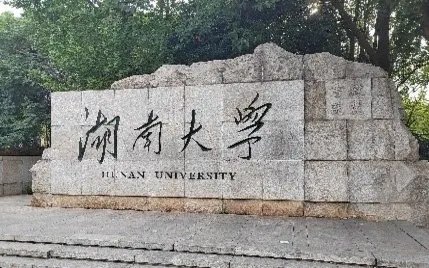
| Hunan University, HNU, 湖南大学 | national university, 985, 211, Double First-Class | engineering, design, economics and management |
| Changsha University of Science and Technology, CSUST, 长沙理工大学 | provincial public university | energy, transport, civil engineering |
Confusion most often arises from the word "South" in the English name and the similar abbreviations CSU, CSUFT and CSUST. Three reliable signs will help you identify the right university: the characters 中南大学, a website on the csu.edu.cn domain and the address on Lushan South Road, Changsha.
The standard Russian form is considered to be the one meaning ‘Central South University’. ‘Central-South University’ is a common spelling variant. ‘University of the Central South’ repeats the English word order and is therefore not the main form. Central South University is the official international name, and CSU is the university's established English abbreviation. Zhongnan renders the short Chinese form 中南; there is no separate official colloquial Russian form. The original Chinese name is 中南大学, pinyin Zhōngnán Dàxué.
CSU is short for Central South University. The university is in Changsha, Hunan Province; the main postal address is 932 Lushan South Road, Changsha 410083.
Yes. According to the university, CSU was among the first members of Project 211, is part of Project 985, and since February 2022 has been on the second Double First-Class list. Projects 211 and 985 are historical; the current programme is called Double First-Class.
Yes. At bachelor's level, a joint English-taught programme in five engineering fields is run with the University of Dundee, and there are also English-taught majors at master's and doctoral level. The full list is published in an annex to the current admission announcement.
For Chinese-taught engineering and science programmes, HSK 4 with 260 points or more; for humanities and medical programmes, HSK 5 with 200 points or more.
Tuition depends on the level, language and field, and the cost of the dormitory depends on the building and room type. The university publishes current rates on its official website csu.edu.cn.
You can apply for the Type A competition or a suitable Type B programme. A full scholarship usually covers tuition, dormitory and medical insurance, and also includes a monthly allowance.
The university offers HSK and HSKK preparation, but the exam schedule at the current test site is published separately. Find a test site in Changsha in the official Chinese Testing International system.
In the international buildings, rooms have private bathrooms, air conditioning, hot water and Wi-Fi; the buildings have shared kitchens, laundries, lifts and a 24-hour duty desk. Which room you get depends on the campus and availability.
CSU is Central South University, 中南大学 in Chinese. CSUFT is the forestry university 中南林业科技大学 (Central South University of Forestry and Technology), and CSUST is Changsha University of Science and Technology. Check the full Chinese name and the website domain, not just the initials.
As a rule: passport, school-leaving certificate and school transcript, CSCA result, proof of language proficiency, medical form, police clearance certificate and citizenship documents. An applicant who is a minor needs a guardian in China.
You work with Nihao Study specialists. They will help you put together a portfolio and a set of documents, draw up a study plan and choose a university or college and a specialty that genuinely interest you.
We take care of every stage of admission, from choosing to enrolment
We will gather, prepare, certify and send your documents to the institution
We will show the admissions committee your strengths
We run training sessions and courses so you can prepare with more confidence
We will help you settle in at the start of your studies and keep moving forward
Nihao Study specialists select universities and colleges that match the applicant's goals and means. We make sure the teachers are practitioners and that the knowledge will be useful in your profession.
We examine curricula, talk to students and teachers and look at which specialties employers need, and use this information to select options for the applicant.
Advisers guide the applicant from the first consultation to enrolment, help build a plan and spot mistakes in time that could get in the way.
The cost of our support depends on the programme and the partner university; you'll get an exact quote after a free consultation.
Get a quoteA free 15-minute consultation: together we will choose a university or college and a programme that suit your goals and budget.
Apply with peace of mind: we handle the documents, deadlines and correspondence with admissions committees, and you save time and energy.
Don't want to wait for a call? Message us in the chat.
Message us in chatUniversity · Changsha
Language courses · Bachelor's Degree · Master's Degree
University · Xiangtan