Anhui Agricultural University
University · Hefei
- Language courses
- English
- Bachelor's Degree
- English
- Master's Degree
- English
AHU · 安徽大学
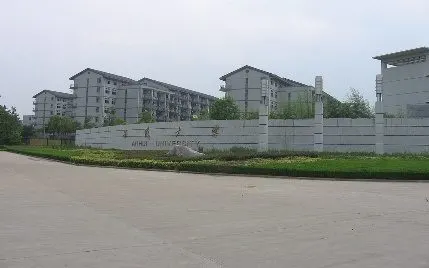
Anhui University accepts international students on programmes in the following fields: business, engineering, medicine, economics, agriculture, natural sciences. Choose the level and programme that suit your goals.
Chinese language study at the university — from a few weeks to a year or longer. Suitable for those starting from scratch or preparing for the HSK before entering a main programme.
self-funded · language programme
The first level of higher education: usually four years of study, specialised subjects, internships and a graduation thesis. It opens the way to working in your field and to a master's degree.
self-funded
Advanced study after a bachelor's degree: research, applied projects and internships. It helps you become an expert in your chosen field and broaden your career opportunities.
self-funded
Anhui University is located in Hefei. Nihao Study consultants keep track of the deadlines and admission requirements of this university, and you can always check the most accurate and up-to-date information on its official website. In university rankings, it is ranked 118 in China and 1684 worldwide.
Come for a face-to-face meeting: together we will go through the requirements, deadlines, documents and study options that suit you.

At the meeting we will look at your situation, tell you which documents to prepare and by when, talk about possible programmes and help you decide on the next step.
Anhui University (AHU, 安徽大学, pinyin Ānhuī Dàxué) is a public comprehensive university in Hefei, the capital of Anhui Province. Russian-language sources have a standard name for it, and search queries also turn up several spelling variants and typos. Within China the short name 安大 (Āndà) is used, while international documents and correspondence use Anhui University or AHU.
In 1996 AHU was included in the national Project 211, and since 2017 it has taken part in the Double First-Class programme (双一流). In the second round of this programme, the university's listed discipline is Materials Science and Engineering. The university was never part of the former Project 985, so calling it a '985 university' is incorrect.
The university gives the following figures as of 12 March 2025: almost 34 000 undergraduates, almost 15 000 master's and doctoral students, and around 500 international students. For an applicant looking for a large comprehensive university rather than a narrowly specialised institute, this scale is a strong argument.
Below you will find the 211 and 双一流 statuses, rankings, strong academic fields, programmes for international students, language requirements, scholarships and the application procedure. Questions about admission to AHU can be discussed at a Nihao Study consultation.
| Item | Data |
|---|---|
| Founded | in 1928 in the city of Anqing |
| Status | public comprehensive university; Project 211, Double First-Class |
| Number of students | bachelor's: almost 34,000; master's and doctoral: almost 15,000 |
| International students | approximately 500 |
| Structure | 33 academic units (schools and departments) |
| Bachelor's programmes | 89 in the current intake |
| Campuses | 4 operating campuses, plus the university science park |
| Qinyuan Campus address | No. 111 Jiulong Road, Hefei, 230601 |
AHU currently has four operating campuses: Qinyuan, Longhe, Shihe Road and Sizhou Road. Together they cover 2,831 mu, with buildings totalling almost 1.2 million square metres. In addition, Ziyun Campus (about 1,100 mu) is under construction, so the distribution across campuses may change over time.
Its history begins in 1928, when the university opened in Anqing, then the provincial capital. The name Provincial Anhui University appeared in 1930. War interrupted its work, and in 1946 the university was revived as National Anhui University. That is why different sources give different dates and names.
In 1949 the university moved to Wuhu, where it merged with Anhui College. Then higher education was reformed nationwide and the university was split up. Work to re-establish a comprehensive university began in 1956, this time in Hefei, and full student admissions resumed in 1958.
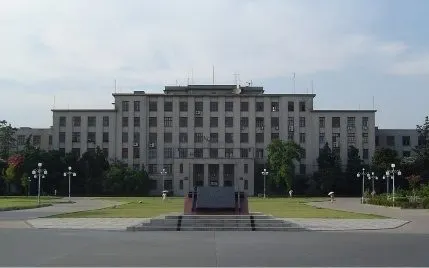
16 September 1958 holds a special place in AHU's calendar. On that day Mao Zedong personally wrote the characters 安徽大学, and the university adopted this inscription as the official form of its name. Since then, this date has been regarded as the university's founding day. The history also has a practical side: the older Longhe Campus is associated with the humanities and international programmes, while the large Qinyuan Campus is the result of AHU's growth in Hefei's new university district.
Later milestones are linked to national programmes: joining Project 211 in 1996, an agreement between the Ministry of Education and the provincial government on joint development of the university in 2013, and inclusion in Double First-Class in 2017. Today "211" is more of a historical label, but it still indicates the level of support the university has received at central and provincial level.
Membership of "211" is confirmed: according to AHU itself, the university joined the project in 1996. Double First-Class status is also confirmed: in the second round, the Ministry of Education listed Anhui University with the discipline Materials Science and Engineering.
One detail is worth noting. In 2022, AHU's materials science and engineering appeared on the official list of first-round disciplines that received a public warning. However, a warning is not an exclusion: the same discipline is on the second-round list and, according to the university's current data, one discipline retains world-class status. The bottom line: AHU is part of Double First-Class, but this does not mean all its specialisations are world-class.
The university also reports two national key disciplines and 11 fields in the global top 1 per cent of ESI: chemistry, physics, mathematics, materials science, engineering, computer science, ecology, biology and biochemistry, clinical medicine, geosciences and general social sciences.
| Ranking | Position | Edition |
|---|---|---|
| ARWU | 301–400 band | 2025 |
| THE World University Rankings | 1001–1200 band | 2026 |
| QS World University Rankings | 1201–1400 band | 2027, published in 2026 |
| CWUR Global 2000 | 541st worldwide, 101st in China | 2026 |
| EduRank | 1369th worldwide, 94th in China | 2026 |
These positions should not be averaged into a single number, because the methodologies differ. ARWU gives more weight to research publications and citations; THE combines research and teaching indicators; QS relies partly on reputation surveys; CWUR calculates its own indicators for education, graduate employment and research. Among the 21,291 institutions assessed by CWUR, AHU is in the top 2.6 per cent. EduRank credits the university with over 40,000 publications and more than 550,000 citations; these are EduRank's own model estimates, not university statistics.
When choosing a specialisation, look at subject rankings rather than the overall position. The university reports that in the ShanghaiRanking Best Chinese Subjects 2024, three of its disciplines (chemistry, applied economics, and computer science and technology) were in the national top 20 per cent. This is not 20th place: it means the top fifth of each table.
Only one AHU discipline is officially listed under Double First-Class: Materials Science and Engineering. Building on it, the university develops related fields: chemistry, materials physics, integrated circuits, microelectronics and materials for new energy. Among its major research platforms, the university names a national key laboratory and an institute working on advanced materials and integrated circuit technologies, based at the Hefei Comprehensive National Science Centre.
The bachelor's catalogue includes several separate specialisations in this area: computer science and technology, software engineering, artificial intelligence, data science and big data technology, information security, cyberspace security, robotics and Internet of Things engineering. These are distinct programmes, not one programme under several names. Check with the admissions office whether each of them is open to international students in the year you need.
Among its applied projects, AHU lists work on autonomous vehicles, highly sensitive sensors, electric vehicle drives and millimetre-wave chips. Hefei's advantage is that major research institutes and technology companies of the region are close by.
AHU is also strong in the humanities. Chinese Language and Graphonomy is a national key discipline, and the Huizhou culture research centre is a Ministry of Education key humanities base. Another field is Warring States bamboo manuscripts, known as the Anhui University Bamboo Strips. So the university may appeal not only to future engineers but also to those studying the language, writing, history and culture of the region.
Teaching at AHU covers 11 fields of knowledge, from philosophy, history and literature to law, economics and management, as well as natural sciences, engineering, education, the arts and interdisciplinary studies. If a unit's name contains School or College, it is a faculty within Anhui University, not a separate institution.
AHU is authorised to award doctoral degrees in 23 categories (first-level disciplines and professional degrees) and master's degrees in 65. The published doctoral catalogue lists English as the language of instruction for, among others, chemistry, physics, mathematics, materials science, microelectronics, electrical engineering, computer science and ecology.
| Level | Language and mode of study | Fields (examples) |
|---|---|---|
| Bachelor's Degree | mainly in Chinese, full-time | Chinese language, law, materials, international economics, computer science |
| Master's Degree | Chinese; some programmes in English | humanities, economics, chemistry, engineering, IT |
| Doctoral (PhD) Programmes | Chinese or English, as stated in the catalogue | physics, chemistry, materials, microelectronics, computer science |
| Chinese Language | for a semester or an academic year | language study in Hefei |
The language of instruction depends on the programme itself; the English name of a specialisation in the catalogue says nothing about it. For Chinese-taught programmes, AHU sets the following requirements: bachelor's, HSK 4 with more than 200 points; master's, HSK 5 with more than 180; doctoral, HSK 5 with more than 210. Non-native English speakers applying for English-taught master's or doctoral programmes need TOEFL 75 or higher or IELTS 6.0 or higher.
Language courses in Hefei work both as a standalone programme and as preparation for a degree. You can enrol for a semester or a full academic year, but after the course students are not automatically transferred to a degree programme: you will need to meet its requirements separately and apply again.
AHU publishes separate fees for language courses, bachelor's, master's and doctoral programmes. In addition to tuition, your budget should include the non-refundable registration fee, medical insurance, study materials, a medical examination and visa costs. Conditions change every year, so check current costs on the university's official website or ask the admissions office for an up-to-date invoice before applying.
Qinyuan Campus is on Jiulong Road in Hefei's Economic and Technological Development Zone, and Longhe Campus is on Feixi Road. When choosing accommodation, bear in mind that your classrooms and dormitory may be on different sites: your daily commute depends on which school you study at.
AHU has two large libraries. According to the published schedule of the former library system, on regular teaching days the reading rooms are open until 22:00 and the self-study area until 23:00. Opening hours change during holidays and breaks, so first-year students should install the university app and follow announcements.
Learning goes beyond the lecture halls. The university reports 39 national first-class courses, as well as practical training bases, experimental centres and partnerships with 460 companies. International students have access to engineering laboratories, sports grounds, clubs and events run by the international college.
| Campus and room type |
|---|
| Longhe: single room |
| Qinyuan: single room |
| Longhe: double room |
| Qinyuan: double room |
Students are housed on the campus their programme belongs to, and the specific room type depends on availability. Accommodation prices vary by campus and room type; the university publishes current rates. Internet in the dormitory is paid separately, and it is best to check the terms for utility payments in the contract when you move in.
Residential blocks usually have rooms with bunk beds and built-in desks, as well as a shared kitchen and laundry. This is the basic layout; which room you get is decided when you move in.
According to AHU's official CSC announcement, a full scholarship usually covers medical insurance, tuition, a place in a double room and a living allowance. The application must be approved by both AHU and CSC. In addition, the university assesses enrolled scholarship holders every year, and payments may be suspended if results are poor.
Before making any payment, check the bank details with the official admission office: do not transfer money using details received in correspondence with third parties.
AHU accepts the HSK certificate as proof of language level. However, whether HSK or BCT exams are held on campus depends on the session, so do not choose a test centre based on the university name alone: register in the official system and check the test venue there.
For the Silk Road scholarship in 2025, the bar was higher than the usual minimum: bachelor's applicants needed HSK 4 with a score of 220 or more, and master's applicants HSK 5. The takeaway: each scholarship may have its own language threshold.
According to the university, it has more than 170 partner universities and research organisations, including in the USA, the UK, France, Germany, Japan and Russia. The most prominent joint project is the Anhui University New York Stony Brook Institute, set up together with Stony Brook University. There is also a Sino-French Institute of Engineers.
In total, AHU has nine China Centers abroad. If you are offered a joint programme or double degree that does not appear in AHU's official materials, ask for the programme's registration number and written confirmation from the university.
| University | City | Main focus |
|---|---|---|
| Anhui University, 安徽大学, AHU | Hefei | comprehensive, 211 and Double First-Class |
| Anhui Agricultural University, 安徽农业大学 | Hefei | agricultural sciences, biology, food science |
| Anhui Medical University, 安徽医科大学 | Hefei | medicine, healthcare |
| Hefei University of Technology, 合肥工业大学 | Hefei | engineering and industrial technologies |
| Anhui University of Finance and Economics, 安徽财经大学 | Bengbu | finance, economics, management |
To avoid mistakes, check four markers: the Chinese name 安徽大学, the English name Anhui University, the abbreviation AHU and the website on the ahu.edu.cn domain. If another university has the word "Anhui" in its name, that does not mean it is an AHU campus.
The standard Russian form is the one meaning "Anhui University". Two other Russian spellings are typos and search variants, and a third is a calque that copies the English word order. The university's official international name is Anhui University; the abbreviation AHU is used in rankings and business correspondence. The original Chinese name is 安徽大学 (Ānhuī Dàxué), and 安大 (Āndà) is its short Chinese form.
AHU is short for Anhui University. The university is in Hefei, the capital of Anhui Province. Qinyuan Campus: No. 111 Jiulong Road, Hefei, 230601. Longhe Campus: No. 3 Feixi Road, Hefei, 230039.
It was part of the historical Project 211, and it is also in the current second round of Double First-Class, where it is recognised for Materials Science and Engineering. The university was never part of Project 985.
Yes, mainly in some master's and doctoral programmes: the doctoral catalogue lists English for a number of natural science and engineering fields. Non-native English speakers usually need TOEFL 75 or higher or IELTS 6.0 or higher.
Basic requirements for Chinese-taught programmes: bachelor's — HSK 4 with more than 200 points; master's — HSK 5 with more than 180; doctoral — HSK 5 with more than 210. For certain scholarships and programmes the bar may be higher.
The university publishes separate rates for bachelor's, master's and doctoral programmes and Chinese language courses, and they are revised. Check the current tuition fee on AHU's official website or with the admissions office before applying.
The price depends on the campus and room type: a place in a double room at Qinyuan is the cheapest, and a single room at Longhe is the most expensive. Current rates are published by the university.
Yes, provided you win the competition. Through the High-Level Postgraduate Program, AHU admits CSC scholarship holders to master's and doctoral programmes, and some schemes also extend to bachelor's programmes. A full scholarship usually covers tuition, the dormitory, insurance and a living allowance.
Public sources describe the HSK requirements, but they do not give a reliable, up-to-date schedule for an exam centre at AHU. Choose your test centre only through the official registration system and check the dates against the official HSK schedule.
A passport, an application form, a photo, a school leaving certificate with transcript, a language certificate, a medical form, a police clearance certificate and a financial guarantee; if the chosen programme requires the CSCA, its result as well. It is worth checking the required format for document translations with the admissions office in advance.
Hefei (合肥) is the capital of Anhui Province and a city of science: it is home to numerous national laboratories and the University of Science and Technology of China (USTC). The city is betting on artificial intelligence and electric vehicle manufacturing.
Here you can get a strong technical education and find your place in high-tech industries. The city has plenty of greenery, the large Chaohu Lake is nearby, and there is a metro and modern infrastructure, but none of the bustle and high prices of the big capitals. Parents value the safety and academic atmosphere, the good environment, new campuses with good facilities, high-speed trains to Nanjing and Shanghai and the low cost of living.
You work with Nihao Study specialists. They will help you put together a portfolio and a set of documents, draw up a study plan and choose a university or college and a specialty that genuinely interest you.
We take care of every stage of admission, from choosing to enrolment
We will gather, prepare, certify and send your documents to the institution
We will show the admissions committee your strengths
We run training sessions and courses so you can prepare with more confidence
We will help you settle in at the start of your studies and keep moving forward
Nihao Study specialists select universities and colleges that match the applicant's goals and means. We make sure the teachers are practitioners and that the knowledge will be useful in your profession.
We examine curricula, talk to students and teachers and look at which specialties employers need, and use this information to select options for the applicant.
Advisers guide the applicant from the first consultation to enrolment, help build a plan and spot mistakes in time that could get in the way.
The cost of our support depends on the programme and the partner university; you'll get an exact quote after a free consultation.
Get a quoteA free 15-minute consultation: together we will choose a university or college and a programme that suit your goals and budget.
Apply with peace of mind: we handle the documents, deadlines and correspondence with admissions committees, and you save time and energy.
Don't want to wait for a call? Message us in the chat.
Message us in chat University · Hefei
University · Hefei
Language courses · Bachelor's Degree · Master's Degree